

Key takeaways
- Outcome ownership matters more than task completion: Most VA and generalist outsourcing models keep operational authority with the owner, meaning you're still managing the work. The right fractional office manager service owns execution end-to-end, not just individual tasks when directed.
- Most shops wait too long: According to the HVAC Industry Pulse 2025 report, most owners handle admin themselves or lean on a spouse until well past $500K in revenue, long after it starts costing them money.
- The cost comparison goes beyond salary: Shops with 1 to 10 employees average 15.4 admin hours a week, per the HVAC Industry Pulse 2025 report. That time has a real dollar value that a monthly fee comparison to a full-time hire rarely captures.
Across the US HVAC industry size and payroll, there are 111,207 employer HVAC establishments. The vast majority are small shops where the owner is still handling billing, permits, and customer follow-ups after hours. Fractional office manager services exist to solve exactly that problem, but the category includes everything from generic virtual assistants to fully managed HVAC-specific back offices, and they don't all work the same way.
This guide walks through what to look for, what questions to ask, and how the main options compare, so you can choose the right fit for your shop without trial and error.
What Is a Fractional Office Manager Service for HVAC Businesses?
A fractional office manager service gives a small HVAC shop access to experienced office management without hiring a full-time employee. For a 2-4 truck operation, that means someone handling permits, rebates, invoicing, and scheduling on a shared or part-time basis, at a cost that fits a smaller revenue base.
The term covers a wide range of models, and that's where owners get tripped up. A fractional office manager service is not a virtual assistant who completes tasks you assign. It's not a staffing placement where you recruit, onboard, and manage someone yourself. It's not a software subscription that automates a few workflows. And it's not a family member or part-timer filling gaps reactively.
The distinction that matters most is accountability. Some services in this category execute tasks when directed, but operational authority stays with you. You're still deciding what gets done, checking that it happened, and managing the person doing it. Other services, like fractional HVAC office management through WorkHero, own training, oversight, and execution outright. The question worth asking any provider is: who manages the manager? If the answer is still you, the model hasn't actually removed the burden.
Why Do HVAC Shops Need Outsourced Office Administration?
Most small HVAC businesses reach a point where admin volume outpaces what one person can handle alongside field work, but the revenue doesn't yet justify a full-time office hire. The result is the owner absorbing the gap, usually at night and on weekends.
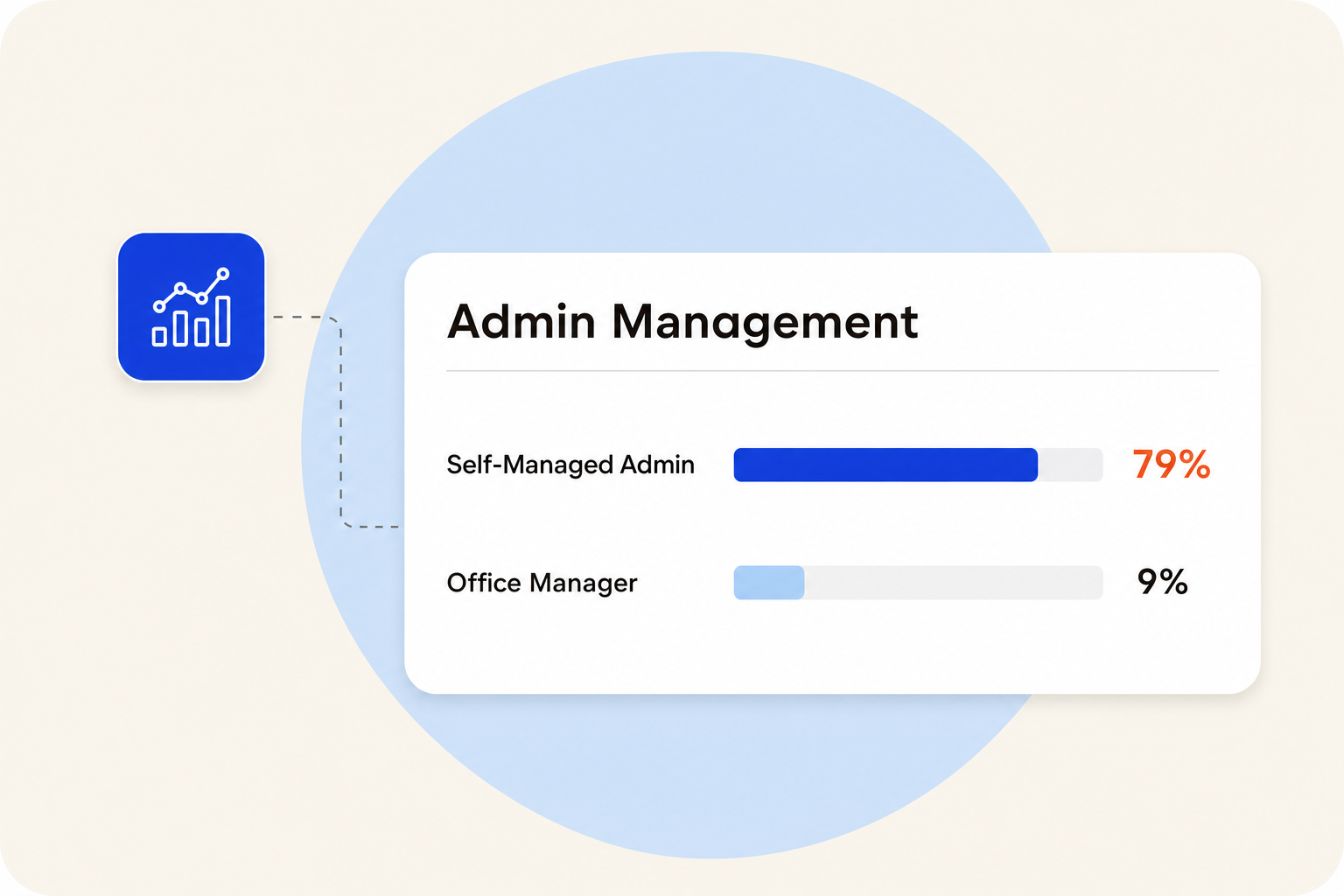
- The admin burden is larger than most owners account for: Shops with 1 to 10 employees average 15.4 hours a week on administrative work, according to the HVAC Industry Pulse 2025 report. At a typical service call rate of $250-$400 per hour, that's a significant amount of billable capacity absorbed by invoicing and paperwork.
- Most shops delay getting help well past the point it costs them: The 2025 HVAC Industry Pulse report, which surveyed more than 1,300 industry professionals including more than 850 HVAC/R contractors, found that office manager adoption only climbs from 9% at smaller shops to 38% as businesses scale. Most small shops are still self-managing admin long after it's creating real problems.
- The hidden costs compound quickly: Invoices sitting unsent for weeks, rebate windows missed, equipment warranties not filed, and quotes that go out too slowly to win the job. These aren't abstract risks. Check the signs you need office help if you're unsure whether your shop has crossed that threshold.
- You're already paying for office help with something more valuable than money: Every hour spent on admin is an hour not spent on service calls, customer relationships, or hiring decisions. Waiting to outsource isn't free. It has a real cost measured in your time.
What Should You Look for When Selecting an Office Manager Service?
The right criteria for selecting a fractional office manager service are specific to how HVAC businesses actually operate, not generic traits like "good communication" or "relevant experience."
- HVAC-specific knowledge from day one: Does the provider already understand permit filing timelines in your jurisdiction, utility rebate windows, and equipment registration workflows? A provider who needs you to explain what a heat pump rebate is will cost you time before they save you any.
- Software fluency inside your existing tools: Your service runs on Jobber, HouseCall Pro, ServiceTitan, or QuickBooks. A provider who works inside those systems without requiring you to switch platforms is far less disruptive than one who needs a separate tool or manual handoffs.
- Capacity during peak season: Scheduling and dispatch pressure in July looks nothing like February. Ask specifically how the provider handles volume spikes and whether coverage is guaranteed or dependent on one person's availability.
- Clear scope and pricing up front: Before you sign, you should know exactly what's covered and what it costs each month. A good provider builds the plan around your shop on the first call. See how WorkHero takes over your back office for an example of what that onboarding looks like.
- Who manages the manager: This is the single most important question. If the provider's model requires you to assign tasks, check outputs, and manage day-to-day execution, you haven't offloaded the back office. You've added a layer to it. Look for a service where oversight and quality control are built into the provider's model, not delegated back to you.
What Tasks Does HVAC Operations Support Actually Cover?
HVAC operations support covers a specific set of workflows that most owners are currently handling themselves. The scope goes well beyond general "admin" and includes both daily execution and longer-term systems work.
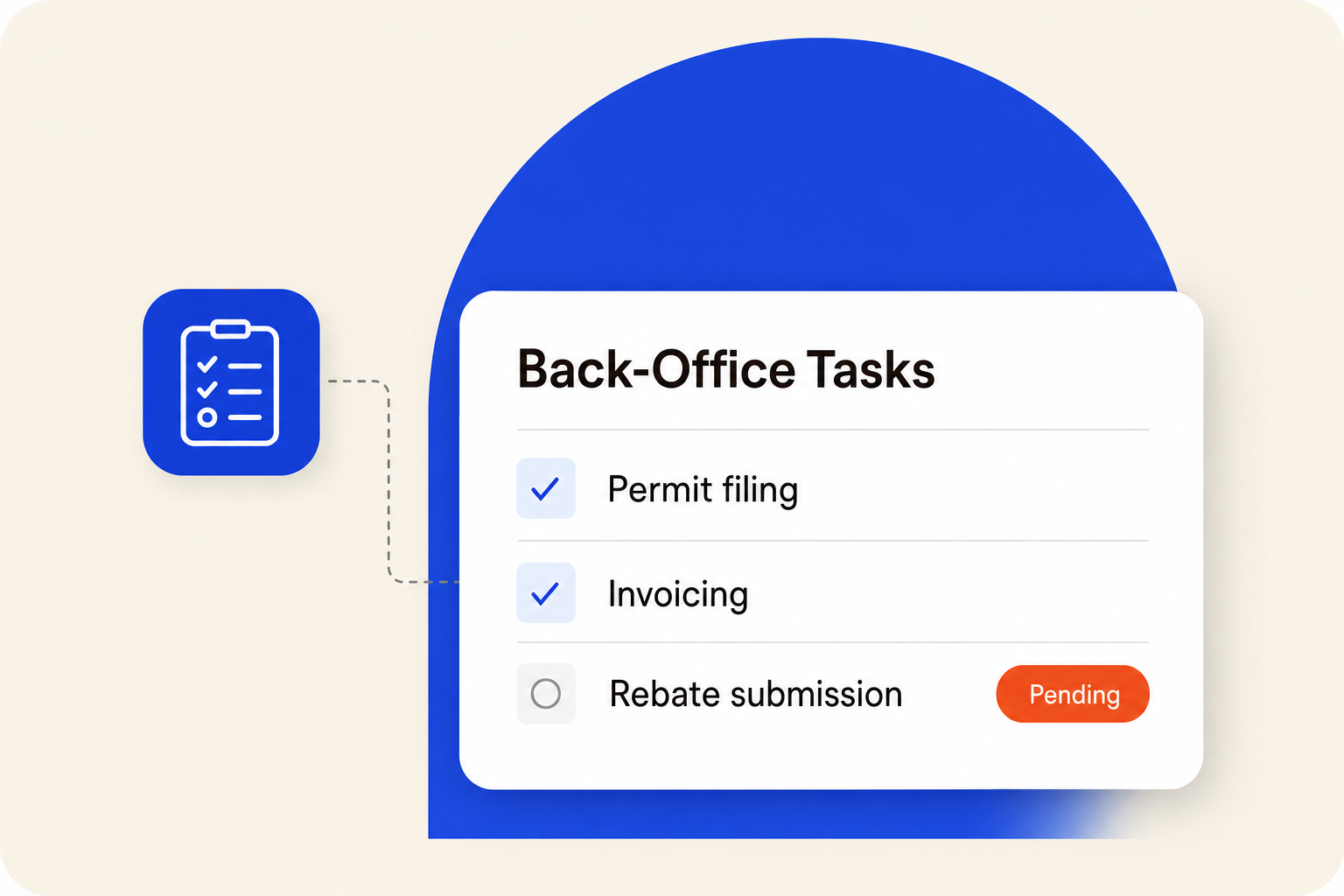
- Paperwork and compliance: Permit filing ahead of installs, inspection scheduling and tracking, manufacturer warranty registrations, and utility and heat pump rebate submissions. See the full scope of permits, rebates, and payroll handled to understand what end-to-end ownership of these workflows looks like.
- Billing and collections: Same-day invoicing on completed jobs, AR cleanup on past-due accounts, structured follow-ups on late payers, vendor payment processing, and expense reconciliation synced with QuickBooks. Invoicing and collections fully managed details how this works without the owner touching individual invoices.
- Business operations and systems: FSM setup and optimization inside HouseCall Pro, ServiceTitan, or Jobber, pricebook builds, maintenance plan design and enrollment tracking, KPI dashboards, workflow automation, and SOP development. Software setup and SOP development covers what this looks like for a shop that's been running on default settings.
- Payroll: Hours validated against jobs and time tracking, certified payroll for applicable jobs, and performance-based pay and spiff plan implementation.
The difference between task-based help and full workflow ownership is whether the work keeps running when no one is watching. A task-based model requires you to notice what needs doing and assign it. A workflow ownership model means the invoices go out, the rebates get filed, and the permits are pulled without you initiating any of it.
How Do Fractional Office Manager Options Compare for Small HVAC Shops?
HVAC owners evaluating outsourced office administration have five realistic options, each with a different scope, pricing model, and level of execution ownership.
- Full-time in-house hire: Full control and dedicated capacity, but it comes with recruiting time, onboarding, training, benefits, and turnover risk. Salary is fixed whether the workload rises or drops, and when that person leaves, the work lands back on you.
- Generalist VA: Hourly or part-time task execution inside your existing systems. The VA executes what you assign, but operational authority stays with you: you still manage the work, check outputs, and decide priorities. Published rates commonly run about $700-$1,400/month for 20-40 hours per week.
- Bundled front-and-back-office outsourcing: Packages call answering, bookkeeping, and dispatch into one outsourced function. These are usually trade-agnostic rather than HVAC-specific, so permits, rebates, and equipment registrations often fall outside the package.
- Fractional COO: Strategic oversight focused on structure, process design, and leadership. Useful for organizational design, but a fractional COO sets direction. Someone still has to run the schedule, keep job records, and handle the daily admin.
- HVAC-specific fully managed back-office partner (WorkHero): Owns training, oversight, and execution inside your existing software from day one, with 125+ years of combined HVAC office management experience across the team. Plans are month-to-month and priced by scope. Best fit for 2-4 truck shops where the owner is still doing admin at night and needs the back office to run without their involvement.
How Much Does Fractional Office Manager Support Cost?
Cost comparisons in this category usually start with salary, but the full picture includes what you're currently spending in time and what you're losing in delayed cash flow.
A full-time HVAC office manager costs an average of $51,476 per year according to HVAC office manager salary data from ZipRecruiter, before recruiting costs, benefits, onboarding time, and turnover risk.
Fractional office manager services typically run $1,000-$3,000 per month depending on scope, which works out to $12,000-$36,000 annually with no hiring overhead. WorkHero clients report an average of 20 hours per week returned to field work and customer time, alongside a 60% cost reduction compared to in-house staffing.
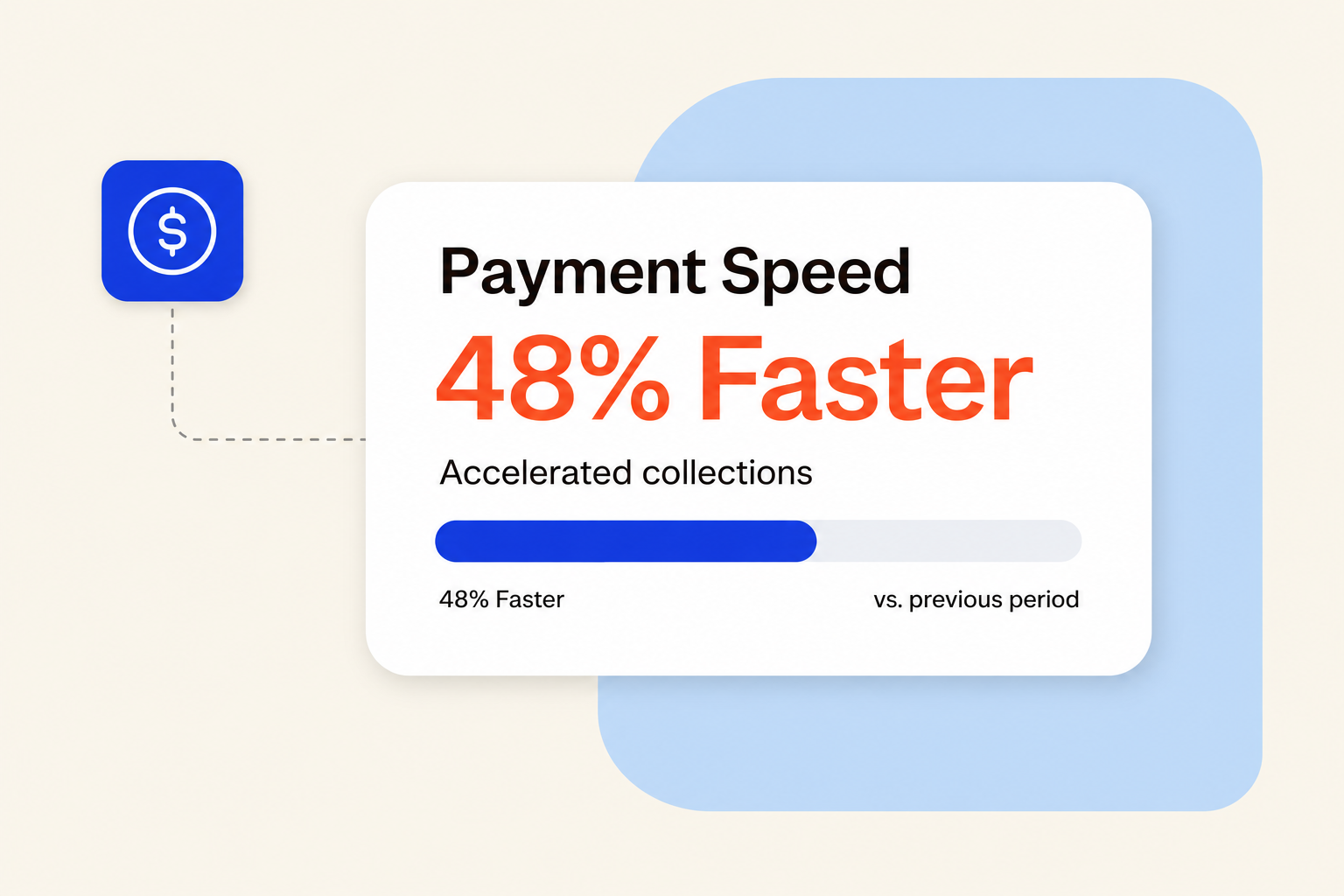
The cash flow impact can be faster than the cost savings. Just Right Mechanical saw a 700% increase in invoices issued and 48% faster payments within 30 days of handing off billing, driven by consistent follow-ups and clear ownership of collections. For the full breakdown of how billing delays affect cash flow, the HVAC collections playbook for owners covers the mechanics in detail.
How Do You Get Started Without Disrupting Your Operation?
A good fractional office manager service starts by learning your existing workflow, not by asking you to adopt a new one. The onboarding sequence should be short and focused on getting execution started quickly.
- Kickoff and systems access (about 60 minutes): Connect your existing tools, confirm goals, and set priorities for the first few weeks. For most shops, that means HouseCall Pro or ServiceTitan, QuickBooks, and email access. No new software required.
- Meet your dedicated office manager: You get a single point of contact who owns the day-to-day work. This person performs a full audit of your current operations to identify the biggest bottlenecks before starting execution.
- Execution begins within a few business days: The office manager starts monitoring incoming jobs, invoices, customer requests, and paperwork deadlines, then executes based on the plan set during kickoff. In the first 30-60 days, priority typically goes to billing and collections cleanup, rebate and permit backlogs, and getting your service software configured to run consistently.
- Ongoing communication on your terms: Day-to-day questions and updates happen by text, email, phone, or Zoom, whichever is fastest for you. You're not filing tickets or logging into a dashboard to check status.
- Short weekly check-ins: A brief standing call keeps priorities aligned and surfaces anything that needs your input. This is the accountability loop that replaces the management overhead you'd otherwise carry with a direct hire.
If admin is still eating your evenings, the simplest next step is to see what a dedicated HVAC back-office team would take off your plate. WorkHero starts every engagement with a short conversation about how your shop runs today.
