

Key takeaways
- Three distinct categories exist: Most services ranking for "HVAC back-office support" are either FSM software (such as Jobber, Housecall Pro, or ServiceTitan) that still requires someone to operate it, or hourly VA services that still require owner direction. A managed, HVAC-specific service is a distinct third category with different pricing, ownership, and outcomes.
- The real cost comparison is not plan vs. plan: For a 2-4 truck shop, the meaningful comparison is a managed back-office service (typically $1,000-$3,000/month depending on scope) against a $50K+ per year in-house hire, before factoring in recruiting, training time, and turnover risk.
- Outcomes, not task lists, are the right standard: Concrete results like 99% billing success across 1,565+ tracked jobs, or a 700% increase in invoices issued in 30 days, show what professional back-office support should actually produce.
According to a report on back office impact on HVAC reviews, 75% of the most frequent customer complaints start in the back office, not in the field. For small contractors, that gap between field performance and office execution is often the difference between a growing shop and one that stays stuck.
This article breaks down the real categories of back-office support services for HVAC businesses, what each one costs, how day-to-day operations actually work inside each model, and what metrics tell you whether the support is doing its job. If you're evaluating options for scheduling, invoicing, permits, or full office coverage, this comparison gives you the specifics to make a clear decision.
What Is Back-Office Support for an HVAC Business?
Back-office support for an HVAC business covers the non-technician side of operations: scheduling, invoicing, billing, permits, rebates, equipment registration, payroll, and customer follow-ups. It is the work that keeps jobs moving from booked to paid, and it has nothing to do with what happens on the job site.
The distinction that matters most for small shops is the difference between software and support. Field service management platforms like Jobber, Housecall Pro, and ServiceTitan are tools. They track jobs, generate invoices, and manage schedules, but only when someone is actively running them. Back-office support is the person or team doing that work inside those tools every day. For most 2-4 truck operations, that person has historically been the owner, a spouse, or a part-timer who cycles out every few months.
A managed back-office service fills that role without the hiring process. It handles HVAC software setup and SOPs, keeps the operational systems running, and owns the outcomes rather than waiting for direction. For shops that have never had a dedicated office manager, it functions as the role they couldn't previously afford to sustain.
Why Do Small HVAC Shops Struggle to Keep the Back Office Running?
Small HVAC shops struggle with back-office continuity because the owner is usually the only person who fully understands both the field and the office, and there aren't enough hours to do both well. The pattern is familiar: paperwork gets done at 10pm, invoices sit for days after jobs close, and the first part-timer who quits takes institutional knowledge with them.
The 2026 HVAC contractor survey findings from EGIA confirm that labor shortages, increased costs, and government regulation are consistent top threats year over year. Hiring and retaining a reliable office manager is part of the labor problem, not separate from it. When an owner leans on a spouse or a rotating cast of part-timers to handle scheduling and billing, the back office becomes the most fragile part of the business.
The downstream effect shows up in customer experience. Per the back office impact on HVAC reviews data, 75% of the most frequent complaints trace back to the office, not the technician. Missed follow-ups, delayed invoices, and permit errors are back-office failures that customers experience as service failures.
What Are the Different Types of Back-Office Support Services for HVAC Businesses?
There are three real categories of back-office support available to small HVAC contractors. Each is priced differently, covers different ground, and puts a different amount of work back on the owner.
Field Service Management (FSM) Software Platforms
FSM platforms are tools, not services. Jobber, Housecall Pro, ServiceTitan, and FieldEdge all rank heavily in searches for HVAC back-office support, but what they sell is software, not execution. Pricing ranges from roughly $49/month for entry-level Jobber tiers to $245-$398 per technician per month for ServiceTitan, with FieldEdge running approximately $100 per office user plus $125 per technician monthly.
- What's included: Scheduling, dispatch, invoicing, and reporting features built into a platform your team operates.
- Who it fits: Shops that already have someone capable of running the software daily and want to improve their systems.
- Main trade-off: The software does nothing on its own. Someone still has to open it, close jobs, send invoices, and follow up on AR every day.
Generic Virtual Assistants and Admin Staffing Services
VA services offer a human who handles tasks you assign, at an hourly rate. Published pricing from services in this category runs approximately $692.80/month for 20 hours per week and $1,385.60/month for 40 hours per week. The owner or service manager retains operational authority and directs the work.
- What's included: Repeatable task execution (scheduling, customer communication, billing coordination) within the scope the owner defines.
- Who it fits: Shops with a clear process already documented and an owner willing to manage the VA's workflow.
- Main trade-off: The owner still manages the relationship and must explain HVAC-specific workflows, permit jurisdictions, and rebate processes from scratch. The VA executes; the owner directs.
HVAC-Specific Managed Back-Office Services
A managed back-office service assigns a dedicated, HVAC-experienced office manager (or team) who owns execution inside your existing software without requiring you to train them on industry basics. This model covers permits registrations and payroll handling alongside billing, scheduling, and compliance paperwork, and at the higher tier it extends into growth work like pricebook builds and recurring revenue through maintenance plans.
- What's included: Full ownership of daily back-office tasks, software operation, and outcome accountability, with weekly check-ins to keep priorities aligned.
- Who it fits: Owners who want the back office handled without hiring, training, or managing an employee.
- Main trade-off: Higher monthly cost than a VA, though significantly below a full-time hire when total employment costs are factored in. Scope and pricing vary by provider.
How Much Does HVAC Back-Office Support Cost Compared to an In-House Hire?
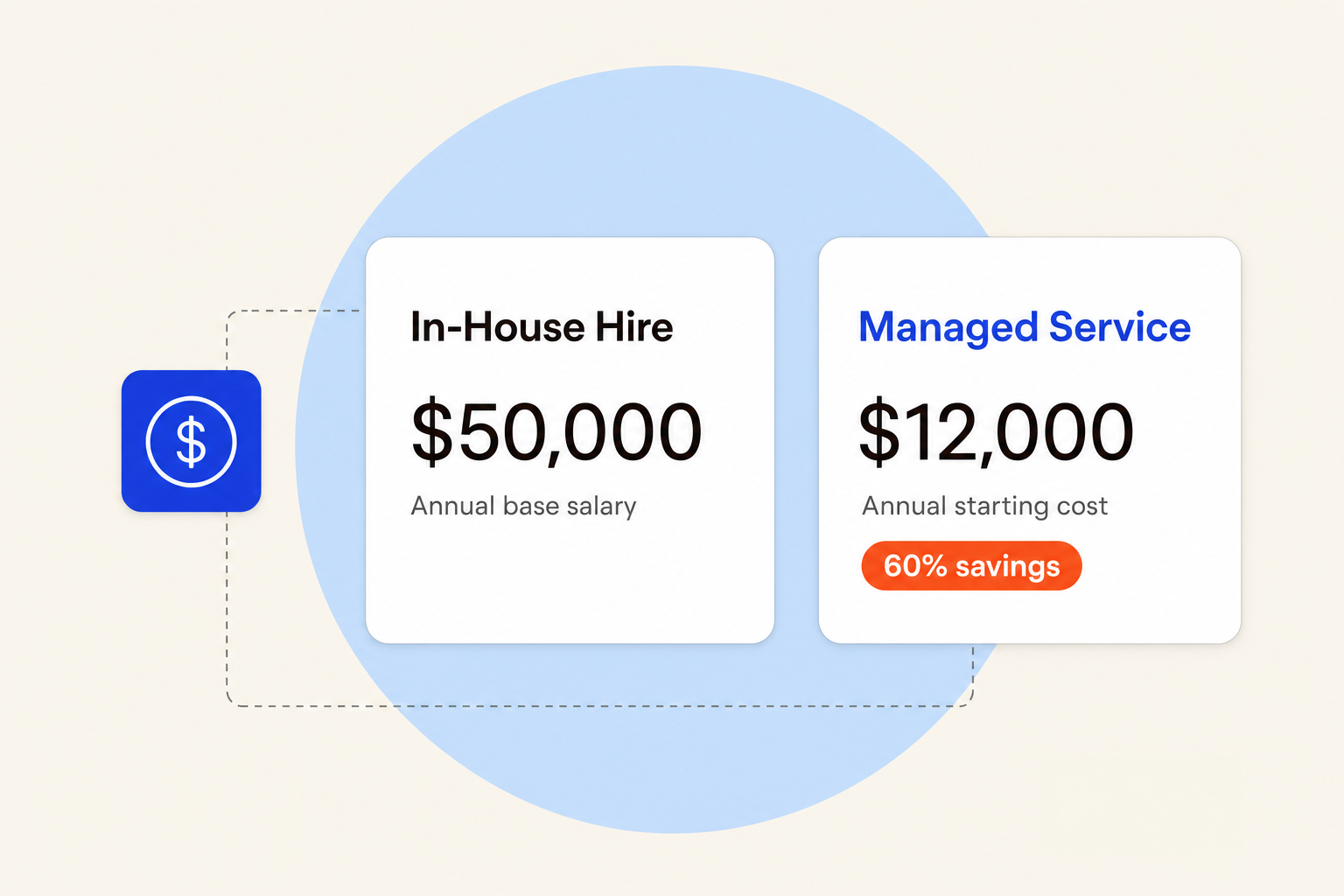
A full-time office manager costs $50,000 or more per year in base salary before benefits, payroll taxes, recruiting fees, and the time spent training someone who may leave within 12 months. A managed back-office service typically runs $1,000-$3,000/month depending on scope, which puts the annual cost at $12,000-$36,000 with no hiring overhead and no turnover risk.
The margin pressure behind this decision is real. Per HVAC profit margin benchmarks 2026, HVAC contractors average 7% net profit with flat-rate pricing but only 4% without it. A disorganized back office that delays invoicing, misses rebates, and lets AR age directly compresses that margin. Meanwhile, HVAC contractor revenue and cost trends data shows 45% of contractors cite rising labor and overhead costs as a primary headwind. Adding a full-time office hire into that environment is a significant fixed cost commitment.
For a 2-4 truck shop generating $500K-$2M in revenue, the math favors a managed service during the growth phase: lower fixed cost, no ramp-up period, and no single point of failure if the person leaves.
How Do HVAC Scheduling, Invoicing, and Billing Support Work Day to Day?
A managed back-office service operates across three daily layers: scheduling and dispatch, invoicing and AR, and compliance paperwork. AI handles the repetitive, document-heavy tasks (job closeouts, invoice generation, follow-up sequences), while a human office manager owns approvals, edge cases, and anything requiring judgment.
Scheduling and Dispatch Support
- What it covers: Booking incoming requests, coordinating technician schedules, managing calendar conflicts, and updating job statuses inside your existing FSM software.
- Owner impact: Dispatch decisions and booking calls stop routing back to you. The office manager monitors the schedule and keeps it moving without pulling you off a job site to answer a question.
- Software dependency: This work happens inside whatever platform you already use. No migration required.
Invoicing and Billing Support
- What it covers: Same-day invoicing on completed jobs, AR cleanup on past-due accounts, vendor payment processing, and expense reconciliation synced to QuickBooks. See invoicing and collections management for the full scope, and the HVAC collections playbook for owners for how to approach AR systematically.
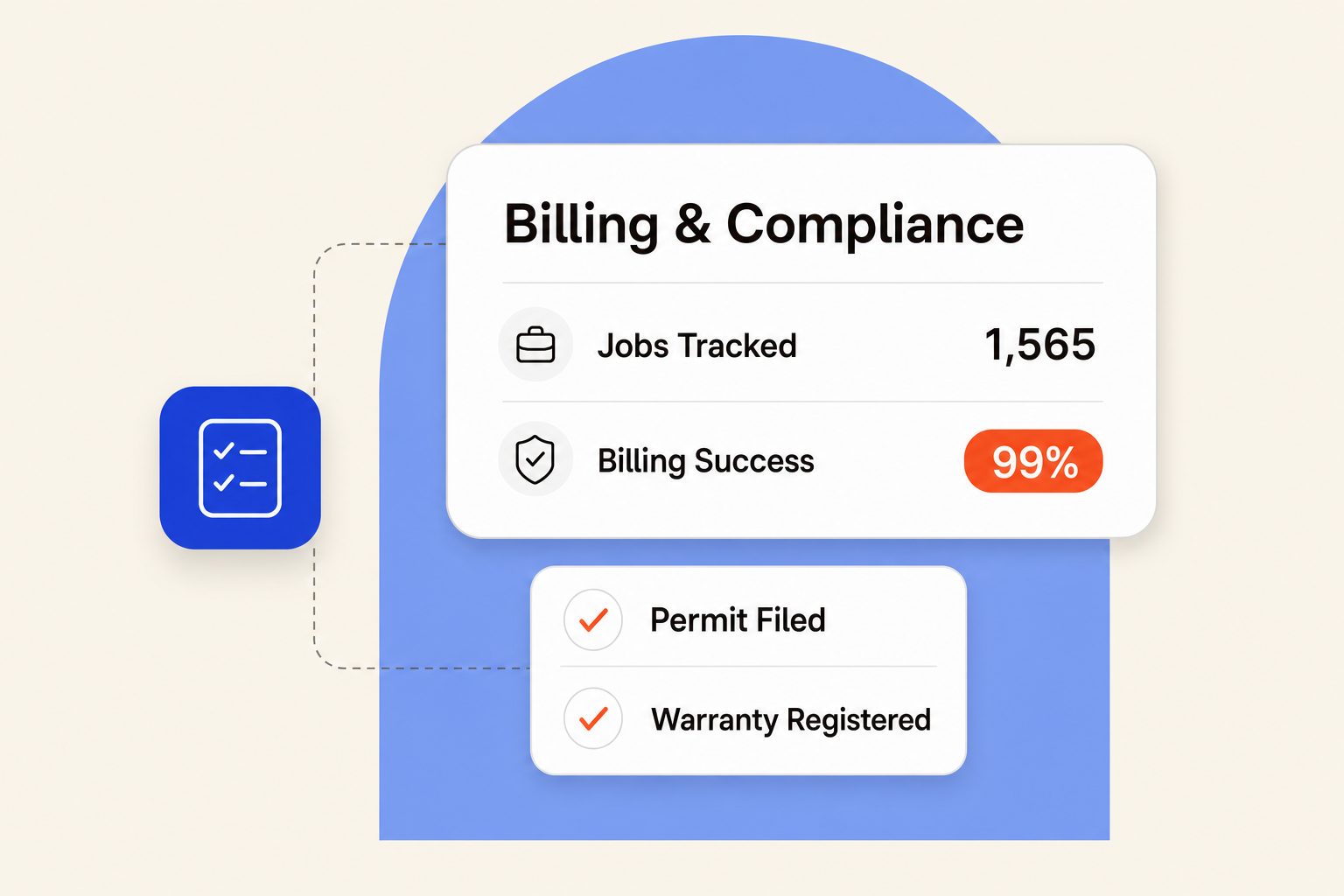
- What this looks like in practice: Just Right Mechanical saw a 700% increase in invoices issued and 48% faster payments within 30 days after handing off billing to WorkHero. ABL Comfort Solutions tracked 1,565+ service jobs with a 99% billing success rate across 10+ properties with different invoicing portals and PO requirements.
- Why delays happen: When billing lacks a single owner, invoices sit after job completion, follow-ups are inconsistent, and AR visibility is limited. Ownership of the full workflow, not just individual tasks, is what changes the outcome.
Permits, Rebates, and Compliance Paperwork
- What it covers: Permit filing ahead of installs based on local jurisdiction, equipment warranty registration triggered at job closeout, and rebate submission with follow-up through utility portals.
- Why this rolls back to the owner: Permit jurisdictions vary, rebate portals change requirements, and warranty registration deadlines are easy to miss when no one owns the workflow. Without a dedicated process, these tasks accumulate and land back on the owner's desk.
- HVAC-specific knowledge required: A generic admin service needs to be trained on what a heat pump rebate submission involves, which jurisdictions require permits for specific equipment types, and how manufacturer warranty portals work. An HVAC-native service already knows this.
How Do You Choose the Right Back-Office Service for Your HVAC Business?
The right back-office service depends on how much ownership you need the service to take, and whether it already understands HVAC operations. Use these questions to evaluate any option you're considering.
- Do they already know HVAC? Ask specifically about rebate portals, permit filing experience, and FSM software they've worked in. A service that needs you to explain what a warranty registration is will cost you time before it saves you any.
- Will you have to change software? Any service that requires you to migrate platforms adds disruption and cost before you see any benefit. The right option works inside what you already use.
- Who manages whom? With a VA, you direct the tasks. With a managed service, the provider owns the outcomes. If you want to stop managing the back office, you need the latter.
- What's covered day to day, in writing? Get a specific list of what's included, not a general description. Scheduling, invoicing, AR follow-up, permits, rebates, and equipment registration should each be explicitly covered or explicitly excluded.
- Is there a regular communication cadence? Weekly check-ins are the standard for a managed relationship. If the service operates as a ticket queue with no proactive communication, priorities will drift and problems will surface late.
- Can they handle growth projects, not just daily tasks? If you're planning to build a maintenance plan program, clean up your pricebook, or set up new software, confirm whether that's in scope before you sign.
For a detailed breakdown of how onboarding, communication, and task ownership work in practice, see how WorkHero back office works as one example of a managed-service model.
How Do You Measure Whether Back-Office Support Is Actually Working?
Back-office support is working when specific, auditable numbers improve within the first 30-60 days. Vague improvements in "organization" or "efficiency" are not a standard. Track these metrics from day one.
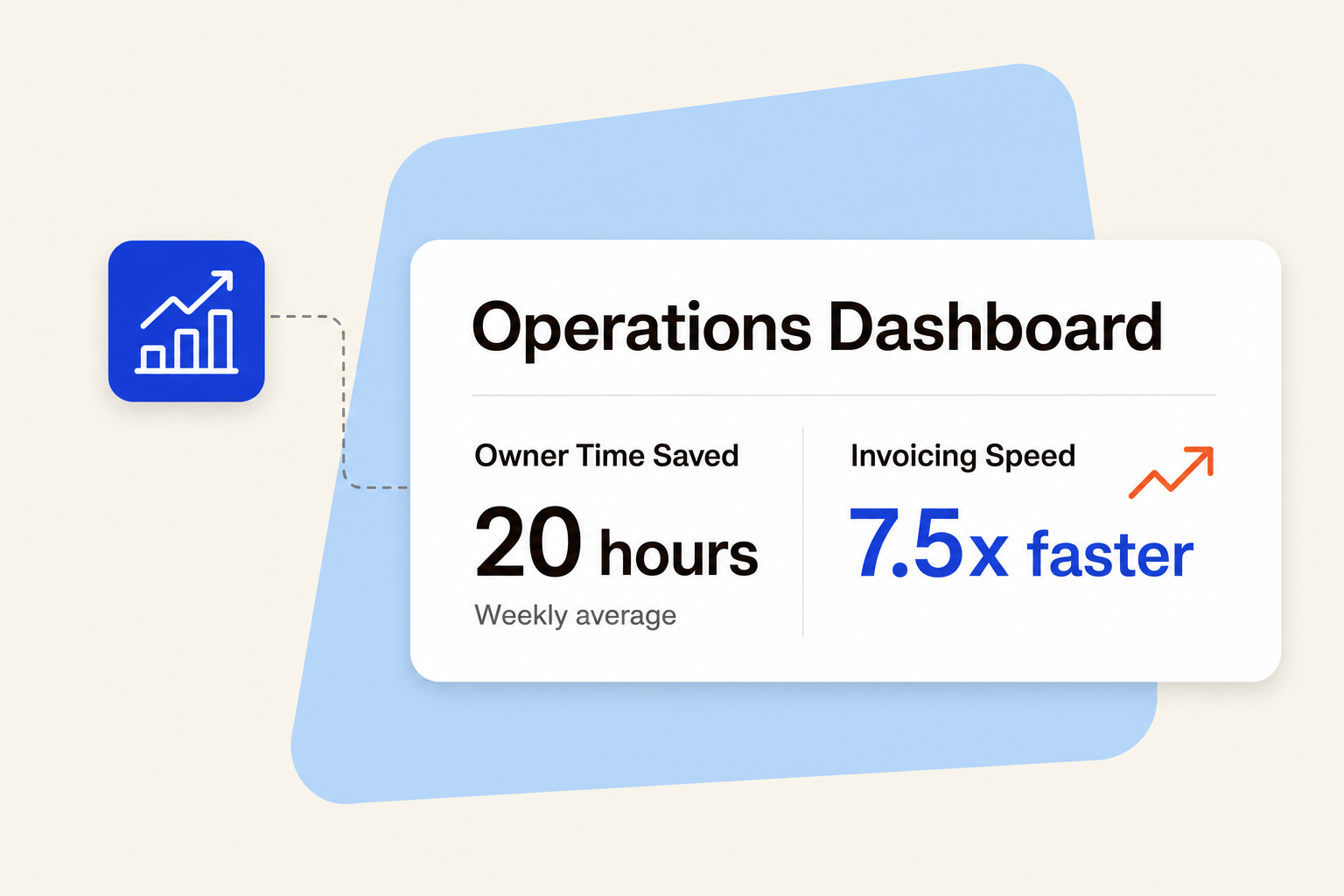
- Invoicing speed: How many days between job completion and invoice sent? Same-day invoicing is the target. WorkHero clients average 7.5x faster invoicing in the first month. If invoices are still sitting for 3-5 days after job close, the billing workflow isn't owned.
- AR aging: What percentage of your receivables are current vs. 30/60/90+ days past due? A managed service should be running structured follow-ups so AR doesn't age out. The real HVAC billing gap case study from ABL Comfort Solutions shows what a 99% billing success rate looks like across 1,565+ tracked jobs, including reconciling remittance payments from multiple property managers with different PO systems.
- Owner time saved per week: Track how many hours you personally spend on admin tasks before and after onboarding. The benchmark from WorkHero's client data is an average of 20 hours per week returned to the owner.
- Customer satisfaction: Back-office failures show up in reviews. If complaint volume on scheduling, invoicing, or follow-up doesn't drop within 60 days, the service isn't owning those workflows end to end.
- Cost relative to in-house: WorkHero's published data shows 60% cost savings compared to in-house staff. Use that as a reference point when calculating whether your current arrangement, whether a part-timer, a VA, or a managed service, is delivering comparable value per dollar spent.
If your back-office service can't show you specific numbers against these metrics at your weekly check-in, that's the signal to reassess. A managed relationship should produce auditable outcomes, not just completed task lists.
