

Key takeaways
- HVAC back-office support services solve a people problem: Most small shop owners already have Jobber, ServiceTitan, or HouseCall Pro. The gap is that no one is working those tools consistently during business hours, let alone after them.
- Four real categories exist: FSM software alone, generic virtual assistants, staffing agencies and direct hires, and fully managed HVAC-specific back-office services. Each carries a different cost, management burden, and coverage gap.
- A full-time office manager costs $50K+ per year before benefits. Fully managed HVAC back-office services report outcomes including 7.5x faster invoicing and an average of 20 hours saved per week, on a month-to-month basis with no long-term contract.
According to the HVAC Industry Pulse 2025 survey findings, based on 1,316 complete responses, small HVAC shops average 15.4 admin hours per week. For a 2-to-4 truck owner still running the field, that time comes out of evenings and weekends.
This article breaks down the four categories of HVAC back-office support services available to small contractors, the five criteria worth using to evaluate them, what dispatch and scheduling support actually covers, and what the full admin stack should look like so you can match an option to your shop's real situation.
What Are HVAC Back-Office Support Services?
HVAC back-office support services are people-driven operations support that handles the administrative and scheduling work a small shop needs to function: invoicing, permits, equipment registrations, dispatch, collections, and more. The key distinction is that these are services performed by people, not features inside an app.
Most 2-to-4 truck owners already have field service management software. The problem is that Jobber, HouseCall Pro, ServiceTitan, and QuickBooks don't run themselves. Someone has to close out jobs, send invoices, file permits, follow up on unpaid accounts, and keep the schedule moving. When there's no dedicated person doing that work, it defaults back to the owner, usually at 9pm.
HVAC back-office support services step into that gap. A managed service operates directly inside your existing FSM tools rather than replacing them, so there's no software migration and no disruption to how your techs work in the field. To understand how HVAC back-office ownership works in practice, the key is that execution responsibility shifts from the owner to a dedicated operations partner.
Why Do Small HVAC Teams Struggle With Back-Office Work?
The admin load on a small HVAC owner isn't just heavy, it's structurally misaligned. The owner is simultaneously the lead tech, the dispatcher, the billing department, and the permit filer. That works until it doesn't.
The most common breaking point isn't gradual overload. It's a sudden staffing gap. Just Right Mechanical, a 9-person HVAC company, hit exactly this scenario: a part-time office manager left, a VA picked up miscellaneous admin tasks, and billing and AR ended up without a clear owner. Invoices sat unissued. Follow-ups were inconsistent. Cash flow visibility dropped. The problem wasn't that the business was doing bad work in the field. It was that no one had full accountability for turning completed jobs into collected revenue.
This pattern repeats across small shops. A part-timer leaves, a spouse steps back, or a VA gets reassigned, and suddenly the owner is back to doing admin at midnight. The HVAC Industry Pulse 2025 survey findings (1,316 complete responses) confirm that admin burden is a persistent, industry-wide issue for small contractors, not an individual management failure. Building continuity into back-office support, rather than relying on a single person, is what prevents that cycle from repeating.
What Are Your Options for HVAC Back-Office Support?
Small HVAC contractors have four distinct categories to choose from. Evaluating them across five criteria gives you a practical comparison: hiring and management burden, compatibility with your existing tools, whether coverage is full-stack or single-task, whether the support is proactive or reactive, and true cost in dollars and owner time.
Here's how each category stacks up. For a deeper look at how HVAC back-office ownership works under a managed model, the structure matters as much as the task list.
FSM Software Alone
- What it covers: Scheduling templates, invoice generation, job tracking dashboards, and reporting inside platforms like ServiceTitan, Jobber, and HouseCall Pro.
- What it doesn't cover: Someone to actually run those workflows. Software creates the infrastructure; it doesn't execute the work. Permits don't get filed, AR doesn't get followed up, and jobs don't get closed out unless a person does it.
- Management burden: Low to acquire, but high to operate without dedicated staff. Underutilized software is a common outcome for shops without an admin.
- Best fit for: Shops that already have a capable admin and need better tooling, not shops where the owner is the admin. See HVAC software setup and SOP development for what proper FSM configuration looks like when paired with human execution.
Generic Virtual Assistants
- What it covers: Task execution assigned by the owner, such as data entry, scheduling calls, or basic follow-ups. Hourly VA services and offshore admin providers publish monthly tiers in the $900-$2,999 range depending on hours and scope.
- What it doesn't cover: HVAC-specific knowledge. A generic VA doesn't know how to navigate a rebate portal, file a permit in your jurisdiction, or set up a maintenance plan billing cycle in HouseCall Pro. That training falls entirely on you.
- Management burden: High. You're directing the work, correcting errors, and covering gaps when the VA is unavailable.
- Best fit for: Very narrow, repetitive tasks where HVAC knowledge isn't required and the owner has time to manage the relationship.
Staffing Agencies or Direct Hires
- What it covers: A placed candidate or direct hire who can own admin tasks once trained and onboarded.
- What it doesn't cover: The recruiting, onboarding, and training process, which lands entirely on the owner. When that person leaves, the cycle restarts. A full-time office manager runs $50K+ per year before benefits, and the productivity gap during turnover is unplanned cost on top of that.
- Management burden: High and ongoing. You're responsible for oversight, performance management, and coverage when someone is out sick or quits.
- Best fit for: Shops at a scale where a dedicated full-time hire is justified and the owner has the bandwidth to manage an employee properly.
Fully Managed HVAC Back-Office Services
- What it covers: The full admin stack, executed by experienced HVAC office managers working directly inside your existing tools (Jobber, HouseCall Pro, ServiceTitan, QuickBooks). Scope includes invoicing, collections, permits, rebates, equipment registrations, payroll, maintenance plan management, pricebook upkeep, and FSM optimization.
- What it doesn't require: Hiring, training, or managing anyone. The service provider owns execution, oversight, and continuity.
- Proactive vs. reactive: A managed service flags issues before they become problems. AI-assisted workflows scan jobs daily, surface missed invoices or approaching permit deadlines, and route them to a human for resolution, rather than waiting for the owner to notice something is wrong.
- Best fit for: 2-to-4 truck owners who need full back-office coverage without the cost and management overhead of a full-time hire. For details on what this covers on the paperwork side, see permits, rebates, and equipment registrations.
What Does Dispatch and Scheduling Support Include?
Dispatch and scheduling support covers the daily coordination work that keeps your board running: assigning jobs to techs, confirming appointments, managing schedule changes, and making sure completed jobs close out properly in your FSM software.
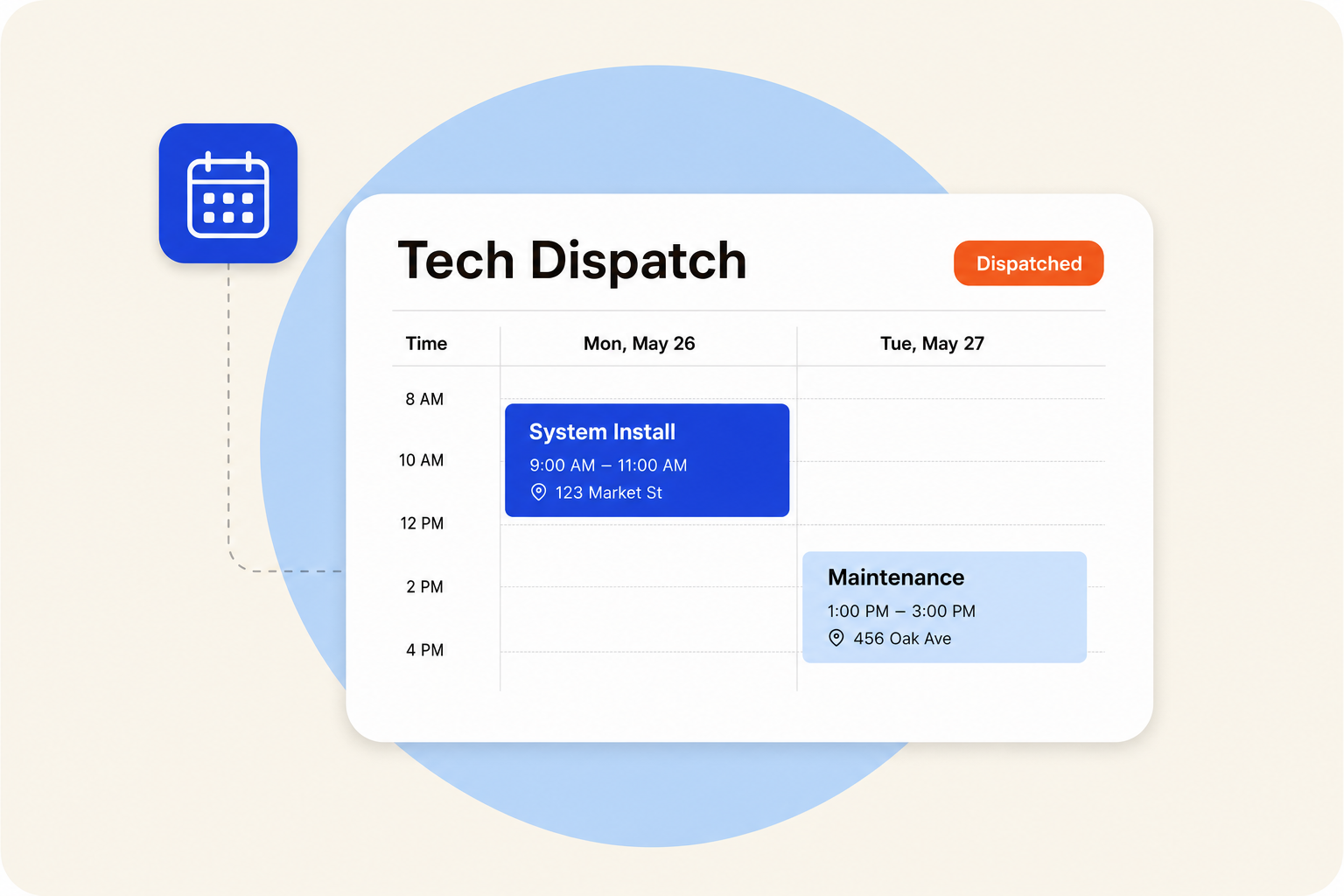
The distinction worth understanding is that dispatch support inside a managed back-office service operates within your existing software, not as a separate system. When a tech completes a job in HouseCall Pro, ServiceTitan, or Jobber, the closeout workflow triggers automatically, updating job status, initiating invoicing, and flagging any missing information before it becomes a billing problem. That's different from a dispatcher who just moves jobs around a board manually.
- Board management: Open jobs get monitored throughout the day so schedule gaps and tech availability are addressed in real time, not discovered the next morning.
- Job confirmations: Customer confirmations and reminders go out on schedule without the owner manually sending them.
- Job closeout workflows: Completed jobs trigger invoicing, equipment registration, and permit follow-up automatically inside your FSM platform.
- Schedule-to-billing handoff: Every dispatched job connects to a billing record so nothing falls through between field completion and invoice generation.
For shops where the owner is currently managing the board, offloading this to a back-office partner frees up several hours daily. See HVAC software setup and SOP development for how these workflows get configured inside your existing tools.
What HVAC Administrative Services Should a Back-Office Partner Handle?
A capable back-office partner covers the full admin stack, not just one or two tasks. Evaluating a service by whether it handles your single biggest pain point misses the compounding effect of having multiple admin functions owned by one accountable team.
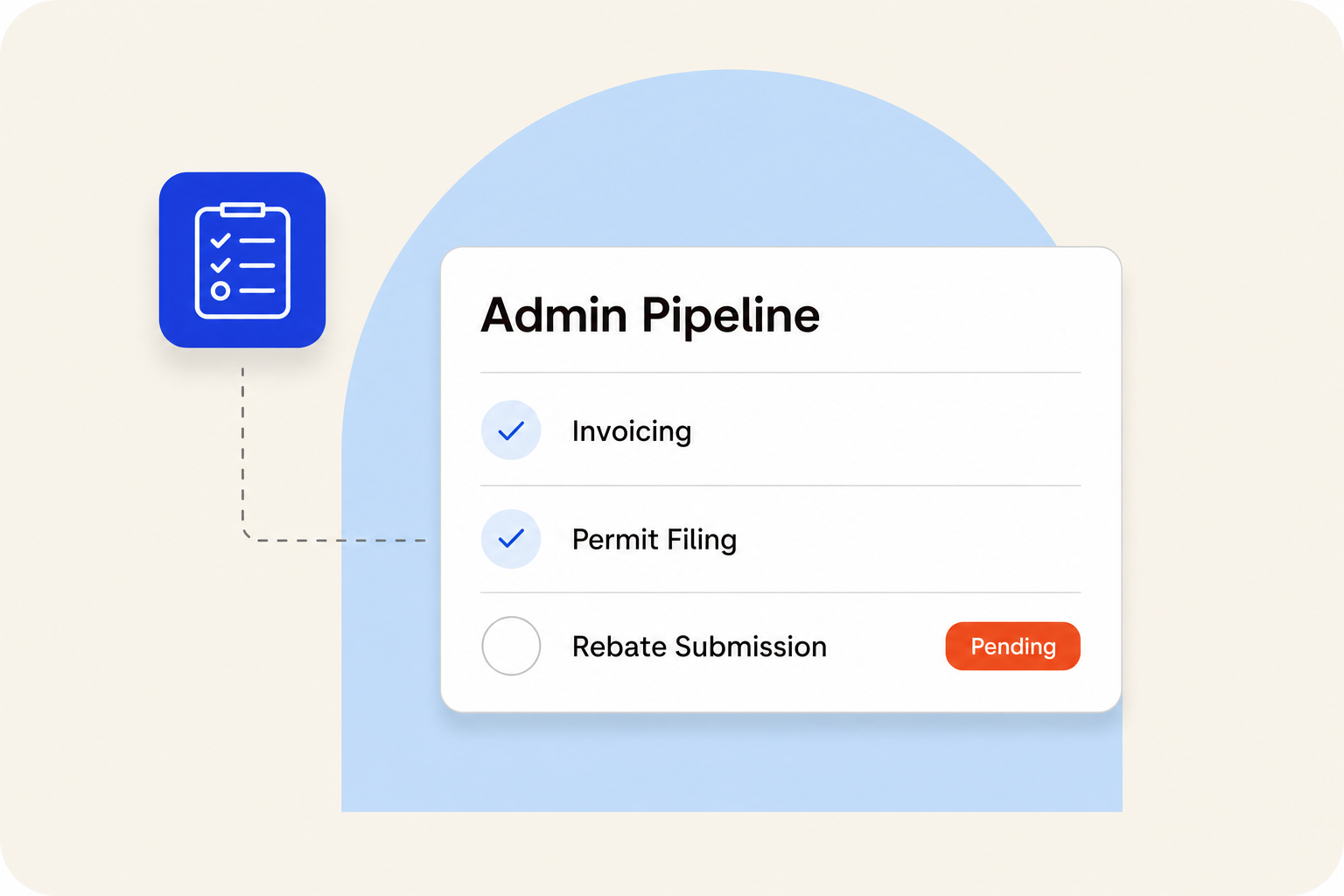
- Invoicing and collections: Every completed job gets invoiced promptly, with structured follow-up on outstanding balances and AR cleanup for aged accounts.
- Permits and inspections: Permits get filed ahead of installs based on your jurisdiction, inspections get tracked through completion, and municipal communication is handled without the owner making calls to the building department.
- Equipment registrations: Manufacturer warranty registrations get filed at job closeout, with certificates stored and linked to the job record in your software.
- Rebate filings: Utility and heat pump rebate applications get submitted and followed up end-to-end, not left in a backlog.
- Payroll: Hours get validated against job records and time tracking before payroll runs, including certified payroll requirements where applicable.
- Vendor payments and expense reconciliation: Supplier bills get processed weekly, credit card charges get logged, and your FSM stays synced with QuickBooks so your books match your jobs.
- Maintenance plan management: Plan design, enrollment tracking, renewal follow-up, and billing monitoring are all covered. For a full picture of what this involves, see maintenance plan enrollment and renewal tracking.
- Pricebook upkeep: Flat-rate pricing gets built and maintained inside your FSM so techs are quoting from current, margin-aware numbers in the field.
How Much Does HVAC Back-Office Support Cost?
The most useful cost comparison for a small HVAC owner starts with the full-time hire baseline: a dedicated office manager runs $50K+ per year in salary alone, before payroll taxes, benefits, PTO, and the recruiting and training costs that come with turnover.
Generic VA services and offshore admin providers publish monthly tiers ranging from roughly $900 to $2,999 per month depending on hours and scope. Those rates look lower on paper, but they typically cover task execution only, with the owner still responsible for training, direction, and quality control. The management overhead is real cost that doesn't show up in the monthly invoice.
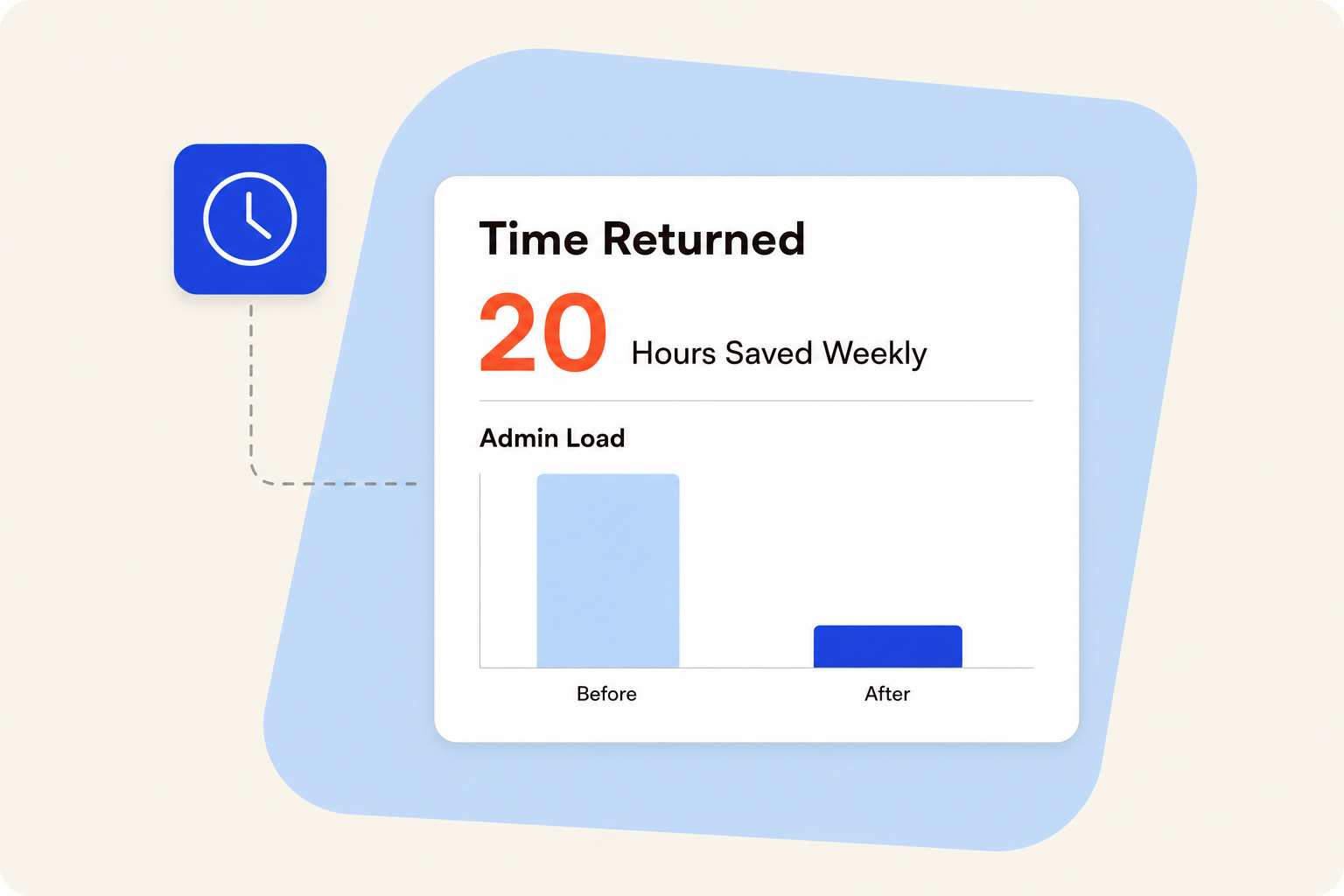
Fully managed HVAC back-office services operate on month-to-month plans built around scope, with no long-term contract. According to SMB back-office outsourcing statistics 2026, 37% of small businesses already outsource at least one core function, and the primary driver is cost relative to in-house staffing. For HVAC specifically, the relevant comparison isn't just monthly rate; it's monthly rate against the loaded cost of a full-time hire, plus the value of the owner's time currently spent on admin. WorkHero reports 60% cost savings compared to in-house staff and an average of 20 hours per week returned to owners, which changes the math considerably when you factor in what those hours are worth in the field or in customer relationships.
For a detailed look at how billing and collections specifically affect cash flow, the HVAC collections playbook for faster payment covers the mechanics of getting paid faster without adding headcount.
How Do You Choose and Manage an HVAC Back-Office Partner for Your Team?
Choosing a back-office partner comes down to five criteria. Working through them in order gives you a clear picture of fit before you commit to anything.
- Hiring and management burden: Confirm whether you're taking on an employee relationship or a managed service. A staffing agency placement still requires you to onboard, supervise, and replace the person. A managed service owns that internally.
- Tool compatibility: Ask specifically which FSM platforms the service works inside. Generic admin support describes "your existing systems" abstractly. HVAC-specific services name Jobber, HouseCall Pro, ServiceTitan, and QuickBooks because they've configured those systems for other shops and know where the common setup errors are.
- Full-stack vs. single-task coverage: A service that handles invoicing but not permits, or dispatch but not AR, still leaves you managing the rest. Map your full admin load against what the service actually covers before signing.
- Proactive vs. reactive execution: Ask how issues get surfaced. A reactive service waits for you to flag a problem. A proactive service scans jobs daily, catches a missed invoice or an expiring permit, and resolves it before you know it existed. That difference is significant for a shop where the owner isn't monitoring the back office in real time.
- True cost: Compare total monthly cost against the $50K+ full-time hire baseline, factoring in training time, management overhead, and coverage gaps during turnover. Month-to-month terms matter because they keep the service accountable without locking you into a contract during a slow season.
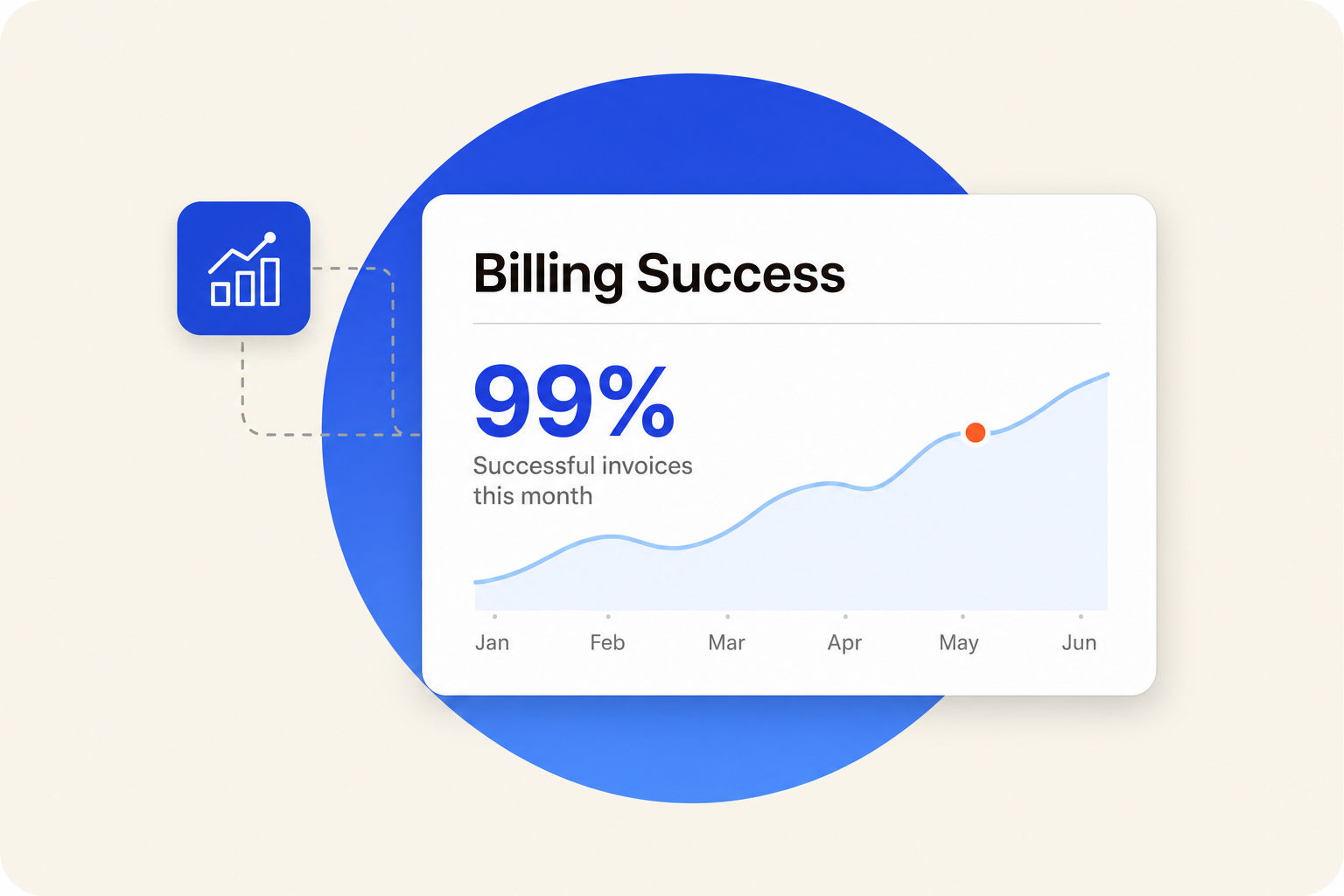
On the management side, the right structure is a weekly check-in plus day-to-day communication by text, email, or phone, not a set-it-and-forget-it subscription. ABL Comfort Solutions, a commercial HVAC operation running 10+ Boston-area properties, tracked 1,565+ service jobs with a 99% billing success rate after establishing this kind of ongoing accountability with a dedicated back-office team. Just Right Mechanical saw a 700% increase in invoices issued, a 138% improvement in on-time payments, and 48% faster payments within 30 days of transferring billing ownership to a single accountable team. Both outcomes came from clear ownership and consistent follow-through, not from adding new software. For the financial mechanics behind those results, the job costing and price book fundamentals article covers how back-office accuracy connects directly to margin visibility.
