

Key takeaways
- The cost gap is real: HVAC office management services typically price at $1,000–$3,000/month depending on scope, compared to a full-time office manager averaging $51,476/year before benefits and turnover costs.
- Five realistic options exist: Owners running 2–4 trucks can choose from a full-time hire, generalist VA, bundled outsourcing, fractional COO, or an HVAC-specific fully managed partner, and each carries different cost, control, and ownership trade-offs.
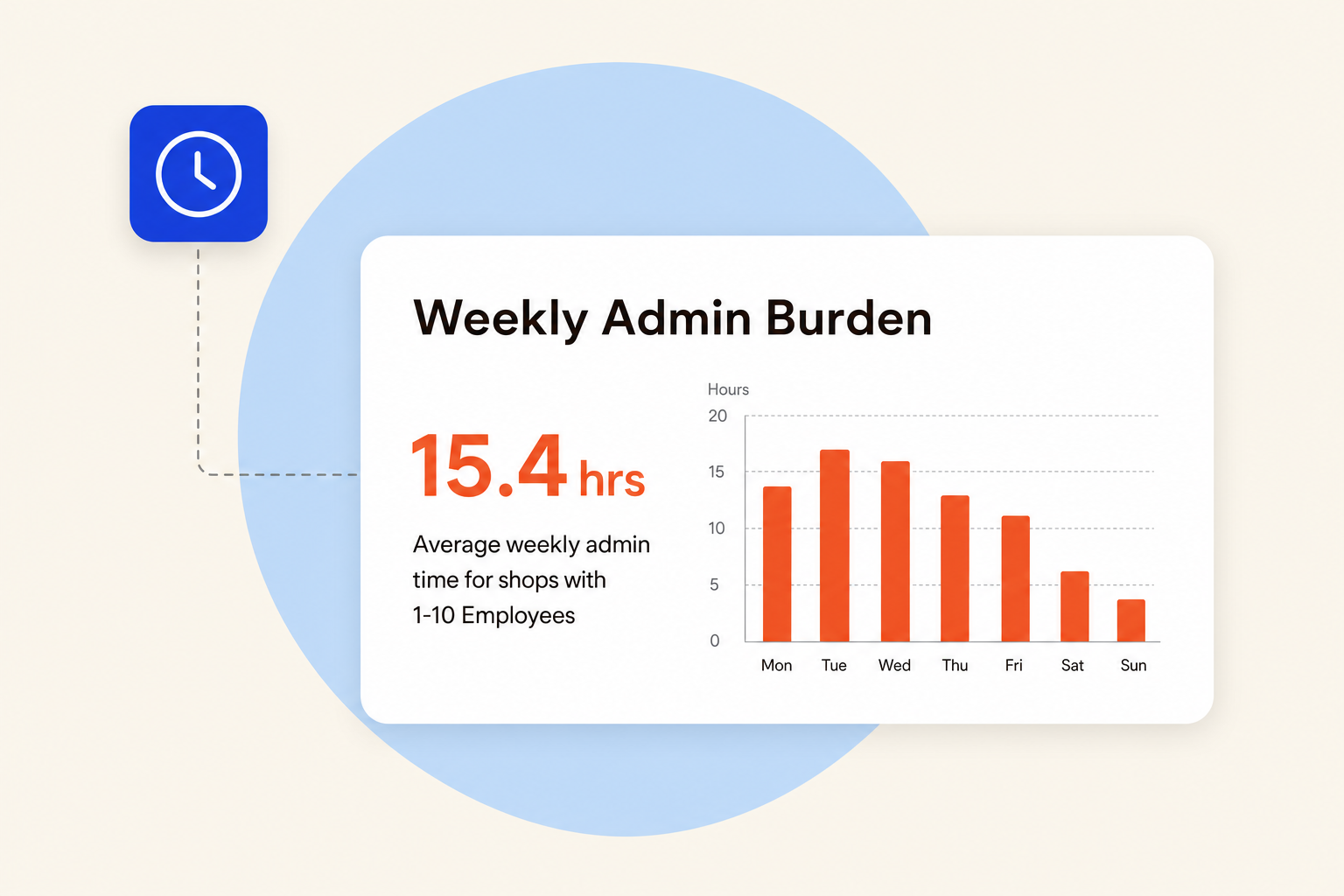
- The admin burden has a dollar figure: According to HVAC Industry Pulse 2025 data, shops with 1–10 employees average 15.4 administrative hours per week, which translates to nearly $100,000 in lost billable revenue annually at a $120/hour rate.
Most owners doing paperwork at 9pm aren't there because they're bad at running a business. They're there because the shop grew past what one person can carry, and a $50K+ full-time hire doesn't pencil out yet. HVAC office management services exist precisely in that gap.
This article walks through what these services actually cover, what your options are, how the cost math works, and what to look for when your existing tools and workflows need to stay in place. By the end, you'll have a clear picture of which path fits your shop's current stage.
What Are HVAC Office Management Services?
HVAC office management services provide experienced administrative support for scheduling, invoicing, permits, rebates, and equipment registration without requiring a full-time hire. The category exists because most HVAC businesses are small: according to HVAC Industry Pulse 2025 admin data, 44% of contractors employ 5 or fewer employees, and 69% have 20 or fewer employees. At that scale, a dedicated back-office function is a real operational need, but a full-time salary to cover it often isn't justified.
The distinction worth understanding is between task execution and outcome ownership. A service that handles tasks completes what you assign. A service that owns outcomes runs the workflows end-to-end, monitors for gaps, and keeps things moving without you having to check in. For a 3-truck shop where the owner is also the lead tech, that difference matters considerably. Permits that don't get filed ahead of installs, invoices that sit for two weeks, rebates that expire unclaimed: those aren't task failures, they're workflow failures. See how a managed HVAC back office works for a concrete example of what outcome ownership looks like in practice.
Why Do Growing HVAC Shops Need Administrative Support?
Admin overload in a small HVAC shop isn't just an inconvenience. It directly limits revenue, cash flow, and the owner's ability to take on more work. The small HVAC shop admin burden survey (1,316 complete responses) shows shops with 1–10 employees averaging 15.4 administrative hours per week. At a $120/hour billable rate, that's close to $100,000 a year in time that isn't generating revenue.
For owners wondering whether they've hit the threshold, these warning signs are worth checking against. For a deeper look at each one, see signs your back office needs help.
- Evening and weekend paperwork: Quotes, invoices, and customer emails are getting done after hours because there's no time during the day.
- Disorganized billing: Old invoices keep surfacing that were never sent, and AR tracking is inconsistent or nonexistent.
- Slow quoting: Jobs are going to competitors because follow-up on estimates takes too long.
- No permit or registration process: Equipment registrations, permit filings, and rebate submissions are handled reactively, if at all.
- Messy customer and vendor communication: Emails and texts from multiple parties aren't tracked in one place, so things get missed.
- Growth avoidance: The owner is turning down jobs or delaying hiring a new tech because the current admin load is already unmanageable.
- Interrupted field time: The owner is stepping away from job sites to handle calls to insurance companies or building departments.
The framing that most owners get backwards is "I can't afford office help." At 15+ admin hours a week, the owner is already paying for office help with their own time, which is the most expensive resource in the business.
What Is a Fractional Office Manager, and How Does One Actually Work?
A fractional office manager is a dedicated, experienced HVAC admin who handles your back-office workflows on a part-time or shared basis, at a fraction of the cost of a full-time hire. The "fractional" part refers to the cost structure, not the quality or depth of involvement.
In practice, the deliverables cover a wide range depending on scope:
- Core daily admin: Scheduling, same-day invoicing, customer follow-up, vendor communication, and AR tracking.
- Paperwork workflows: Permit filings ahead of installs, equipment warranty registrations, utility and heat pump rebate submissions, and inspection tracking through completion.
- Software and systems work: Configuring and maintaining Housecall Pro, ServiceTitan, or Jobber so jobs, invoices, and payments flow correctly into QuickBooks.
- Higher-impact projects: Pricebook builds, maintenance plan setup, SOP development, and onboarding to new software when the shop is ready to scale.
The operational model typically follows a plug-in structure. During onboarding, the office manager connects to your existing systems, performs a full audit of current workflows and bottlenecks, and sets priorities for the first 30 to 60 days. From there, communication runs however the owner prefers: text, email, phone call, or a short weekly check-in. The owner gets updates when they're needed and answers when they ask. Everything else gets handled without pulling the owner in.
Unlike a generalist VA who executes only what's assigned, an HVAC-specific fractional office manager is expected to surface problems proactively, not wait to be told. That's the operational difference that matters most for a shop where the owner is in the field most of the day.
What Are Your Options for Outsourced Office Management?
Owners running 2–4 trucks have five realistic paths to get admin off their plate. Each carries different trade-offs on cost, control, and who owns execution. The ACCA contractor of the future study, which surveyed more than 1,000 HVACR contractors across the country, consistently finds that back-office management is a defining factor in contractor profitability and growth.
- Full-time in-house hire: Full control over the role, but requires recruiting, onboarding, training, and ongoing management. Average salary runs $51,476/year before benefits. When that person leaves, institutional knowledge walks out with them.
- Generalist VA (hourly or part-time): Lower cost entry point, typically priced by the hour or in monthly blocks. The owner retains operational authority and must assign tasks, manage quality, and fill gaps in HVAC-specific knowledge. Permits, rebates, and equipment registrations often require significant hand-holding.
- Bundled front-and-back-office outsourcing: Trade-agnostic services that handle scheduling, email management, and data entry. Broad task coverage, but HVAC-specific workflows like rebate filing and jurisdiction-specific permit submissions are often excluded or handled poorly.
- Fractional COO: Strategic oversight and process design, but the COO isn't executing daily admin. The owner still needs someone to handle invoicing, permits, and follow-ups, so this option requires pairing with another resource.
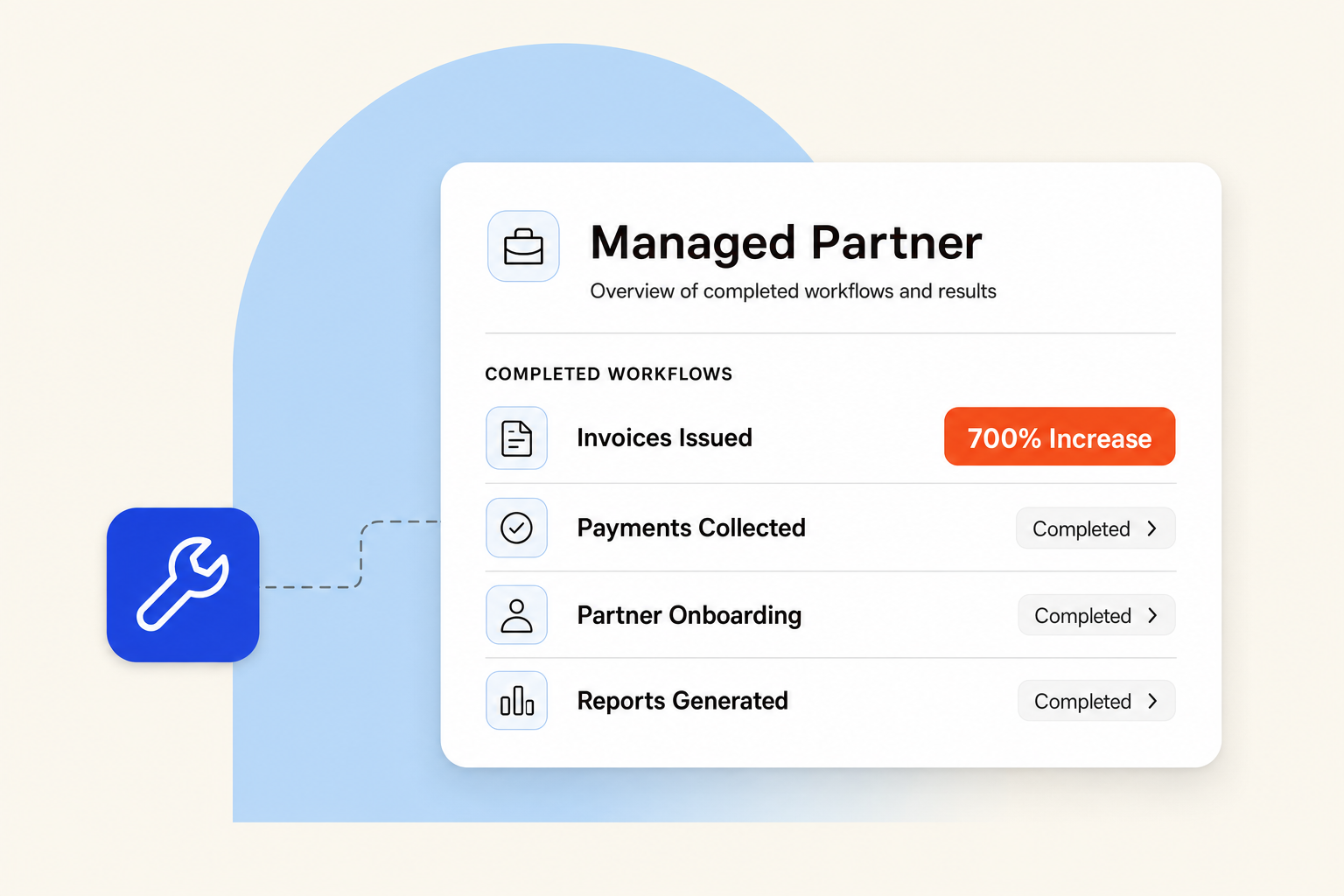
- HVAC-specific fully managed partner: Owns training, oversight, and execution inside the shop's existing software. Month-to-month pricing built around scope. No recruiting, no management overhead, no single point of failure when one person leaves. WorkHero is one example of this model, with 125+ years of combined HVAC office management experience across the team and documented client outcomes including a 700% increase in invoices issued for Just Right Mechanical within 30 days of engagement.
How Much Can HVAC Office Management Reduce Administrative Costs?
The direct cost comparison is straightforward: a full-time office manager averages $51,476/year before benefits, turnover costs, and the time the owner spends recruiting and training. Fractional and managed back-office services price on a month-to-month basis built around scope, with no fixed salary, no benefits overhead, and no recruiting cycle when someone leaves.
But the salary comparison understates the actual cost gap. The more significant number is what unmanaged admin costs in revenue. Invoices that sit unsent for two weeks, rebates that expire, AR that ages out without follow-up: these aren't just inefficiencies, they're revenue that was earned but never collected. Clients who've addressed billing ownership directly have seen measurable results. One client scaled from $1M to $2M in revenue within 12 months by tightening collections. Another recovered $200,000 in missed rebates. A third saw invoicing speed increase 7.5x in the first month after handing off billing. For a practical look at the billing side specifically, the HVAC billing and collections playbook covers the mechanics in detail.
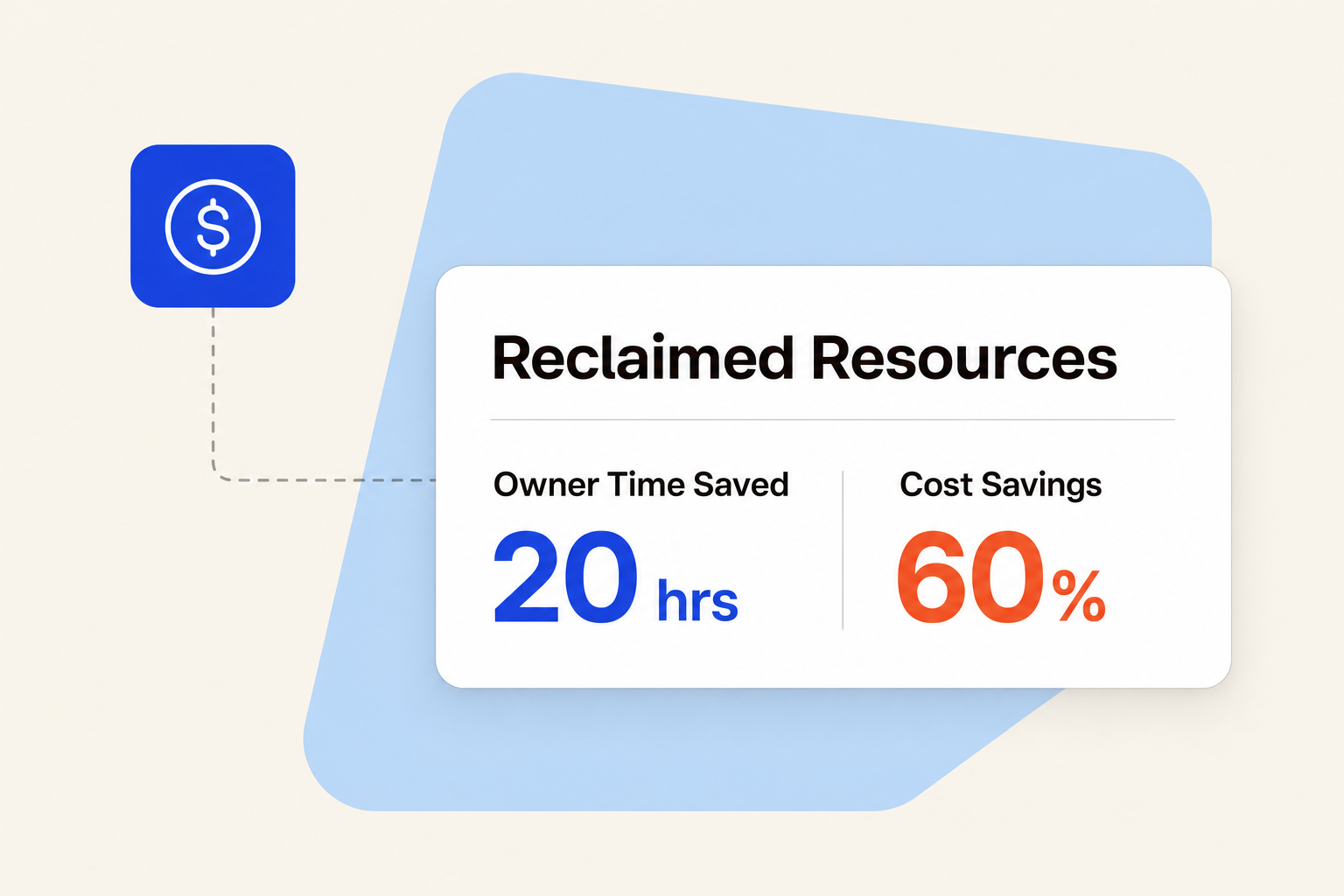
The 60% cost savings figure versus in-house staff and the average of 20 hours per week reclaimed by owners are the two numbers that matter most when building the case internally. The salary avoidance is real, but the reclaimed owner time is what actually changes how the business operates day to day.
What Do Contractor Back-Office Services Cover Day to Day?
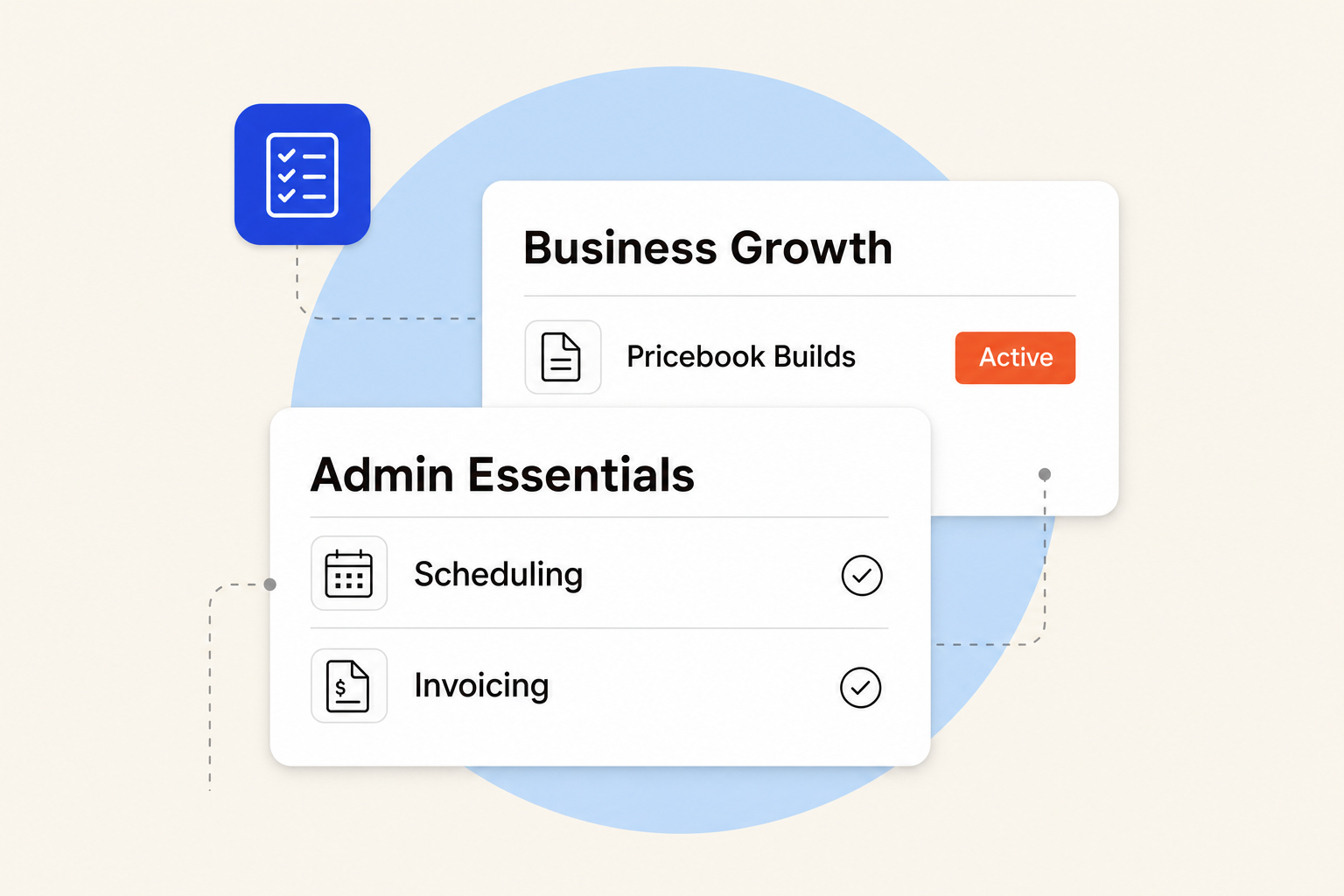
Contractor back-office services cover the full range of HVAC administrative work, from daily operational tasks to higher-level financial and process work. The scope typically divides into two tiers based on what the business needs right now.
Admin Essentials
The core daily scope covers the tasks that have to happen for the business to function and get paid. With HVAC permits and registrations handled as part of this tier, installs don't get delayed by missing paperwork and warranty registrations don't expire unclaimed.
- Scheduling and dispatch coordination: Jobs get booked and techs get routed without the owner managing the calendar.
- Same-day invoicing: Every completed job gets invoiced immediately, not at the end of the week.
- Permit filings: Filed ahead of installs based on the local jurisdiction, with inspection tracking through completion.
- Equipment registrations: Manufacturer warranty registrations filed and stored inside the service software.
- Rebate submissions: Utility and heat pump rebates submitted and followed up end-to-end.
- Customer follow-up: Estimates, maintenance reminders, and post-job communication handled consistently.
This tier fits owners who need the paperwork and billing off their plate without adding a growth program on top of it.
Business Growth
The higher-scope tier adds strategic and financial work on top of the core admin. This is where the back office shifts from keeping the business running to actively helping it scale.
- Pricebook builds and maintenance: Custom flat-rate pricebooks built from real job costs and margin targets, with ongoing updates. See HVAC job costing and price book basics for how this connects to profitability.
- Monthly P&L review: Financial visibility on what's working and what needs attention before problems compound.
- Marketing support: Google Business Profile management, targeted customer outreach, and lead generation campaigns.
- Process optimization: SOP development, workflow automation, and KPI dashboards built inside the existing service software.
With invoicing and collections fully managed across both tiers, the financial foundation is in place before the growth-oriented work begins. Unlike trade-agnostic bundled outsourcing, every task in both tiers is HVAC-specific by design. There's no explaining what a rebate filing is or why a permit needs to be pulled before the crew shows up.
How Does Outsourced Support Fit Into Your HVAC Business Operations and Existing Tools?
Outsourced back-office support works inside your existing software and communicates the way you already work, so there's no disruption to how the shop operates day to day.
Working Inside Jobber, HouseCall Pro, ServiceTitan, and QuickBooks
No new software is required. The back-office team connects to the tools already in use, configures them correctly if they're underutilized or messy, and keeps them running accurately. That means existing data gets migrated rather than lost, workflows get configured to match how the shop actually runs (not how the default settings assume), and the QuickBooks sync gets set up so jobs, invoices, and payments flow through without manual entry. For a full picture of what system setup and optimization covers, see HVAC software setup and SOPs. The back-office partner isn't another software subscription. It's the person who actually uses the software to get the work done.
Communication runs on a short weekly check-in plus day-to-day contact by text, email, or phone, whatever is fastest. The 2026 EGIA HVAC contractor survey findings (353 respondents, 83% from the United States) consistently identify operational systems and communication as top factors in contractor profitability, which is why the communication cadence matters as much as the task list.
What Happens When Your Office Manager Quits
For a 2-to-4 truck shop, an admin hire leaving is an operational crisis. The job history, the rebate portal logins, the permit contacts at the building department, the billing cadence with commercial property managers: all of that lives in one person's head, and when they leave, it leaves with them. Rebuilding takes weeks, and the revenue impact during that gap is real.
A fully managed back-office partner doesn't carry that single-point-of-failure risk. The operating playbook belongs to the team, not to one person's bandwidth. If a team member changes, the workflows, the software configurations, the client-specific billing rules, and the documentation stay in place. The shop keeps running without the owner having to re-train anyone or absorb the admin work themselves while a replacement is found. No competitor category in the outsourced admin space explicitly addresses staffing-turnover risk as a structural feature of the service, but for small shops, it's one of the most practical reasons to choose a managed partner over a single in-house hire.
