

Key takeaways
- Fractional office management covers HVAC-specific tasks: A fractional office manager handles permits, rebates, equipment registration, billing, and payroll without requiring you to hire, train, or manage a new employee.
- The cost gap is significant: Outsourced office management typically runs $1,000–$3,000 per month depending on scope, compared to $50K+ per year for a full-time hire before benefits, turnover, and training time.
- No software switch required: Unlike a virtual assistant or a new software platform, a fully managed back-office service works inside your existing tools (Jobber, HouseCall Pro, QuickBooks, ServiceTitan) and takes ownership of outcomes rather than waiting for a task list.
According to the 2025 HVAC industry pulse survey of more than 1,300 industry professionals including more than 850 HVAC/R contractors, most small HVAC owners handle their own admin until they hit roughly $250K in revenue, then lean on a spouse through $500K–$750K, and don't bring on a full-time office manager until they're approaching $2M. That's a long stretch of evenings and weekends spent on invoices, permits, and rebate paperwork instead of on the field or with your family.
This guide breaks down what outsourced office management for HVAC contractors actually covers, what your options are, how the costs compare, and how to get started without disrupting how your shop already runs.
What Is a Fractional Office Manager for HVAC Contractors?
A fractional office manager is a dedicated back-office resource who handles the administrative work of your HVAC business on an ongoing basis, without the overhead of a full-time employee. For most small contractors, outsourced office management for HVAC contractors means getting someone who already knows HVAC operations handling permits, utility and heat pump rebate filings, manufacturer warranty registrations, billing, and payroll, not just answering phones or scheduling appointments.
The word "fractional" reflects the cost and commitment structure: you get experienced, full-ownership support at a fraction of the cost of a dedicated hire. The 2025 HVAC industry pulse survey documents this as a structural industry pattern, not a personal failing. Owners do their own admin until revenue grows enough to justify help, but by then the paperwork backlog and the habits built around it are already costing real money.
If you're spending your evenings catching up on quotes and your weekends filing rebates, that's the gap a fractional office manager is designed to fill. For a closer look at the specific warning signs, see signs you need office help.
What Does Outsourced Office Management Actually Cover?
The core task set goes well beyond scheduling and answering emails. A fully managed HVAC back office covers two tiers of work: the daily operational tasks that keep jobs moving and cash flowing, and the higher-level work that builds repeatable systems.
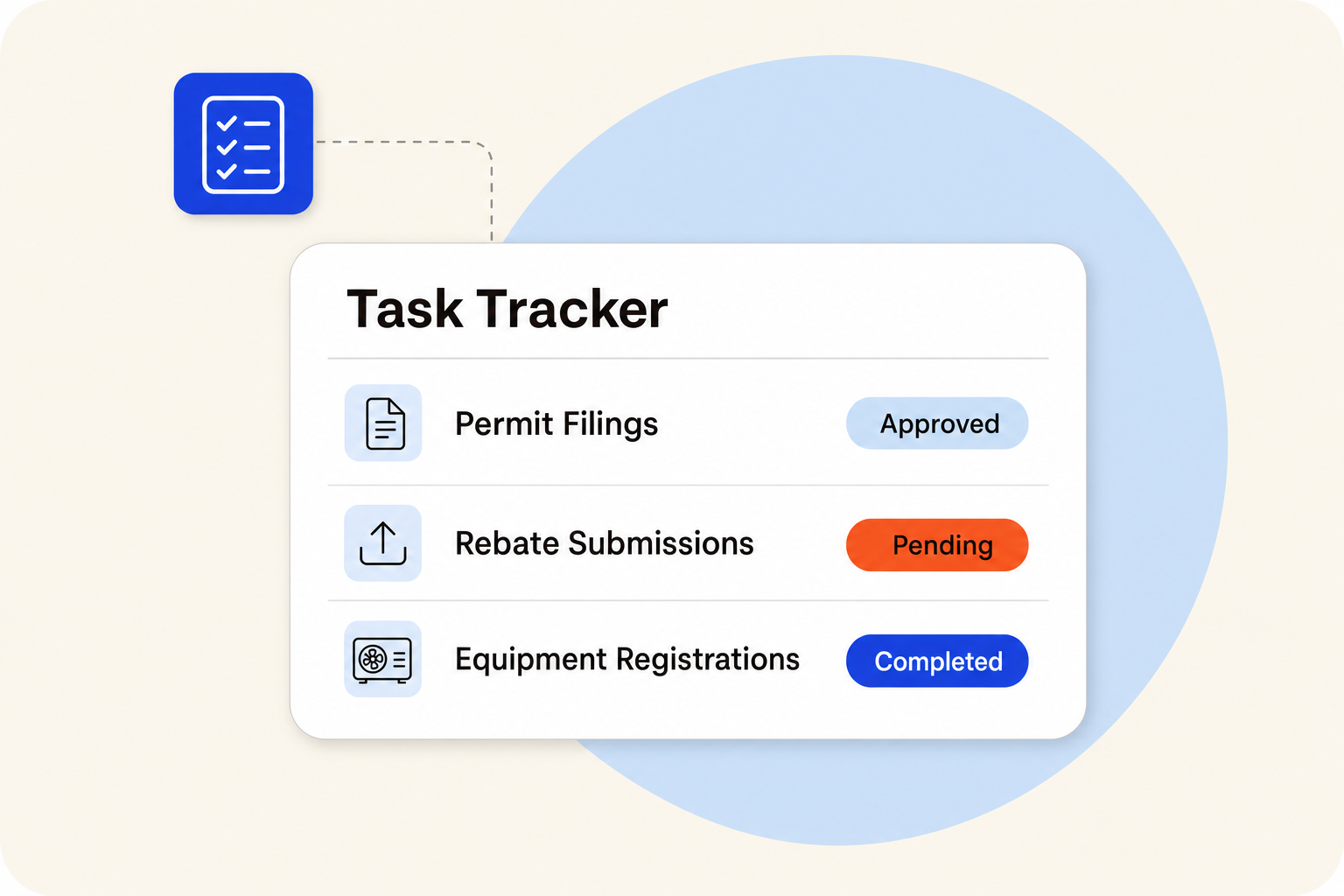
Core daily and weekly tasks (covered under standard plans):
- Scheduling and dispatch coordination: Jobs get booked, assigned, and tracked without the owner acting as the go-between.
- Invoicing and collections: Every completed job gets invoiced promptly, with AR follow-up handled consistently. See outsourced invoicing and collections for the full scope.
- Permits and inspections: Permits get filed ahead of installs based on your local jurisdiction, with portal submissions and municipal follow-up handled end-to-end.
- Equipment registrations: Manufacturer warranty registrations get filed after every install, with certificates stored and linked to the job record.
- Rebate filings: Utility and heat pump rebate submissions get processed and tracked through completion, including portal navigation and follow-up.
- Payroll: Hours get validated against jobs and time tracking, with certified payroll handled for jobs that require it.
- AR cleanup, vendor payments, and expense reconciliation: Past-due invoices get recovered, vendor bills get processed on time, and your field service software stays synced with QuickBooks.
Higher-tier and growth-focused work (typically included in expanded plans):
- Pricebook builds: Custom flat-rate pricebooks built from real job costs and margin targets, loaded directly into your software.
- Maintenance plan setup: Plan design, enrollment tracking, and renewal management built into your existing system.
- KPI dashboards and SOP development: Reports built inside your field service software, plus documented processes for job closeouts, hiring, and training.
- Marketing support: Google Business Profile management, targeted customer outreach, and campaign execution.
For a detailed look at the paperwork side, including rebate portals and permit filings, see managed HVAC paperwork and permits.
What Are Your Options for Outsourcing HVAC Office Work?
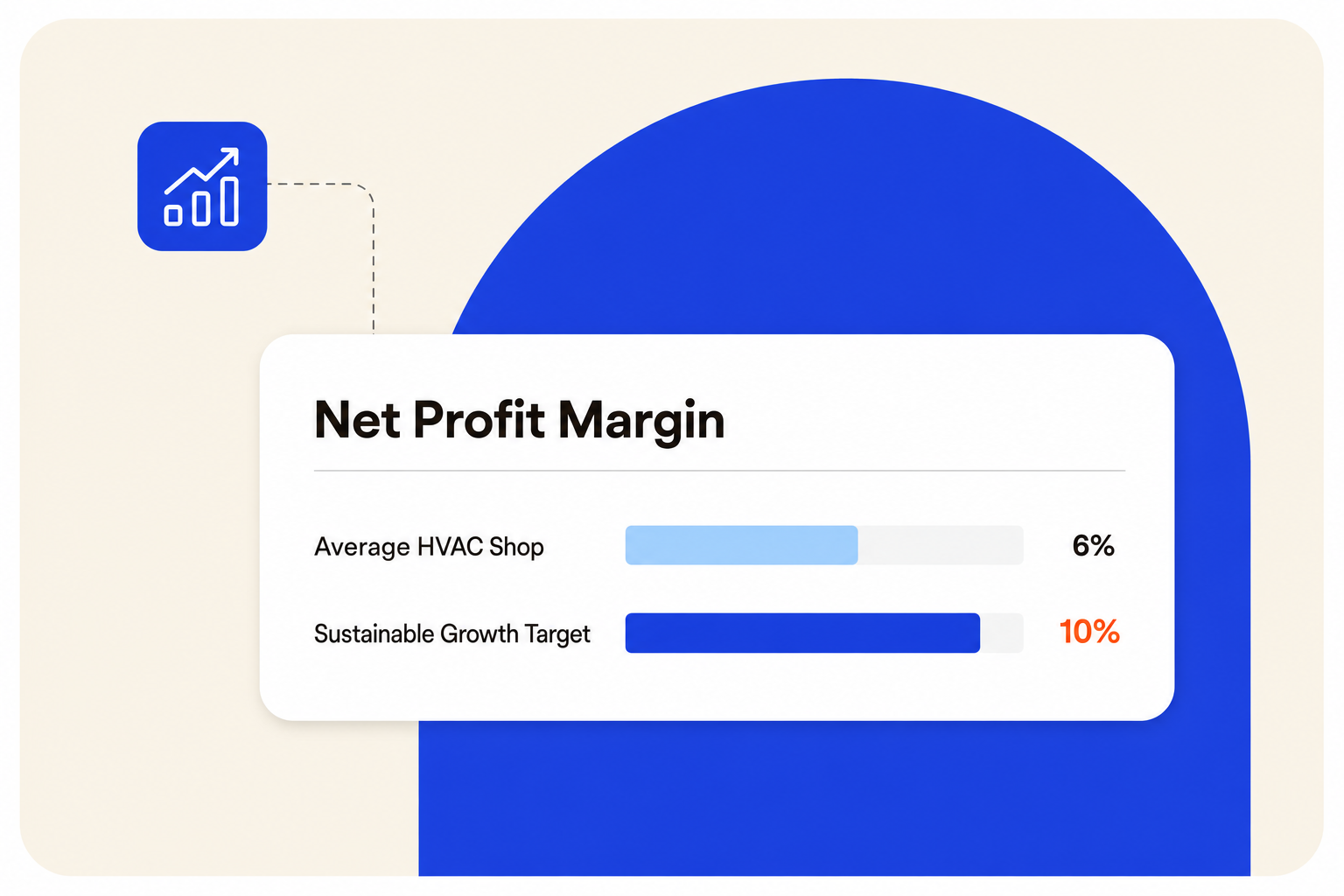
There are four realistic options for handling HVAC back-office work, each suited to a different stage of business and a different tolerance for cost and management overhead. According to US HVAC industry employer data, there are 111,207 employer HVAC business establishments in the United States, and the vast majority of them are small shops working through exactly this decision. Given that HVAC contractor profitability study findings put average net profit at 6% across respondents (below the 10% threshold identified as necessary for sustainable growth), the cost of the option you choose matters more than it might appear.
Doing It Yourself or Relying on a Spouse
This is the default for most owners under $500K–$750K in revenue, per the HVAC Industry Pulse data. The direct cost is zero, but the real cost is the owner's own time: evenings on invoices, weekends on permit paperwork, and no one with clear accountability for the back office. When the owner is also the office manager, growth creates pressure rather than stability.
Part-Time Hire or Virtual Assistant
Hourly VA models are widely available, with published pricing tiers typically running roughly $700–$1,400 per month for 20–40 hours per week. The limitation is structural: VAs execute tasks you assign. If you don't build the task list, send the reminders, and check the work, the work doesn't get done. For an owner already stretched thin, managing a VA adds a layer of oversight rather than removing one.
Staffing Agency or Full-Time Office Manager Hire
A full-time office manager typically costs $50K+ per year before benefits and PTO, plus recruiting time, ramp-up, and turnover risk. The HVAC Industry Pulse data shows full-time office managers typically don't appear in HVAC shops until around $2M in revenue, which means most owners trying to hire one are doing so before the revenue base fully supports it. When that hire leaves, the owner absorbs everything again.
Fractional or Outsourced Office Manager
A fractional or outsourced model provides a fully managed back-office partner who plugs into your existing software and takes ownership of outcomes rather than individual tasks. Unlike a staffing agency, there's no hiring cycle, no training period, and no single point of failure when someone quits. Unlike a VA, the work doesn't bounce back to you when a task falls outside the assigned list. WorkHero operates this way, working inside Jobber, HouseCall Pro, QuickBooks, and ServiceTitan without requiring any software change on the owner's end.
How Is a Fractional Office Manager Different From a Virtual Assistant?
The core difference is ownership versus execution. A virtual assistant handles tasks you assign; a fractional office manager owns the workflow and keeps it running whether or not you're paying attention to it that week.
WorkHero puts the difference simply: it isn't a virtual assistant who needs constant direction, and it isn't a staffing agency where you end up hiring and managing an employee. In practice, that distinction shows up in situations like rebate portals that change mid-season, permit jurisdictions that push back on a filing, or an AR backlog that builds up over a slow month. A task-based VA waits for you to notice the problem and assign the fix. A fractional office manager catches it and resolves it as part of owning the outcome.
The accountability structure is also different. Most fractional office management engagements run on a short weekly check-in cadence, with day-to-day communication by text, email, or phone as needed. You're not managing the person's daily schedule; you're reviewing priorities and results. That combination of a dedicated HVAC-expert office manager paired with AI-assisted workflows is what allows the work to move at a pace a single part-time hire can't match.
How Does Outsourced Office Management Fit Into Your Existing Workflow?
A properly structured outsourced back office plugs into the tools you already use without asking you to change how you operate. That means Jobber, HouseCall Pro, QuickBooks, and ServiceTitan stay in place; the back-office partner works inside them rather than alongside them.
During onboarding, your existing systems get audited for gaps: billing workflows that aren't triggering correctly, rebate submissions that are sitting in a queue, QuickBooks syncs that are out of alignment with your field software. From there, custom automations get built for job closeouts, AR follow-up, rebate submissions, and equipment registrations, so the repetitive work runs without manual intervention. For a detailed look at how those automations work in practice, see AI automation for HVAC admin tasks.
The owner's day-to-day doesn't change. Jobs still get dispatched the same way, techs still close out calls the same way, and customers still get invoiced through the same system. What changes is that someone else is monitoring all of it and catching the exceptions before they become problems. For the full engagement model, see how WorkHero back office works.
How Do You Get Started With Outsourced Office Management?
Onboarding to a fractional office management service is faster than a hiring cycle and lower-risk than bringing on a full-time employee. Most owners are fully handed off within 30 days, with the back office running independently by day 60.
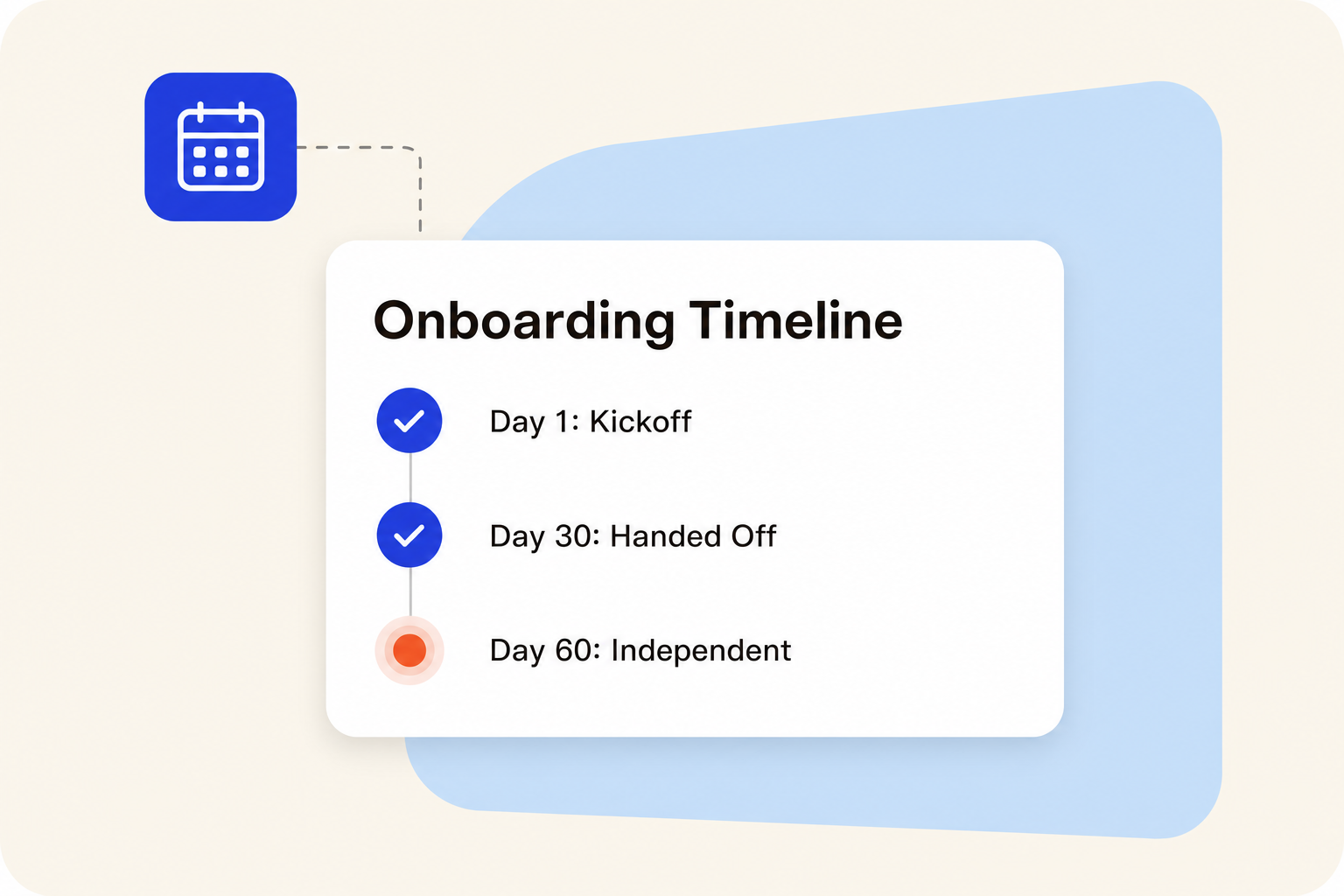
- Kickoff and access call (about 60 minutes): You confirm your goals, connect your existing systems (Jobber, HouseCall Pro, ServiceTitan, QuickBooks, email), and set priorities for the first few weeks. No new software to install.
- Meet your dedicated office manager: You'll have a single point of contact who performs a full audit of your operations to identify where the biggest bottlenecks are. This is where billing backlogs, permit queues, and AR gaps get surfaced.
- Execution takeover within days: The office manager begins monitoring incoming jobs, invoices, customer requests, and paperwork deadlines, then executes the back-office tasks end-to-end based on the plan you set together. The first 30–60 days typically prioritize billing and collections cleanup, paperwork backlogs (rebates, permits, registrations), and getting your systems configured to run consistently. For the systems and SOP side of that setup, see HVAC systems and SOP setup.
- Weekly check-in cadence: After the initial takeover, most owners settle into a short weekly check-in with day-to-day communication by text, email, or phone as needed. You review priorities and results; the office manager handles execution.
What Does Outsourced Office Management Cost, and How Much Can You Save?
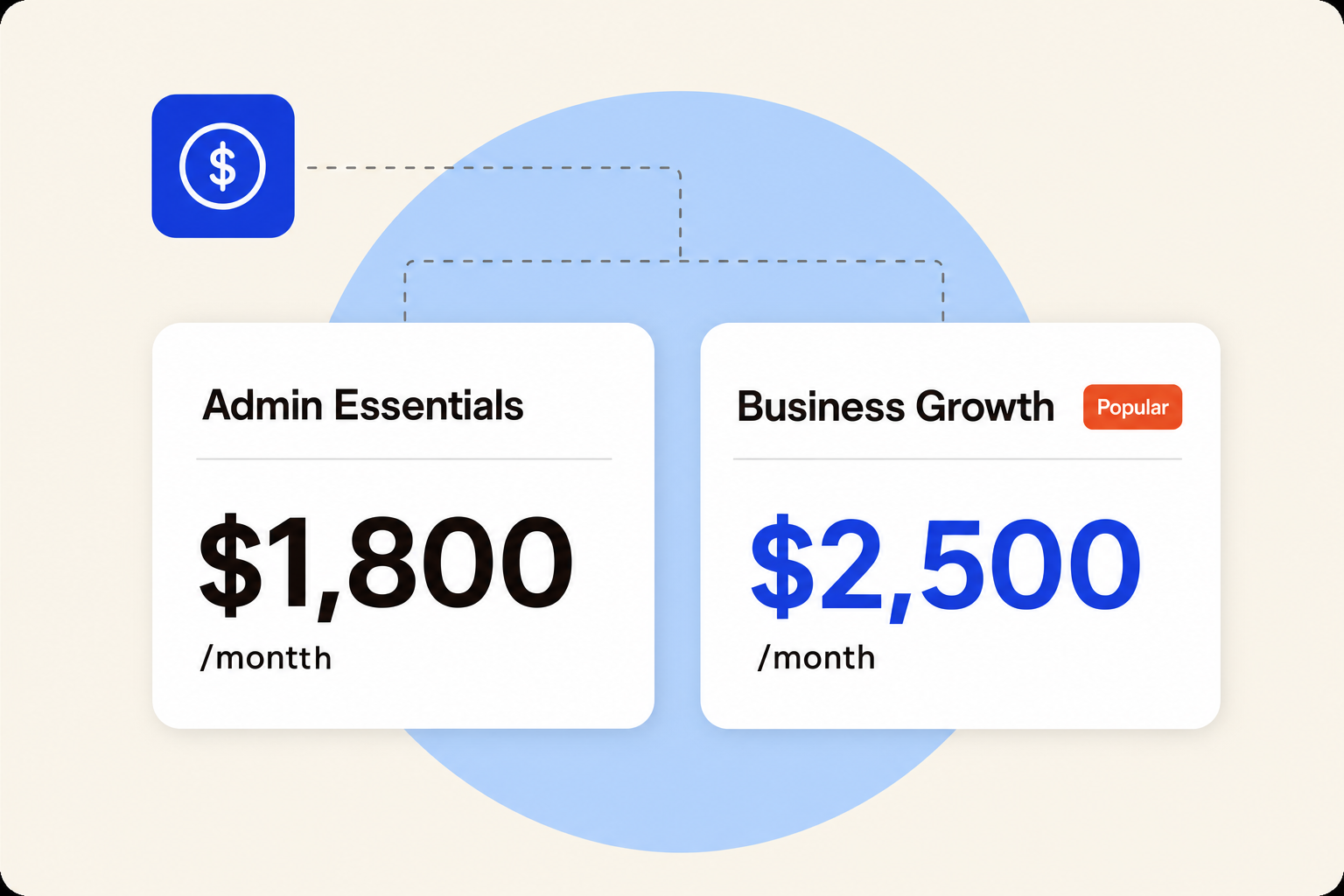
Outsourced office management for HVAC contractors typically runs $1,000–$3,000 per month depending on scope, compared to $50K+ per year for a full-time office manager before benefits, PTO, recruiting, and training time.
On the return side of that equation, the numbers from actual HVAC shops are specific. Just Right Mechanical saw a 700% increase in invoices issued and 48% faster payments within 30 days of handing off billing. ABL Comfort Solutions tracked 1,565+ service jobs with a 99% billing success rate across 10+ properties. Mountain West Heat Pumps processed more than $1.5 million in rebates without adding headcount. Those aren't efficiency gains in the abstract; they're cash that was already earned but not collected.
For context on why billing discipline matters at the margin level most HVAC contractors operate at: HVAC flat-rate pricing profit gap data shows contractors average 7% net profit with flat-rate pricing but only 4% without. A back office that keeps billing current and rebates filed is directly affecting that number. For a practical look at how collections work when someone owns the process, see the HVAC collections playbook for owners.
Most managed back-office services split their scope into two levels: core admin (scheduling, invoicing and collections, permits, equipment registrations, rebates, payroll, AR cleanup) and growth support (pricebooks, maintenance plans, monthly P&L review, marketing). WorkHero works this way, month-to-month, with the plan built around what your shop actually needs.
