

Key takeaways
- Evaluate for full ownership, not task coverage: Virtual office management services for HVAC contractors should be assessed as a fully managed, HVAC-native back-office partner, not a software platform or a generic virtual assistant, because the real gap is industry expertise, not another login.
- Know what the baseline checklist must include: Any provider should cover scheduling, invoicing, permit filings, rebate filing and equipment registration, customer follow-ups, quotes, and weekly check-ins. Generic services typically handle only the surface-level tasks and miss the HVAC-specific ones entirely.
- Cost comparison is concrete: A full-time in-house office manager runs $50K or more per year. Fully managed HVAC-native services generally fall in the $1,000 to $3,000 per month range, with pricing varying by scope.
Owners of small HVAC shops spend about 15 hours a week on billing, permits, rebates, and scheduling follow-ups, according to the HVAC Industry Pulse 2025 report. That time comes out of nights and weekends, not out of the field.
When those owners search for help, they typically land on one of two things: a software comparison site or a generic staffing page. Neither one answers the actual question. This article walks through what virtual office management services for HVAC contractors actually cover, how to evaluate your options, and what separates HVAC-specific back-office support from everything else in the market.
What Are Virtual Office Management Services for HVAC Contractors?
Virtual office management services for HVAC contractors are fully managed, remote back-office operations, where a dedicated team handles scheduling, invoicing, permits, rebates, and customer follow-ups inside your existing software, without you hiring, training, or managing anyone.
Most owners who go looking for this kind of help end up on software review pages or generic VA listings. That's a category mismatch. The problem isn't that you need a new app. You need someone who already knows how to run an HVAC back office and can take it off your plate. If you're still doing invoices after 8pm or chasing permit approvals between jobs, those are clear signs you need office management help, not another software subscription.
The category itself is growing. According to virtual office market growth trends, the virtual office market has grown 22% year-over-year since 2023. But that growth spans everything from mail forwarding services to fully managed admin teams, so knowing what you're actually evaluating matters before you make a decision.
What Should a Virtual Office Management Service Actually Cover?
A baseline virtual office management service for an HVAC contractor should cover the full operational cycle of a job, from scheduling through collections, including the paperwork that most generic providers skip entirely.
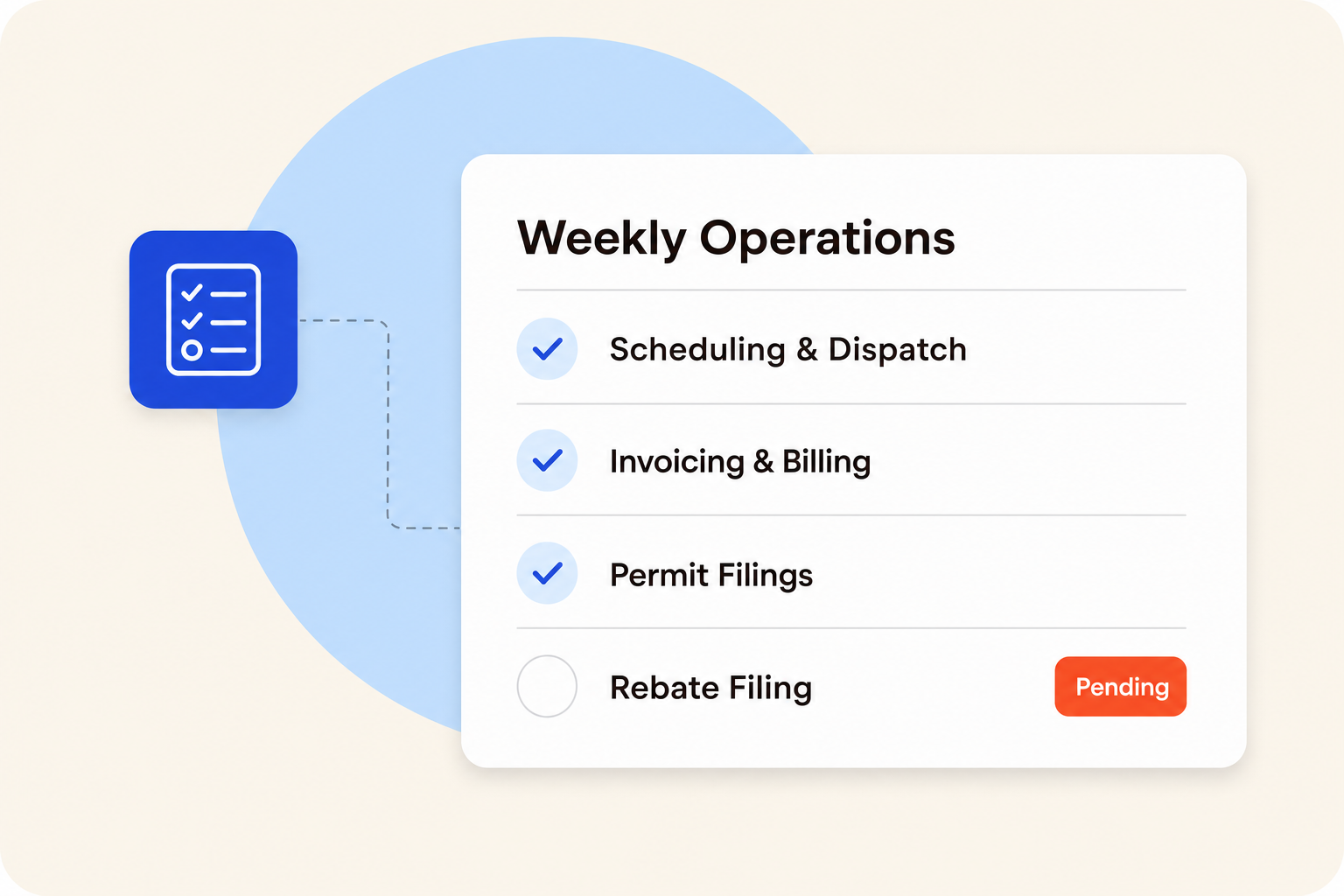
- Scheduling and dispatch coordination: Keeping the calendar organized, confirming appointments, and making sure jobs are assigned and communicated to techs without the owner acting as the go-between.
- Invoicing and billing: Every completed job invoiced promptly, with follow-up on outstanding balances. See remote invoicing and collections management for what this looks like when it's fully owned by a dedicated admin.
- Permit filings: Permits filed ahead of installs, tracked through approval, with municipal communication handled end-to-end. This is not optional in most jurisdictions, and it's easy to miss when the owner is the one responsible.
- Rebate filing and equipment registration: This is where most generic services stop short. Utility rebate programs, manufacturer warranty registrations, and program-specific documentation all require active management. A provider that doesn't mention these tasks specifically isn't built for HVAC.
- Customer follow-ups and quotes: Responding to inbound requests, sending estimates, and following up on open quotes so revenue doesn't sit idle.
- Weekly operational check-ins: A short, structured review of what's been completed, what's pending, and what needs the owner's attention. This is the accountability layer that keeps the relationship from drifting.
Higher-impact work like pricebook builds, maintenance plan setup, P&L review, and managed marketing for HVAC owners typically belongs to a growth-tier plan. Those are valuable, but they're not what you evaluate first. Start with whether the baseline is actually covered.
What Are Your Options for Remote Administrative Support?
HVAC owners have several real options for offloading back-office work. Each one has a different cost structure, a different level of ownership, and a different trade-off worth understanding before you commit.
Generic Virtual Assistant
- How it works: You assign tasks, they complete them. The VA executes what you direct, which means you're still managing the workflow and catching anything that slips.
- Pricing: Typically hourly, often starting around $10 per hour, with bookkeeping and invoicing sold as add-ons.
- Main trade-off: You remain the manager. If you don't know to ask for something, it doesn't get done.
Field Service Software (Jobber, HouseCall Pro, ServiceTitan)
- How it works: A platform that organizes scheduling, dispatch, and invoicing. Someone still has to operate it, whether that's you, a tech, or a part-timer.
- Pricing: Per-user software fees, from roughly $13 to $400+ per user per month depending on the platform.
- Main trade-off: Software doesn't file permits, submit rebates, or follow up on overdue invoices on its own. It's a tool, not a back-office function.
Staffing Agency
- How it works: The agency finds and places a candidate. After placement, you hire, onboard, train, and manage that person yourself.
- Pricing: Placement fees vary, but the ongoing cost is the employee's salary, benefits, and your time managing them.
- Main trade-off: Fully managed means the owner is not the manager. A staffing agency doesn't change that equation. You're still building and running the function from scratch.
Spouse or Part-Timer Covering the Phones
- How it works: A common starting point for small shops. Someone familiar handles calls, scheduling, and basic follow-up.
- Pricing: Low or zero direct cost, depending on the arrangement.
- Main trade-off: Works until volume spikes or the person is unavailable. No HVAC-specific expertise, no backup coverage, and no structured process for rebates, permits, or collections.
HVAC-Native Fully Managed Service
- How it works: A dedicated HVAC office manager, supported by AI for speed and accuracy, works inside your existing tools (Jobber, HouseCall Pro, QuickBooks, ServiceTitan) and owns the back-office workflows end-to-end. Training, oversight, and execution stay with the service, not with you.
- Pricing: Monthly flat-rate plans, typically in the $1,000 to $3,000 per month range depending on scope, with no long-term contract.
- Main trade-off: Higher monthly cost than a VA or part-timer, but the work actually gets done without you managing it. WorkHero, for example, combines experienced HVAC office managers with AI automation to handle document-heavy tasks at speed while keeping a human in the loop for approvals and edge cases. See how AI automation for HVAC back-office tasks works in practice.
How Do You Evaluate Workflow Fit Before Choosing a Service?
The right service is one that plugs into how you already operate, not one that requires you to change your tools or your process before you see any benefit.
Before committing to any service, ask these questions:
- Does it work inside tools you already use? A provider that requires you to switch platforms adds friction before it removes any. Look for one that connects to your existing Jobber, HouseCall Pro, or ServiceTitan setup from day one.
- Do you have to train them on HVAC? Generic admin help requires you to explain rebate programs, permit workflows, and job closeout processes from scratch. An HVAC-native team already knows these.
- Is there a real person assigned to your account? A help desk or ticketing system isn't the same as a dedicated office manager who knows your business week to week.
- What stays with you versus what gets taken off your plate? Be specific. If the answer is vague, the scope will be vague too.
- How fast can they start without disrupting how you operate? Onboarding should start with listening, not with a long implementation project that stalls your business for weeks.
How Does HVAC-Specific Expertise Change the Equation?
HVAC-specific back-office expertise changes what actually gets captured and filed, particularly around rebates, permits, and equipment registrations, where generic admin help consistently falls short.
A provider that doesn't know the difference between an AHRI certificate and a QI form can't submit a complete rebate application. One that hasn't navigated multi-jurisdiction permit portals will slow your installs down. The gap between "general admin" and "HVAC admin" shows up in real dollars. Consider what HVAC business operations support looks like when these tasks are fully owned:
- Rebate complexity: Xcel Energy rebates in Colorado range from $2,000 to $13,000 or more per install. The state's HEAR program stacks on top of that. Capturing those rebates requires precise documentation, multi-portal submissions, and active follow-up with program administrators. A generic VA won't know to ask about any of it.
- Permit volume and jurisdiction variance: Veteran Heating, Cooling, Plumbing and Electric had 179 permit applications filed across 20 or more building departments, each with its own forms, fee structures, and review timelines, resulting in an 85% permit approval rate.
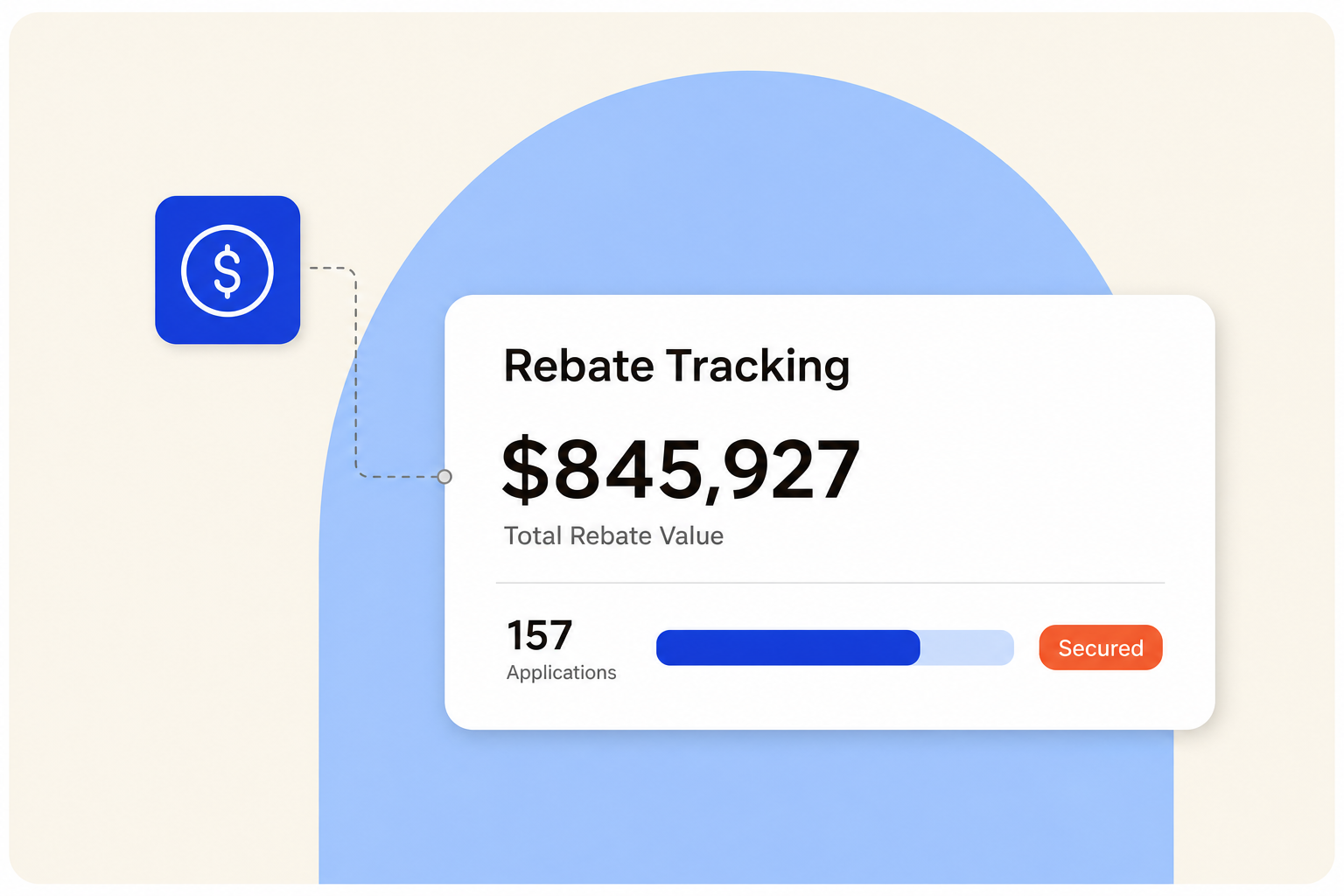
- Rebate value at scale: Across 157 rebate applications submitted through Xcel Energy, the Eli portal, and the HEAR program, Veteran Heating secured $845,927 in total rebate value.
- Equipment registrations: 118 equipment registrations completed across five product categories, covering manufacturer warranty activation that's easy to miss between jobs. Missed registrations leave customers without warranty coverage and expose the contractor to liability.
No FSM software page or generic VA listing cites numbers like these because those providers don't do this work. For a full picture of what permits registrations and payroll handling looks like when it's managed end-to-end, the scope is significant.
How Much Do Virtual Office Management Services Cost?
Cost for virtual office management services ranges widely depending on what's actually included. Understanding the full spectrum helps you compare accurately rather than comparing different things at the same price point.
- Basic virtual office packages (mail, address, receptionist): According to virtual office national pricing data, virtual offices held at $169 per month on average nationally. These are address and phone services, not back-office management.
- Generic VA services: Hourly rates starting around $10 per hour. At 20 hours per week, that's roughly $800 to $1,000 per month, but with no HVAC expertise and the owner still directing the work.
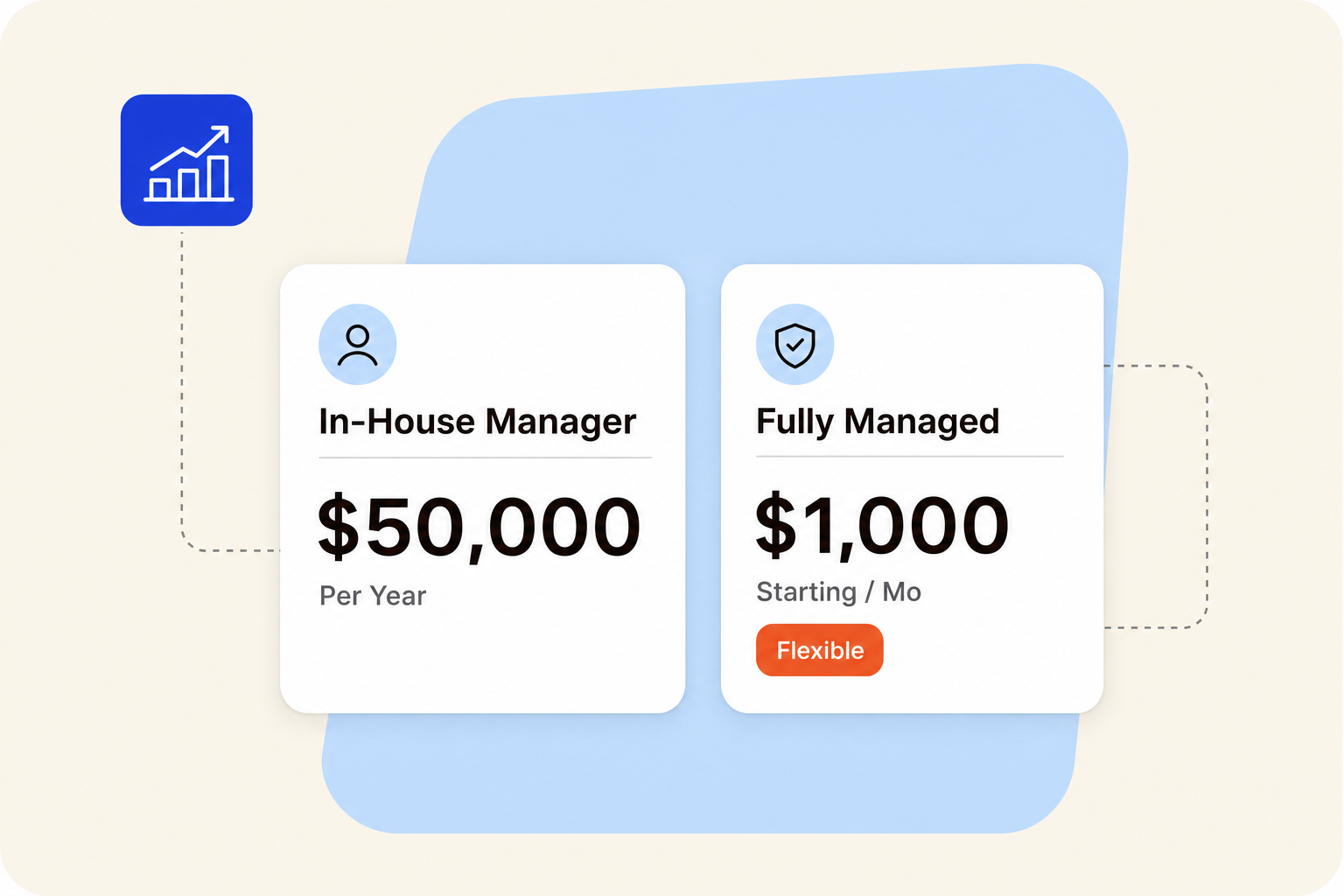
- Fully managed HVAC-native back-office service: Generally falls in the $1,000 to $3,000 per month range depending on scope, with no long-term contract. This covers actual ownership of workflows, not just task execution.
- Full-time in-house office manager: $50,000 or more per year in salary alone, plus benefits, recruiting time, training, and turnover risk.
The comparison that matters for most small HVAC shops isn't VA versus managed service. It's managed service versus continuing to do it yourself at night, or versus a full-time hire you're not ready to manage.
How Do You Get Started With a Virtual Office Management Service?
Getting started with a virtual office management service should take a single kickoff session, not weeks of implementation. A well-structured onboarding process looks like this:
- Kickoff and system access (about 60 minutes): You confirm your goals, connect the tools you already use (HouseCall Pro, ServiceTitan, QuickBooks, email), and set priorities for the first few weeks. This is where the service learns your workflow, not where you learn theirs.
- Meet your dedicated office manager: You get a single point of contact who owns the day-to-day work and knows your account. Day-to-day communication happens by text, email, phone, or Zoom, whichever is fastest for you.
- Execution takeover within a few business days: The team begins monitoring incoming jobs, invoices, customer requests, and paperwork deadlines, then executes end-to-end based on the plan you set together. A weekly check-in keeps priorities aligned and gives you visibility without requiring you to manage the function.
By day 30, the back office should be running without you touching it. By day 60, you should be working on the business rather than in it. For a detailed look at the phases and what changes at each stage, see how our back-office management works. No new software to learn, no employee to manage, just a person who already knows HVAC and can start immediately.
