

Key takeaways
- Generic virtual office services don't cover HVAC work: Call answering, mail handling, and business addresses are built for lawyers and real estate agents, not contractors who need permits filed, rebates submitted, and invoices run inside Jobber or ServiceTitan.
- Ownership is the real difference: HVAC-specific back-office support differs from virtual assistants, staffing agencies, and field service software because it takes full ownership of execution across permits, rebates, equipment registrations, and billing, without requiring the owner to train or manage anyone.
- Match the pricing model to the scope: Pricing across this category ranges from hourly VA rates and per-minute call answering to flat monthly back-office plans, so shop owners should evaluate what tasks actually need to be owned, not just assisted.
The virtual office market has grown 22% year-over-year since 2023, and most of that growth is aimed at professionals who need a mailing address and a receptionist, not HVAC contractors managing permits across a dozen jurisdictions. When you search for virtual office management services as an HVAC owner, most results are built for a completely different kind of business.
This article breaks down what each category of remote admin support actually covers, where the gaps are for field service businesses, and how to match the right option to your shop size and workload.
What's the Difference Between a Virtual Receptionist and an HVAC Back Office?
Virtual office management services cover a wide range of support, from a business mailing address and call answering to full back-office execution including billing, permits, and rebate submissions. For home contractors, the distinction matters because most providers in this category were designed for professional services firms, not field service businesses.
Virtual office and answering providers offer address services, mail handling, and live call answering. Those are useful for a solo consultant who needs a professional presence. For an HVAC shop running three trucks, the gap between "someone answers your phone" and "someone files your permits and tracks your rebates" is significant. It's worth knowing exactly what each type of provider executes before choosing one.
Why Doesn't a Generic Virtual Office Work for HVAC Shops?
Generic virtual office and reception providers handle communication tasks. They don't execute the operational workflows that pile up in an HVAC back office. The mismatch isn't about quality; it's about scope.
- Evening and weekend admin: Small HVAC shops average about 15 hours a week on billing, rebates, permits, and scheduling follow-up, according to the HVAC Industry Pulse 2025 report. A call-answering service running 9 to 5 doesn't touch any of that.
- Permit and rebate backlogs: Permit filings vary by jurisdiction, and rebate programs like Xcel Energy or state HEAR programs require specific documentation, multi-portal submissions, and active follow-up. Answering and reception services have no way to handle this work.
- Scheduling chaos when staff quit: When your one office person leaves, a virtual receptionist can take messages. But they can't pick up the Jobber or ServiceTitan queue, reschedule jobs, or manage dispatch. They've never logged a job in your software and can't start without significant training.
- Underutilized software: Most small shops have HouseCall Pro, Jobber, or ServiceTitan set up but not fully configured. Generic virtual office providers don't work inside these platforms at all.
- Cost of a full-time hire: A dedicated in-house office manager runs $50,000 or more per year, which is out of reach for many two to four truck shops. But patching together a receptionist service and a part-time VA still leaves the owner owning the process. For more on identifying when you've crossed that threshold, see signs you need office management help.
What Are Your Options for Remote Administrative Support?
For a two to four truck HVAC shop, there are five realistic categories of remote admin support. Each has a different scope, pricing model, and trade-off.
- Virtual office and reception services: Call answering, message taking, and business address services. AI-only answering runs around $25 to $300/month; live human answering ranges from $300 to $2,000 or more per month depending on call volume. No back-office execution, no software access, no permits or billing.
- General home-services VAs: Hourly support, often starting around $10 to $15/hour with monthly minimums. Coverage spans plumbing, electrical, roofing, and landscaping, so HVAC-specific work like rebates and permits depends on what you teach them. You assign the tasks; the VA executes them, and you still manage the work.
- Field service software alone (Jobber, HouseCall Pro, ServiceTitan): Software organizes jobs, scheduling, and invoicing, but it doesn't file permits, submit rebates, or follow up on AR. The platform is only as useful as the person running it.
- Staffing agencies: Place a candidate you then hire, train, and manage. You absorb the recruiting cost, ramp time, and turnover risk. The agency's involvement ends at placement.
- HVAC-specific back-office support (WorkHero): Built exclusively for HVAC contractors, with dedicated office managers who work inside your existing software. Covers permits, rebates, equipment registrations, billing, and AR end-to-end, without the owner managing the workflow. See how our back office works for the full delivery model.
How Do Virtual Office Management Services Handle HVAC-Specific Workflows?
HVAC-specific back-office support covers workflows that no generic virtual office provider touches. The difference shows up most clearly in permits and paperwork handled remotely, rebate submissions, equipment registrations, and billing.
Permits and Inspections
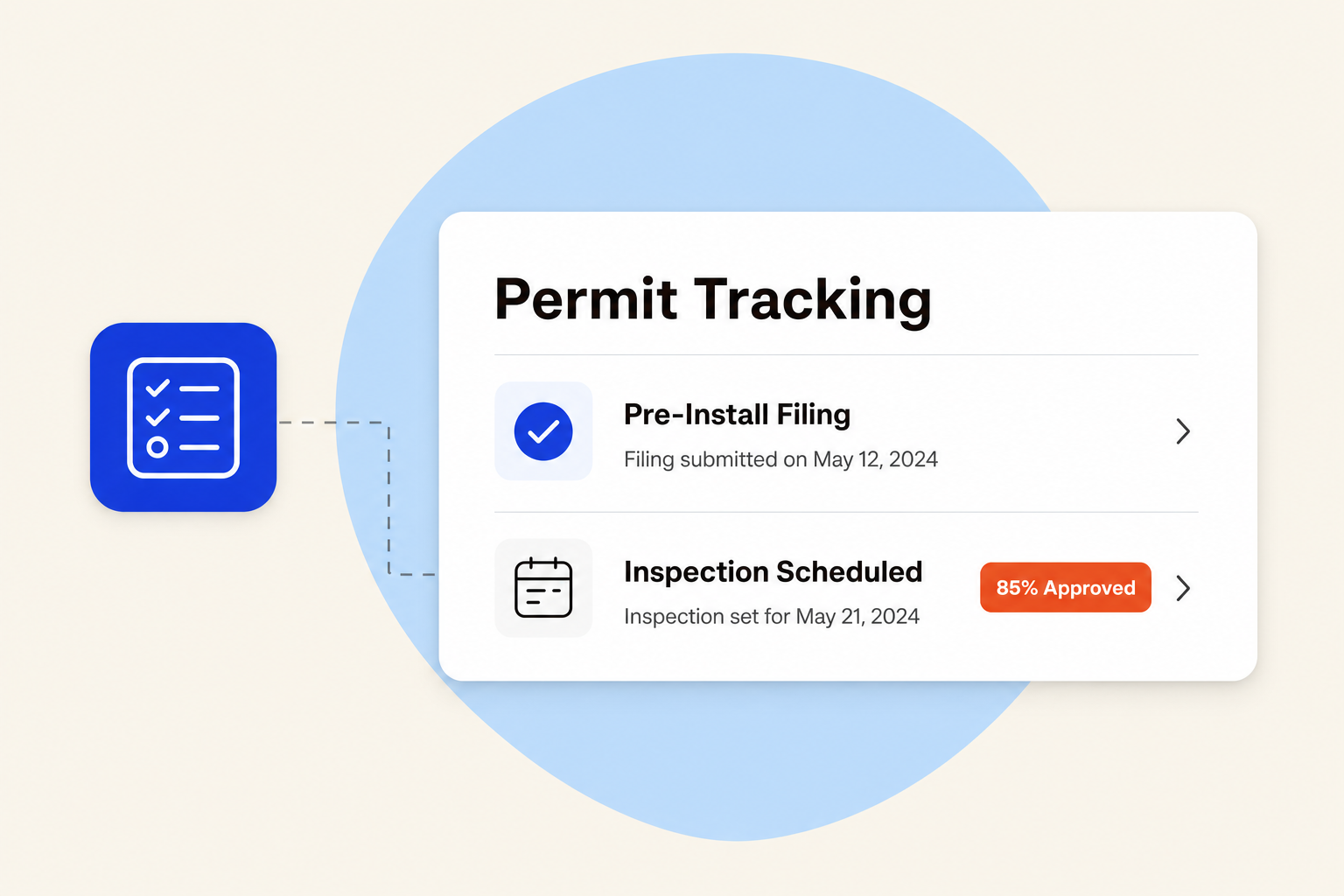
- Pre-install filing: Permits get filed ahead of installs based on the specific jurisdiction, so crews aren't showing up to a job that isn't cleared. Portal submissions, municipal communication, and follow-up are all handled without the owner making calls to the building department.
- Inspection tracking: Inspections get scheduled and tracked through completion. In Veteran Heating's case, this meant managing 179 permit applications across more than 20 building departments, each with its own forms, fee structures, and review timelines, with an 85% permit approval rate.
Rebate Submissions
- Multi-portal submission: Rebate programs like Xcel Energy and Colorado's HEAR program require QI forms, AHRI certifications, geo-tagged photos, and utility account information. Each portal has its own submission process and follow-up requirements.
- What's at stake: Veteran Heating secured $845,927 in total rebate value across 157 applications. As Mike at Veteran put it:
"A single missed heat pump rebate can cost a customer $10,000 or more. WorkHero makes sure that money ends up where it belongs."
Equipment Registrations and Billing
- Warranty registrations at job closeout: Manufacturer registrations trigger automatically when an install is completed in HouseCall Pro, ServiceTitan, or Jobber. Certificate generation, storage, and follow-up are handled so customers are covered from day one. Veteran Heating completed 118 equipment registrations across five product categories through this process.
- Same-day invoicing and AR follow-up: Every completed job gets invoiced the same day. Consistent AR follow-up and collections management produced a 99% billing success rate across 1,565 tracked jobs for ABL Comfort Solutions. For the billing side specifically, see remote invoicing and collections.
How Much Do Virtual Office and Back-Office Services Cost?
Pricing across this category varies widely depending on what's actually included. A business address and call answering costs far less than full back-office execution, and the two shouldn't be compared on price alone.
- AI-only call answering: $25 to $300/month. Handles inbound calls and lead qualification. No admin execution.
- Live human answering services: $300 to $2,000 or more per month depending on call volume. For comparison, an in-house receptionist runs roughly $3,950 to $5,000 or more per month.
- Hourly VA services: Around $10 to $15/hour with monthly minimums. Invoicing and bookkeeping are often sold as a separate add-on.
- Virtual office address services: According to virtual office pricing across U.S. markets, "Virtual offices stretch from $50 to $225 around a $179 median, a 4.5-times spread, the widest in the study." A separate analysis of coworking and virtual office industry trends shows prices rose from $159 to $169 per month recently. These are address-and-mail services, not back-office execution.
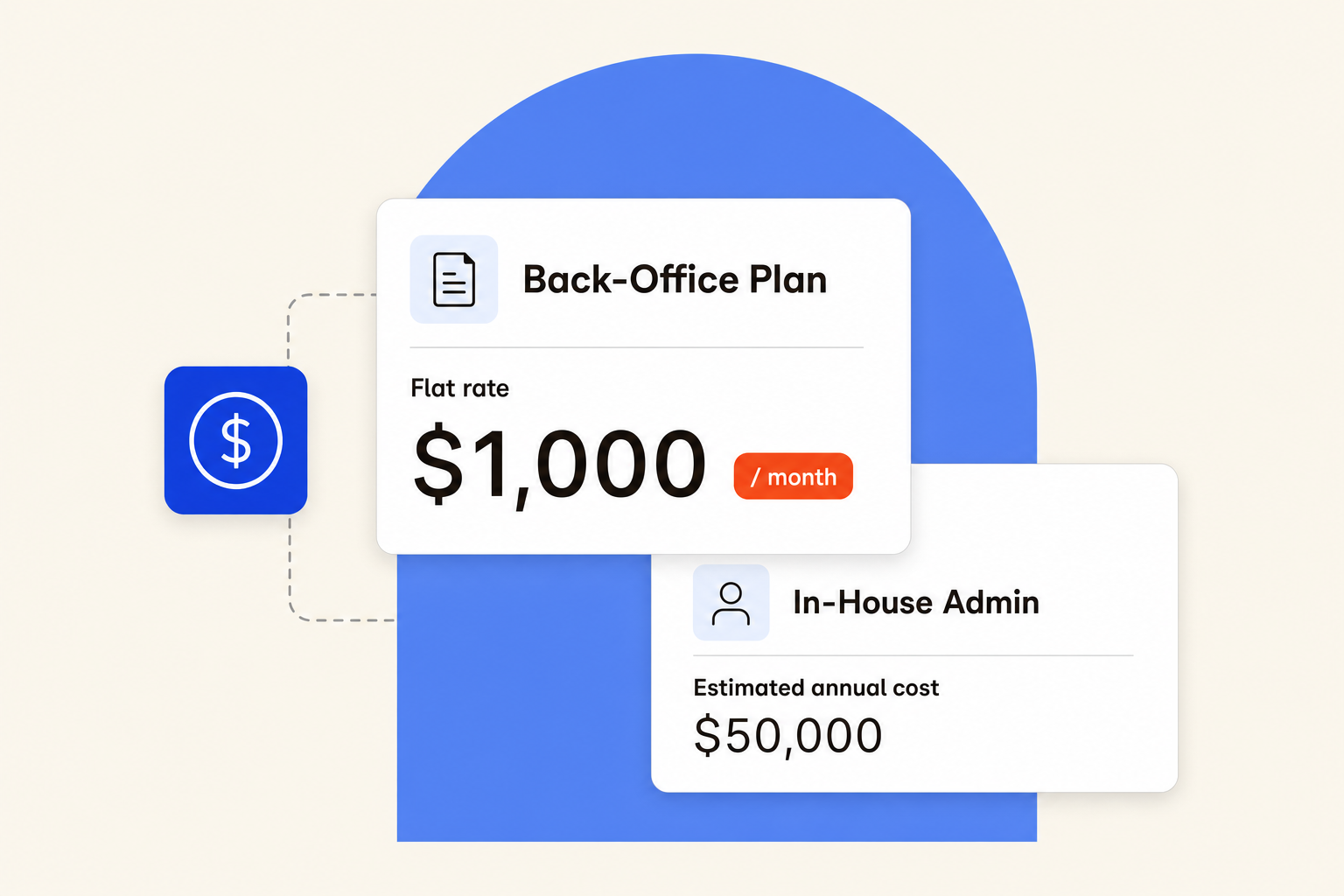
- HVAC-specific back-office support: Flat monthly pricing tied to scope, month-to-month, at a fraction of the $50,000+ a year a full-time office manager costs.
How Does Virtual Office Support Work Inside Your Existing Software Stack?
Back-office support should plug into the software you already use, not require you to adopt a new platform. For HVAC shops, that means working inside Jobber, HouseCall Pro, QuickBooks, or ServiceTitan from day one.
According to residential contractor technology adoption rates, 29% of contractors plan to invest in technology this year to increase revenue, customer retention, and customer acquisition. Most of those contractors already have field service software in place; the gap is in having someone who can actually run it well.
The delivery model that works for HVAC-specific admin pairs a dedicated human office manager with AI-assisted tools. AI handles repetitive, document-heavy work like data entry, documentation, and follow-ups. The office manager handles approvals, quality control, and edge cases, like a permit jurisdiction pushing back or a rebate portal changing its documentation requirements. That combination keeps work accurate on tasks where errors are expensive. For more on how automation fits into this model, see AI automation for HVAC admin tasks.
How Do You Choose the Right Virtual Office Solution for Your HVAC Business?
The right option depends on your truck count and where your paperwork volume actually stands. Choosing by price alone without accounting for scope leads to gaps that roll back to the owner.
Solo or 1 to 2 Truck Shops
- Best fit: If your only gap is the phones, an answering service can cover it. But once you're installing equipment, permits, rebates, and registrations start to stack up, and that's work a receptionist can't do. An HVAC back-office team covers both the follow-up and the paperwork.
- Watch for: As install volume grows, permit filings and rebate applications accumulate faster than an hourly VA can track without dedicated HVAC workflow knowledge.
2 to 4 Truck Shops
- Best fit: This is the range where paperwork volume, permits, rebates, registrations, and billing, outpaces what an owner or part-time VA can reliably track. A flat-rate back-office model with HVAC-specific expertise covers the full scope without the owner managing the process. For a full picture of what HVAC business operations management looks like at this stage, that page covers SOP development, KPI dashboards, and workflow automation in detail.
- Cost frame: Monthly back-office support in the $1,000 to $3,000 range compares directly against a $50,000 or more per year full-time hire, without the recruiting, ramp time, or turnover risk.
5 or More Trucks or Multi-Location Shops
- Best fit: Higher-volume operations with commercial clients or multiple locations require custom billing automation and reconciliation across multiple property managers. ABL Comfort Solutions, running 10 or more Boston-area properties with 150 or more service calls per month, required a centralized tracking system, automated invoice generation from technician notes, and remittance reconciliation across four different property management portals. That level of complexity is beyond what a generalist VA or standard call-answering service can handle.
How Do You Measure Success After Switching to Virtual Office Management?
After onboarding a back-office provider, track these specific metrics to confirm the arrangement is working. A weekly check-in with your provider is the built-in mechanism for reviewing these numbers without chasing anyone down.
- Invoicing speed: How quickly are completed jobs getting invoiced? A meaningful improvement shows up in the first 30 days. Just Right Mechanical saw a 700% increase in invoices issued and 48% faster payments after handing off billing end-to-end.
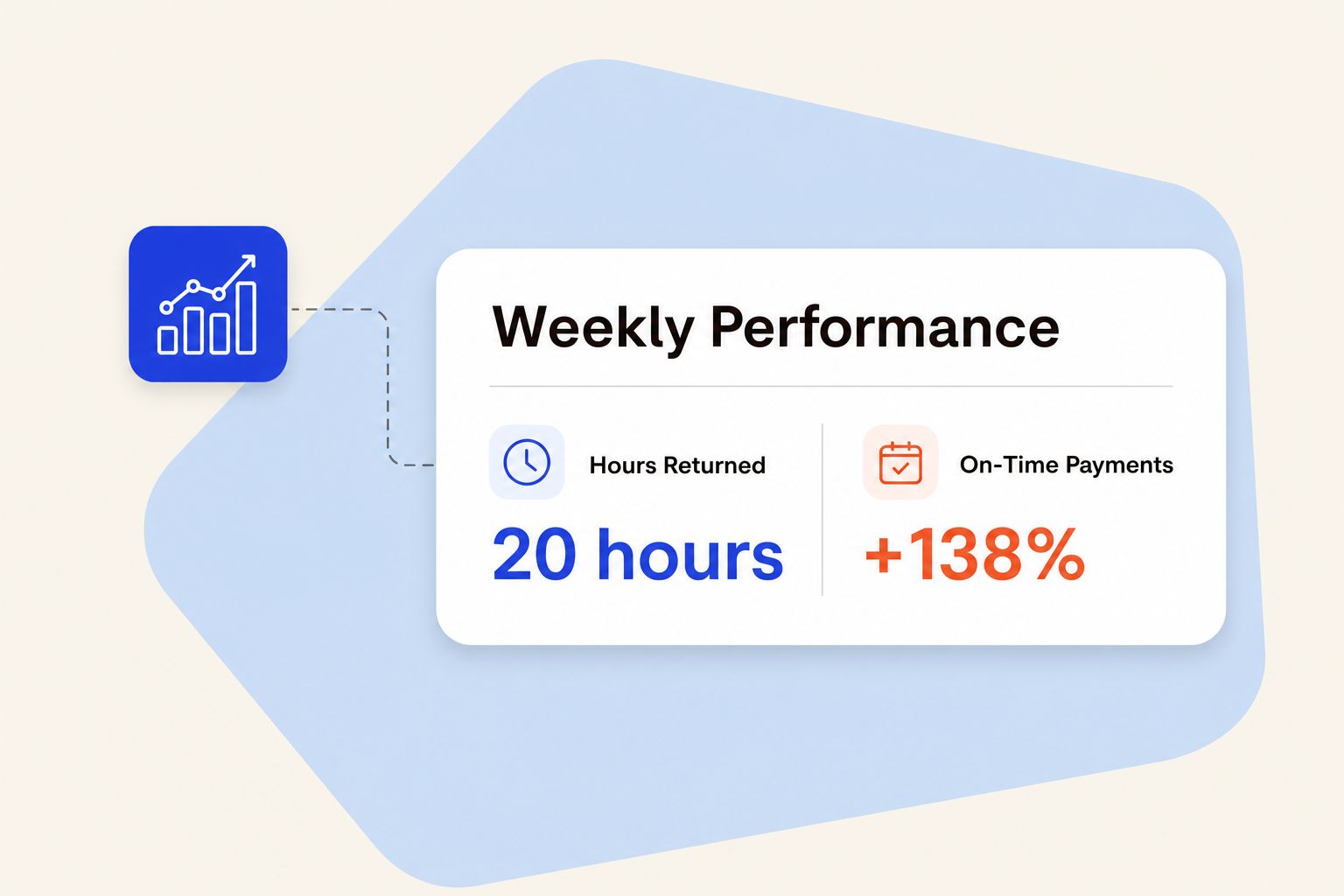
- AR aging and on-time payment rate: Track what percentage of invoices are paid on time and how old your oldest open invoices are. Just Right Mechanical also recorded a 138% increase in on-time payments.
- Rebate dollars recovered: If you're installing heat pumps or high-efficiency equipment, track what rebate applications were submitted versus what was collected. A single missed application can cost a customer $10,000 or more.
- Permit approval rate: Track how many permits are approved on first submission versus requiring resubmission. An 85% first-pass approval rate across 179 filings is a reasonable benchmark from the Veteran Heating case study.
- Hours returned per week: Owners working with a dedicated back-office partner report an average of 20 hours per week returned to field work and customer time. That's the number worth tracking against your own baseline.
- Marketing follow-through: If your plan includes customer outreach and seasonal campaigns, track booked appointments from those efforts. For shops ready to connect back-office execution with customer acquisition, managed marketing for HVAC owners covers how that layer works alongside admin support.
