

Key takeaways
- Back-office services mean real people, not software: For small HVAC businesses, back-office services mean HVAC-experienced people handling invoicing, permits, rebates, and follow-ups inside the software a shop already uses, not another tool to manage.
- Know your real options before you decide: The alternatives small HVAC owners are actually weighing include FSM software alone, a generic VA, a staffing agency, a full-time in-house hire, and a specialized HVAC back-office service, and each carries a different cost and management burden.
- Use numbers to evaluate, not gut feel: Measurable outcomes like 7.5x faster invoicing and 99% billing success rates give owners a concrete way to evaluate back-office support instead of guessing.
There are over 145,000 HVAC contractor businesses in the United States, according to the US HVAC contractor market size report, and the vast majority of them are small owner-operated shops where the person running the trucks is also the one sending invoices at 9pm. This article breaks down what back-office services for small HVAC businesses actually include, what each option costs, and how to tell whether the support you're getting is working.
If you're running two to four trucks and still personally handling permits, rebates, and AR follow-ups, this guide is written for you.
What Are Back-Office Services for Small HVAC Businesses?
Back-office services for small HVAC businesses are real people handling invoicing, scheduling coordination, permit filings, equipment registration, rebate filing, and customer follow-ups inside the software a shop already uses. The key distinction is labor, not technology.
FSM platforms like Jobber, HouseCall Pro, and ServiceTitan give you a place to manage jobs, but they don't file the permit, chase the rebate, or send the invoice. Someone still has to do that work. For most small shops, that someone is the owner, usually after hours. Back-office services shift that labor to people who already know HVAC workflows, so the owner doesn't have to. For a deeper look at how software setup and SOPs fit into this picture, see HVAC software setup and SOPs.
The market is large enough that this problem is widespread. The HVAC contractor industry is growing at an estimated 3% to 6% annually, which means more small shops are hitting the same wall: the field work scales faster than the office work does.
Why Do Small HVAC Shops Struggle With Back-Office Work?
Small HVAC shops struggle with back-office work because the owner is usually the only person accountable for it, and field work always takes priority. According to small HVAC admin burden survey data, small HVAC companies are 6.5 times more likely than larger companies to cite administrative work as their primary challenge.
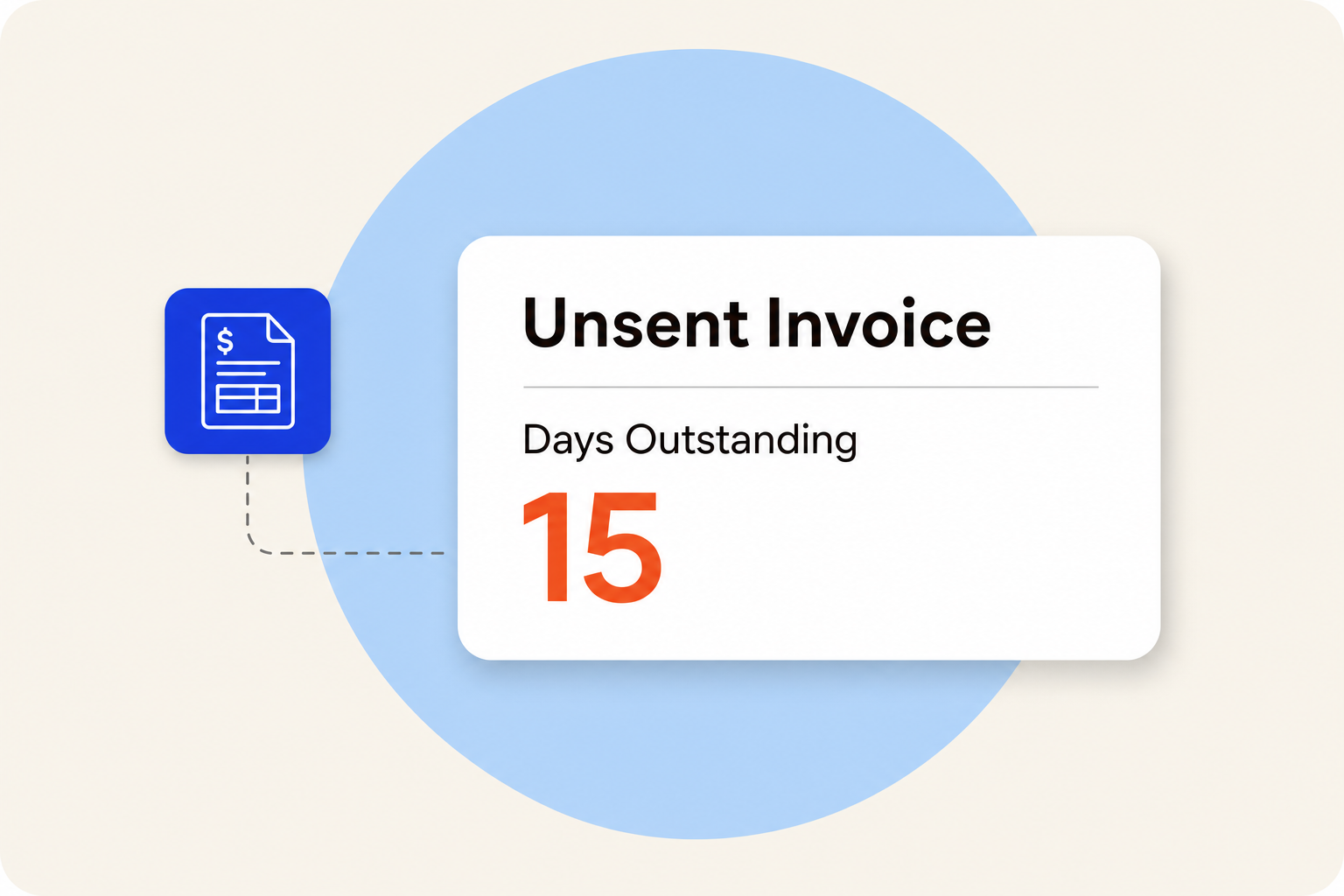
The downstream effects are measurable. Per HVAC missed call rate by company size, solo operators miss 68 to 75% of incoming calls. Invoicing lags just as badly: according to HVAC invoicing delays industry benchmarks, 16% of HVAC firms take 15 or more days to invoice after work is complete. Every day that invoice sits unsent is a day the owner is financing the customer's job out of pocket.
Doing admin yourself isn't free. The cost is evenings, weekends, and the follow-ups that never happen because there's no time. A rebate that doesn't get filed, a warranty registration that gets missed, an AR balance that ages past 60 days because no one sent a second notice: these are real dollar losses, not just inconveniences.
What Back-Office Services Should a Small HVAC Business Actually Get?
A small HVAC business needs back-office coverage across two levels: core daily operations and strategic growth support. The right tier depends on where the shop is today and what's consuming the most owner time.
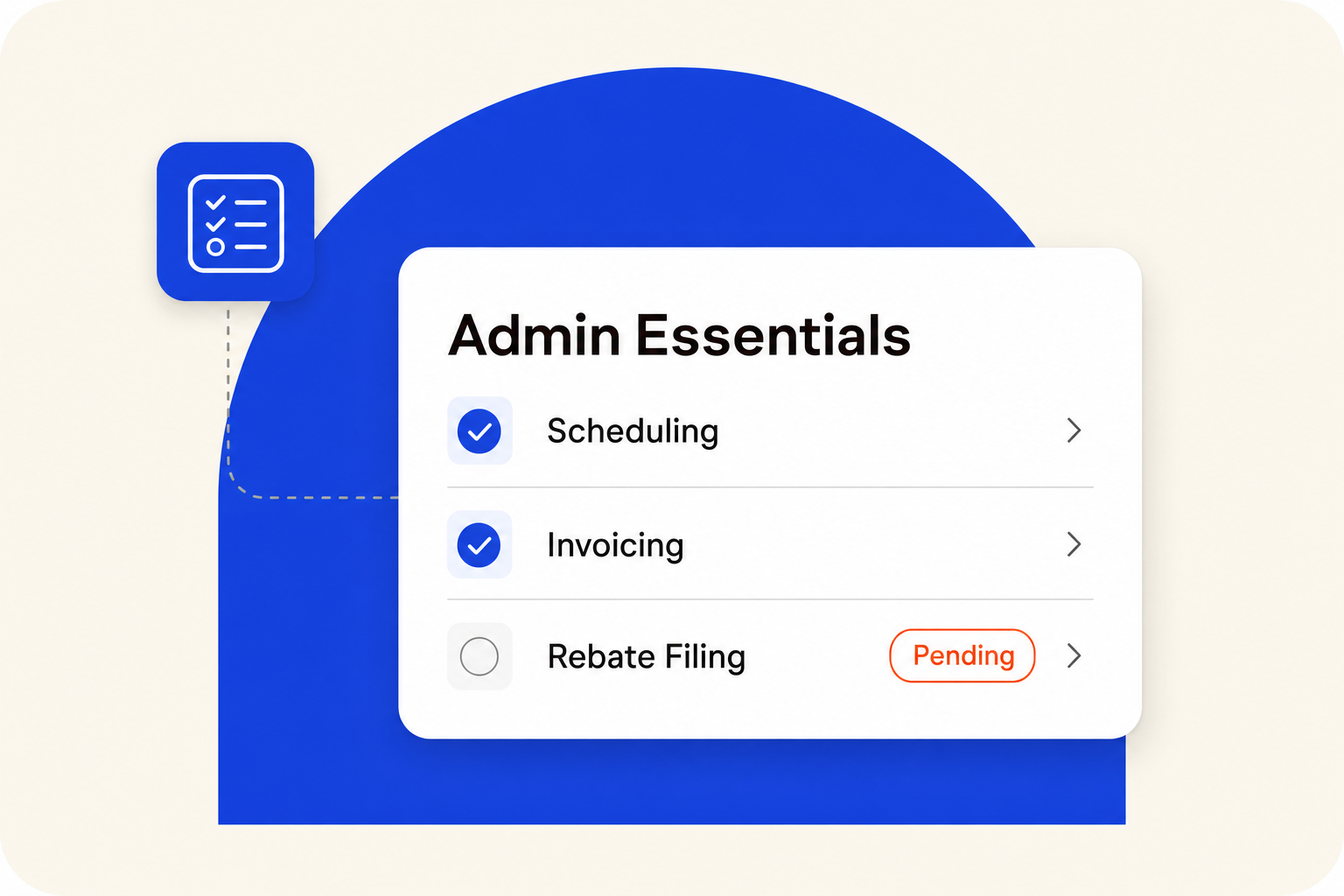
Admin Essentials: Core Back-Office Coverage
- Scheduling and dispatch coordination: Jobs get booked, routed, and confirmed without the owner managing the calendar between service calls.
- Invoicing and billing: Every completed job gets invoiced the same day. See how this works end to end at invoicing and collections management.
- Customer follow-ups: Reminders, satisfaction checks, and outstanding invoice nudges go out on a consistent schedule instead of whenever someone remembers.
- Permit filings: Permits get filed ahead of installs based on local jurisdiction requirements, so crews aren't showing up to jobs that aren't cleared. Details on how this is managed are at permits registrations and payroll handling.
- Equipment registration: When a job closes out, the manufacturer warranty registration triggers automatically inside HouseCall Pro, ServiceTitan, or Jobber, so nothing gets missed in the handoff.
- Rebate filing: Utility and manufacturer rebates get tracked and submitted per job, not batched months later when some are already expired.
- General office admin: Vendor questions, supplier bills, and routine correspondence get handled without landing on the owner's desk.
Business Growth: Added Strategic Support
- Marketing support: Targeted outreach to past customers, seasonal campaigns, and Google Business Profile management to keep the schedule full.
- Monthly P&L and financial insights: A monthly review of revenue, job margins, and overhead so the owner can see what's working before problems compound.
- Process optimization: Identifying where jobs are getting delayed, where invoices are aging, and where the workflow has gaps that cost money.
- Pricebook builds: Labor rates and material pricing built from real cost math, loaded directly into the FSM so techs quote consistently in the field.
- Maintenance plan setup: Plan tiers, pricing, enrollment workflows, and renewal tracking built into HouseCall Pro, ServiceTitan, or Jobber and managed on an ongoing basis. See how this is structured at recurring maintenance plan management.
- Software onboarding support: When a shop switches or upgrades its FSM, the migration and configuration get handled so data doesn't get lost and the team isn't starting from scratch.
What Are Your Options for Back-Office Support, and How Do They Compare?
Small HVAC owners have five real options for back-office support. Each one has a different price point, a different management burden, and a different gap it leaves unaddressed.
FSM Software Alone (Jobber, HouseCall Pro, ServiceTitan)
- Cost range: HouseCall Pro runs $49 to $189/month plus $35 per additional user. ServiceTitan runs $250 to $400 per tech per month, making it cost-effective primarily at $2M+ revenue with eight or more techs. Entry-level platforms start around $13 per user per month.
- What it includes: Scheduling fields, invoice templates, job tracking, and reporting dashboards.
- What it doesn't include: Anyone to enter the data, file the permit, follow up on the unpaid invoice, or submit the rebate. The platform gives you a better place to fall behind. For guidance on getting the most out of your existing setup, see HVAC software setup and SOPs.
- Best for: Shops that already have someone handling admin and need a system to work inside.
A Generic Virtual Assistant
- Cost range: Lower upfront than most other options, typically hourly or part-time monthly rates.
- What it includes: General admin tasks as directed by the owner.
- What it doesn't include: Any HVAC-specific knowledge. A generic VA needs to be trained on rebate filing workflows, permit submission portals, and how ServiceTitan or Jobber actually works before they can do anything useful. The time spent training is time the owner doesn't get back.
- Best for: Shops with a patient owner willing to invest weeks in onboarding before seeing any return.
A Staffing Agency Hire
- Cost range: Agency fees vary, but the ongoing cost is the placed employee's salary plus the agency's placement fee.
- What it includes: A candidate the agency sourced.
- What it doesn't include: Training, oversight, or accountability for outcomes. The agency hands over a person; the owner is still responsible for managing that person's work, correcting mistakes, and covering gaps when they leave. Unlike a staffing agency, a managed back-office service owns the outcome, not just the placement.
- The catch: If the placement doesn't work out or leaves, you start the search over, and the back office lands back on you in the meantime.
A Full-Time In-House Office Manager
- Cost range: $50,000+ per year in base salary, before benefits, payroll taxes, and the time spent hiring and managing.
- What it includes: A dedicated person on-site, full-time.
- What it doesn't include: A guarantee the problem gets solved. Per small HVAC admin burden survey data, small HVAC companies are 6.5 times more likely than larger ones to cite admin as their primary challenge, even at shops with six to ten employees, meaning hiring alone doesn't automatically produce a functioning back office.
- The catch: One person is a single point of failure. Sick days, vacations, and turnover all send the work back to the owner.
A Specialized HVAC Back-Office Service
- What it includes: HVAC-experienced admins who already know rebate programs, permit jurisdictions, and FSM workflows. They work inside Jobber, HouseCall Pro, ServiceTitan, and QuickBooks from day one, communicate via text, email, or phone, and hold weekly check-ins to stay aligned on priorities. AI tools handle speed and accuracy on repeatable tasks. For a look at how automation fits into this model, see AI automation for HVAC admin tasks.
- Proof points: WorkHero's back-office support has produced 7.5x faster invoicing in the first month, 60% cost savings compared to in-house staff, an average of 20 hours per week returned to owners, and a 92% customer satisfaction rate across HVAC owner customers.
- Best for: Shops with two to four trucks where the owner is personally handling admin and wants that to stop without hiring and managing a new employee.
How Much Do Back-Office Services Cost for a Small HVAC Shop?
A specialized HVAC back-office service is priced monthly based on scope, at a fraction of the $50,000+ per year a full-time in-house office manager costs. WorkHero, for example, is month-to-month with no long-term contract. Software alone costs $49 to $400+ per month but doesn't replace the labor of actually doing the admin work.
The 60% cost savings figure cited above reflects the difference between a managed service and a fully burdened in-house hire when you account for salary, benefits, payroll taxes, and turnover. For most two-to-four-truck shops, the math on a full-time hire doesn't work until the business is large enough to keep that person fully occupied. A monthly service with no hiring overhead changes that calculation significantly.
Software spend and back-office service spend are not interchangeable. Paying for HouseCall Pro or ServiceTitan doesn't reduce the hours an owner spends on admin; it just gives those hours a better platform to happen on.
How Does HVAC Back-Office Support Work Day to Day?
Effective back-office support follows a consistent operational cadence: learn the shop's workflow first, build a service plan together, then work inside existing tools with weekly check-ins to stay aligned. It's not a set-it-and-forget-it arrangement.
- Onboarding starts with the workflow, not a template: A good back-office partner learns how jobs move through your specific FSM, what your permit jurisdictions require, and where your current AR is aging before touching anything.
- Weekly check-ins keep priorities current: A standing weekly touchpoint means problems surface before they compound, and the owner stays informed without being in the weeds. Text, email, or phone, whichever fits how the shop already communicates.
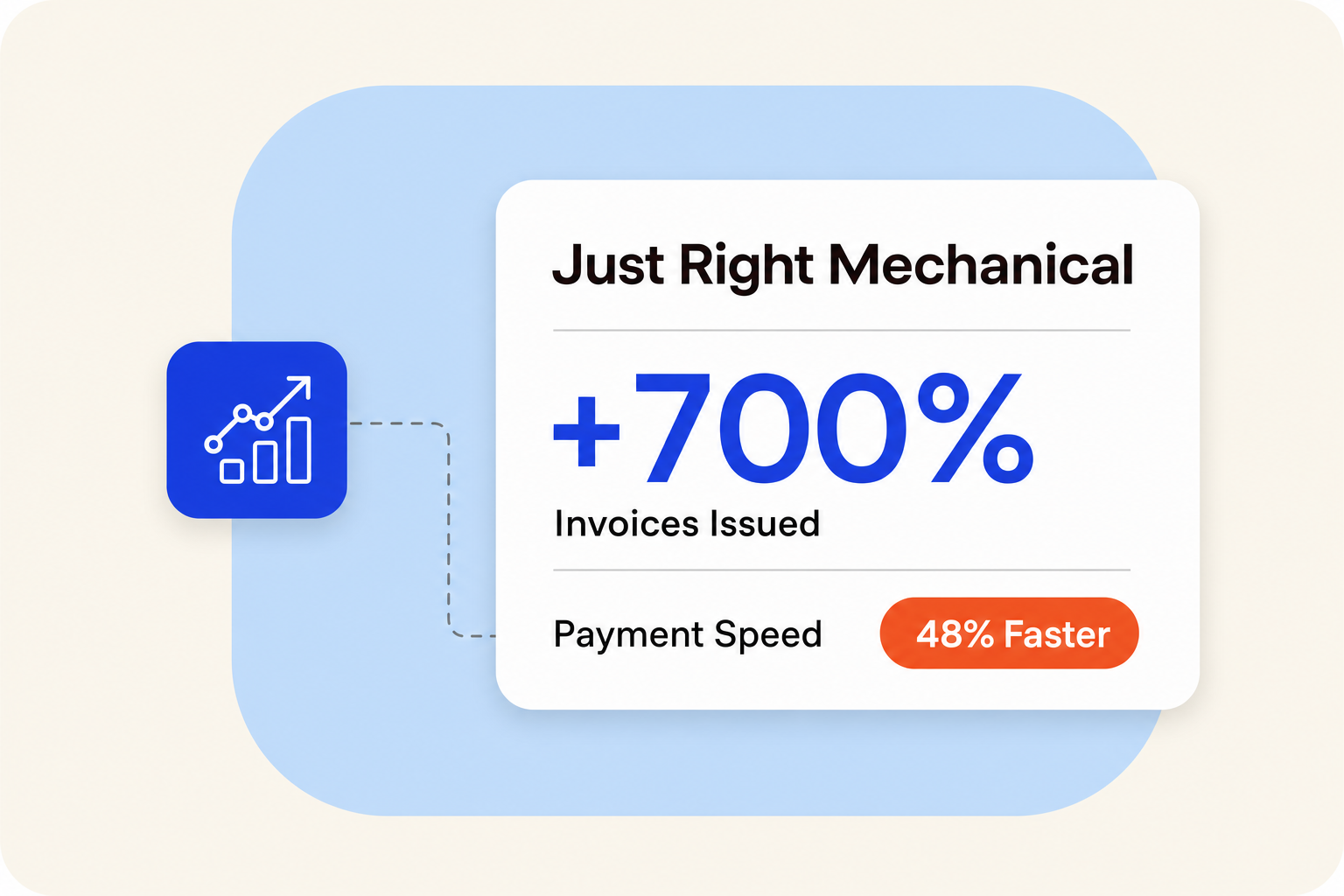
- Billing ownership produces measurable results fast: Just Right Mechanical, a nine-person HVAC company, went from delayed invoicing and reactive follow-ups to a +700% increase in invoices issued, 48% faster payments, and +138% on-time payments in 30 days after handing off invoicing and collections management to a dedicated back-office team. For the full collections framework behind those results, see the HVAC collections playbook for owners.
- Commercial complexity requires purpose-built systems: ABL Comfort Solutions tracked 1,565+ service jobs across 10+ Boston-area properties, each with different PO requirements and payment schedules, and achieved a 99% billing success rate by running all billing through a centralized automation built inside HouseCall Pro.
How Does the Right Back-Office Support Vary by Shop Size?
The right level of back-office support depends on how much complexity the shop is managing, not just how many trucks are on the road. Two-to-four-truck shops typically need core admin coverage first; shops with more commercial accounts or multiple service lines need more infrastructure.
- Two to four trucks, residential focus: Core admin coverage handles the volume. Scheduling, invoicing, permit filings, and rebate tracking are the primary time drains, and getting those off the owner's plate is the first priority. Pair this with a look at job costing and price book profitability to make sure the work being invoiced is priced correctly.
- Growing shops approaching eight to ten technicians: At this threshold, memory stops covering the gaps. Schedule changes require a call tree, and one person can't hold all the billing details in their head. Process documentation and dashboard reporting become critical, not optional.
- Commercial or multi-site operations: ABL Comfort Solutions is the clearest example of what happens when complexity outgrows manual tracking. Four different property management systems, 150+ service calls per month at peak, and periodic remittance payments that don't match individual invoices. That level of operation requires purpose-built billing infrastructure, not just a faster admin.
How Do You Know Your Back-Office Support Is Actually Working?
Track four numbers from the start: invoice turnaround time, AR aging, rebate and permit completion rate, and hours saved per week. If those numbers aren't moving in the right direction within the first 30 days, something in the process needs to change.
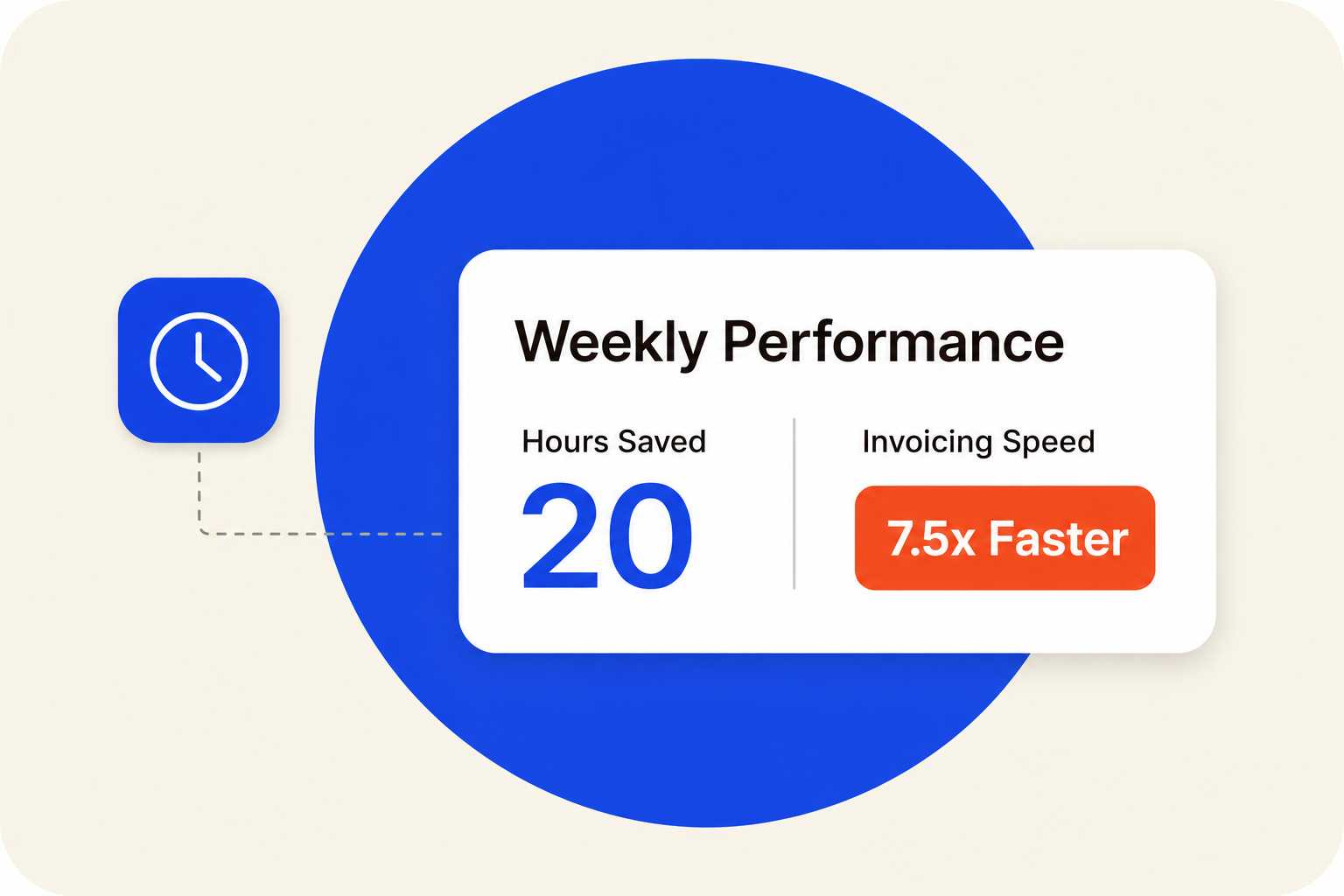
- Invoice turnaround time: Jobs completed should produce invoices the same day or next morning. A 7.5x improvement in invoicing speed in the first month is achievable when billing has clear ownership, as the first-party data shows.
- AR aging: Watch the 30-day and 60-day buckets. If invoices are aging past 30 days without a follow-up sequence running, collections isn't being managed, it's being hoped for.
- Rebate and permit completion: Every qualifying install should have a rebate filed and a permit pulled. Track completion rate per job, not just whether the process exists on paper.
- Hours returned to the owner: An average of 20 hours per week is the benchmark from shops that have handed off admin fully. If the owner is still spending evenings on paperwork, the handoff isn't complete.
- Weekly check-ins as the accountability mechanism: A standing weekly review is what separates ongoing back-office support from an unmanaged VA or a software setup that nobody maintains. For a look at how automation handles the repeatable parts of this, see AI automation for HVAC admin tasks.
