

Key takeaways
- Software isn't support: An FSM platform gives you a place to do the work. Outsourced HVAC back-office support is the team that actually does it, inside that platform.
- It runs inside your existing tools: Job closeouts trigger invoices, AI drafts them from technician notes, an HVAC office manager reviews and sends them, and AR follow-up runs on a set schedule.
- Ownership is the deciding factor: Software and generic virtual assistants leave the owner managing the work. The right fit depends on who actually owns the outcome, not just who executes the tasks.
Most HVAC owners know what back-office support is supposed to do. What's less clear is how it actually works day to day: who touches the invoice, when permits get filed, and how you stay in the loop without managing anyone. This guide walks through exactly that.
If you're still doing invoicing on Sunday nights or chasing permit filings between jobs, this guide is for you.
What Is HVAC Back-Office Support?
HVAC back-office support covers the administrative work that keeps a shop running between jobs: scheduling, invoicing, collections, permits, equipment registrations, rebate filings, and customer follow-ups. It's the operational layer that sits behind your field work and determines whether completed jobs turn into collected revenue on time.
Most owners think of this as a software problem. Buy the right field service management platform, set it up correctly, and the admin handles itself. In practice, the software is just a place to do the work. Someone still has to own the execution, whether that's filing a permit before an install, following up on a 45-day-old invoice, or making sure a manufacturer warranty registration doesn't get missed after a job closes.
The real decision is a staffing and operations decision: who is accountable for getting that work done, consistently, without it bouncing back to you. That question applies whether you're looking at HVAC paperwork and permits handled externally or managing an HVAC invoicing and collections service in-house.
Why Do HVAC Shops Struggle With Back-Office Work?
The admin load on a small HVAC shop is heavier than it looks from the outside. Scheduling, invoicing, permit filings, rebate submissions, equipment registrations, and customer follow-ups don't pause because you're on a job. They pile up, and the owner ends up handling them at night or on weekends because no one else owns them.
Hiring help doesn't always solve it. Office staff turnover is a persistent problem in this industry, and finding someone who already understands HVAC-specific workflows, like how to file a utility rebate or navigate a municipal permit portal, is genuinely difficult. The HVAC contractor labor shortage risks are well documented: 35% of commercial contractors cite labor concerns as their top risk in 2026. The EGIA 2025 HVAC contractor survey, compiled from hundreds of contractors across the United States and Canada, consistently surfaces admin overload as a top operational pressure for small shops.
Software investments often make this worse before they make it better. An owner buys Housecall Pro or ServiceTitan, gets a partial setup done, and then the system sits underused because no one has time to configure it properly or maintain the workflows. If you're not sure whether your shop has crossed the threshold where outside help makes sense, the signs you need back-office help are usually visible well before the owner admits it.
What Kind of Back-Office Support Does This Guide Cover?
This guide covers fully managed, HVAC-specialized back-office support: experienced HVAC admins, backed by AI automation, who own your back-office workflows inside the software you already use. If you're still comparing that with software alone, a virtual assistant, or an in-house hire, see the best back-office support services for HVAC businesses.
What Does It Cost?
Managed HVAC back-office support is priced monthly by scope, at a fraction of the $50,000+ a year a full-time hire costs before benefits and turnover. WorkHero is month-to-month with no long-term contract. The better comparison isn't price per month, though. It's how much stops landing on your desk.
How Does Back-Office Support Work Inside Your Scheduling and Invoicing Software?
Remote back-office support works inside your existing field service software, not alongside it. The mechanics matter because this is where most owners have questions about whether remote admin can actually keep up with daily job volume.
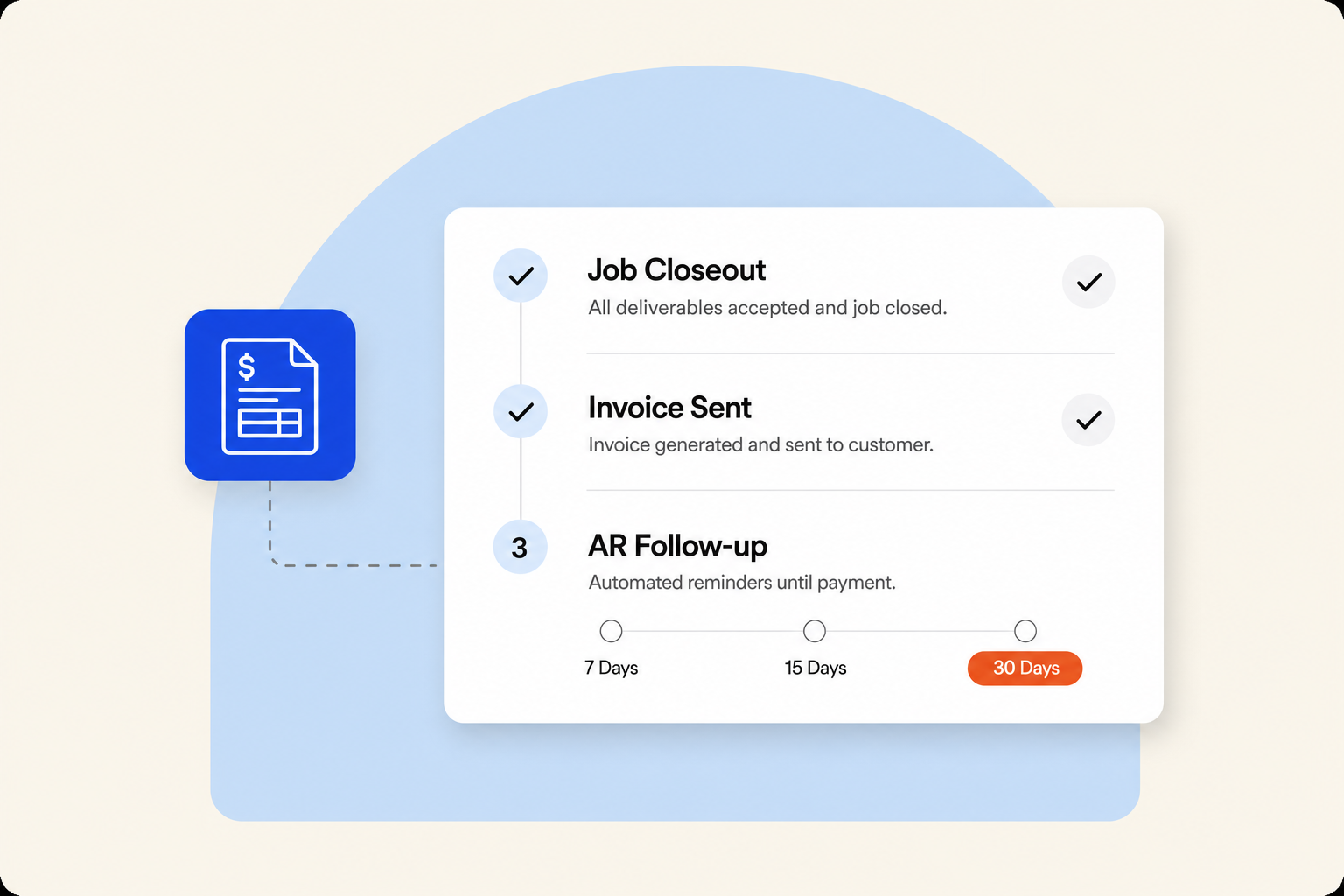
- Job closeout triggers invoicing automatically. When a technician marks a job complete inside Housecall Pro, ServiceTitan, or Jobber, a closeout workflow fires. The back-office team receives the job details and begins processing the invoice without waiting for the owner to prompt them.
- AI drafts the invoice from technician notes. AI pulls the service description, labor codes, and pricebook items from the job record and assembles an invoice draft. A human office manager reviews it for accuracy, applies any commercial-specific formatting requirements, and sends it. This is the "human-in-the-loop" model: speed from automation, accuracy from oversight.
- QuickBooks syncs automatically. Invoices, payments, and job costs flow from the FSM platform into QuickBooks without manual entry, keeping the books current without a separate reconciliation step.
- AR follow-up runs on a defined schedule. Unpaid invoices trigger structured follow-up at 7, 15, and 30 days, handled by the back-office team without the owner needing to track it. The HVAC billing and collections playbook covers the full escalation structure in detail.
The result is that completed jobs move to collected revenue faster, and the owner sees the status in their software without having to ask.
How Does the Right Fit Change for a 2 to 4 Truck HVAC Shop?
For shops in the two to four truck range, the back-office decision is different than it is for larger contractors. The volume isn't high enough to justify a full-time in-house hire, but the complexity, permits, rebates, commercial billing, maintenance plan tracking, is too high for a basic VA to handle without constant direction.
- At one to two trucks: The owner can usually manage admin personally, but it's consuming evenings and weekends. A managed service at this stage frees up 15 to 20 hours per week and lets the owner focus on field work and customer relationships instead of paperwork.
- At three to four trucks: Volume has outpaced what one person can handle reactively. Invoicing backlogs, missed rebate deadlines, and AR aging become real cash flow problems. This is the stage where a managed service with full ownership of billing and paperwork makes the clearest financial case.
- When adding pricebook and job costing support: Once a shop is running consistently, the next constraint is usually pricing accuracy and margin visibility. Bringing in HVAC job costing and price book systems as part of the back-office scope helps owners understand which jobs are actually profitable before they scale further.
- Scaling without adding office chaos: The goal for a two to four truck shop is to grow to five or more trucks without the back office becoming the bottleneck. That requires systems and ownership, not just more people doing more tasks.
How Do You Measure If Your Back-Office Support Is Working?
The right metrics for evaluating back-office performance are specific and trackable. If your support arrangement is working, you should see measurable improvement in invoicing speed, AR aging, and time spent on admin within the first 60 days.
- Invoicing speed: How many days between job completion and invoice sent? Same-day invoicing is the target. Just Right Mechanical saw a 700% increase in invoices issued in the first 30 days after WorkHero took over billing, with payments arriving 48% faster than the prior period.
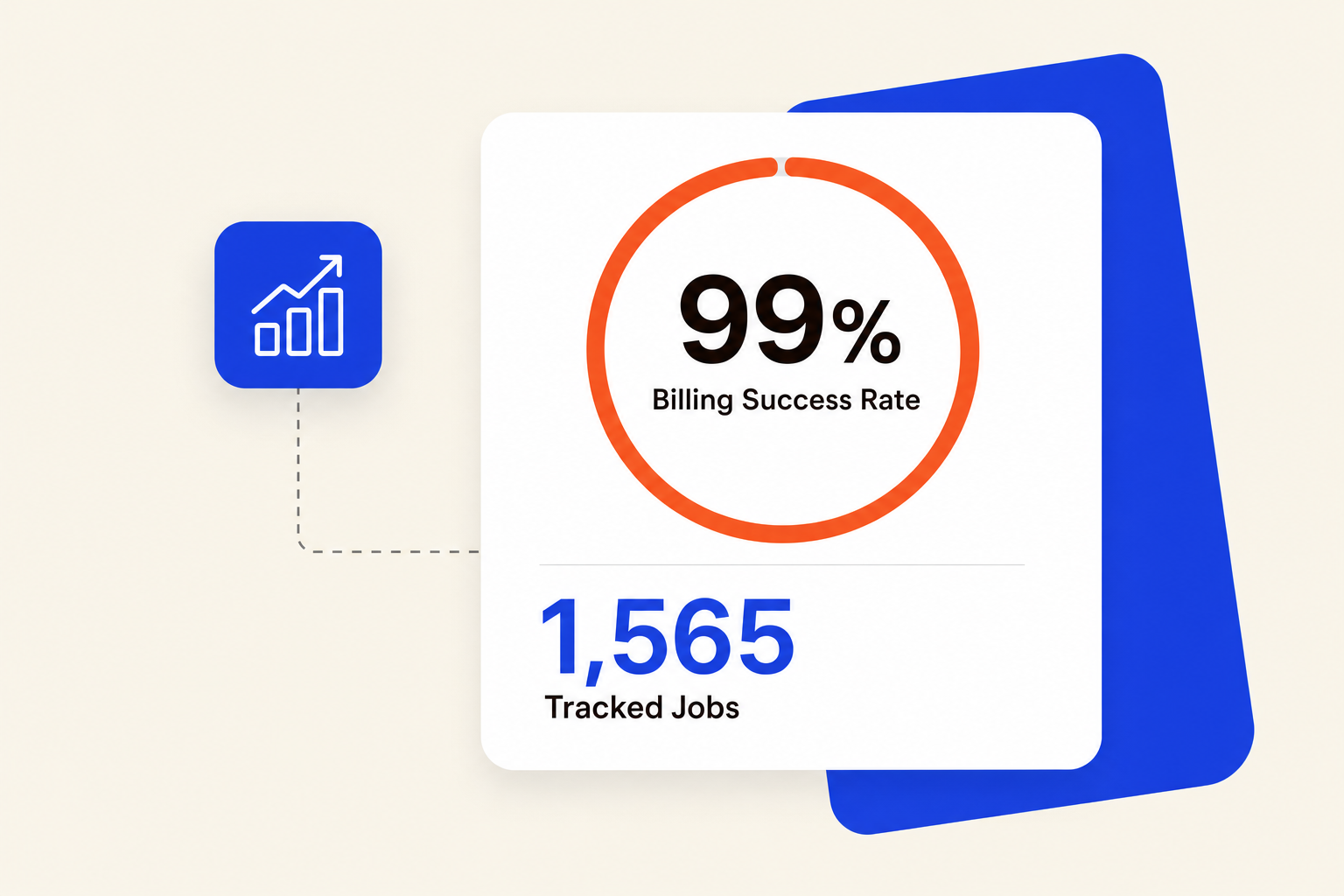
- Billing success rate: What percentage of completed jobs result in a collected invoice? ABL Comfort Solutions reached a 99% billing success rate across 1,565+ tracked jobs and 10+ properties after WorkHero built and maintained their billing infrastructure in Housecall Pro.
- AR aging: How much is sitting in the 30-to-60-day and 60-to-90-day buckets? A well-run back office keeps AR aging current and flags overdue accounts before they reach 60 days. The HVAC billing and collections playbook outlines the weekly AR visibility an owner should expect.
- Owner time on admin: How many hours per week are you still spending on invoicing, permit follow-ups, and customer communications? If that number hasn't dropped significantly within 30 days, the back-office arrangement isn't taking ownership, it's just adding a layer.
- Paperwork completion rate: Are permits filed before installs? Are equipment registrations submitted within the required window? Are rebates tracked through to collection? These are binary outcomes that either happen consistently or they don't.
