

Key takeaways
- Gross margin percentages hide real profitability: Two jobs with identical 40% gross margins can produce wildly different outcomes, with one earning $73.34 per hour and the other generating a $21.37 per hour loss, per Ruth King's documented case study.
- The formula requires trustworthy inputs: Net profit per hour is calculated as net operating profit divided by billable hours, with overhead cost per hour and a profit target stacked on top of direct labor, but the result is only reliable when job costing, pricebooks, and billable-hour tracking are accurate.
- Underpricing is usually an admin problem: Most HVAC owners aren't underpricing because they don't know the formula. They're underpricing because their books are unreconciled, their pricebooks are stale, and nobody is tracking which hours are actually billable.
Over 50% of home service businesses don't run at a profit, and weak accounting foundations, not weak sales volume, are the primary cause. HVAC pricing by net profit per hour is one of the clearest frameworks available for fixing that, but it only works when the numbers feeding into it are clean.
This article is based on How HVAC Owners Can Fix Pricing and Increase Net Profit Per Hour, an episode of the HVAC Know It All Business Edition podcast with Ruth King, founder and CEO of Financially Fit Business and author of The Courage to Be Profitable. Ruth has spent nearly 40 years analyzing contractors' financial statements.
This article walks through the formula, the benchmarks, and, critically, the admin and data problems that make most owners' pricing less reliable than they think. If you've run the math and still can't figure out where the money goes, the answer is usually upstream of the formula itself.
What Is Net Profit per Hour in HVAC Pricing?
Net profit per hour (NPH) is a dollar figure, not a percentage. As defined by Ruth King in HVACR Business, why net profit per hour pricing works: "Net Profit per Hour (NPH) = Total net operating profit ÷ billable (revenue producing) hours." That single number tells you what each hour of field work is actually producing after overhead and direct costs are covered.
Gross margin percentage tells you how much of each revenue dollar survives after direct costs. Net profit per hour tells you how many dollars of actual profit each hour of work generates. A shop running 40% gross margin on a two-hour service call and the same margin on a six-hour install job looks identical on a percentage basis. The dollar outcome per hour is completely different.
The "staying busy" problem is exactly where this metric earns its usefulness. A shop can run full schedules, post strong revenue numbers, and still clear almost nothing at the end of the month. When you divide net operating profit by the hours that actually produced revenue, you can see whether the business is generating profit per hour or just generating activity.
Why Does Pricing by Gross Margin Alone Fail HVAC Contractors?
Gross margin percentage masks the time dimension of profitability, which is where HVAC contractors get hurt most. As the ACCA net profit per hour breakdown notes, two jobs with identical 40% gross margins can tell completely different stories: one might earn you $73 per hour, while the other could actually cost you $21.68 per hour to complete.
Ruth King's JE/HT case study illustrates this directly. Both contractors carried the same 40% gross margin. One earned $73.34 per hour in net profit. The other lost $21.37 per hour. The difference came down to overhead structure and how many billable hours each business was actually producing, not the margin percentage on any individual job.
ACCA's own example is equally stark: an $89 service call that, once overhead is allocated and time is accounted for, produces only $4.60 per hour in net profit. A contractor looking only at gross margin on that call would see a healthy percentage. The hourly number tells the real story. Pricing decisions made from percentages alone will consistently underestimate the cost of slow jobs, long drive times, and high overhead per hour.
How Do You Calculate Net Profit per Hour for Your HVAC Business?
The calculation stacks three components: overhead cost per hour, a target net profit per hour, and direct labor. Here is the step-by-step method Ruth King laid out on the HVAC Know It All Business Edition podcast:
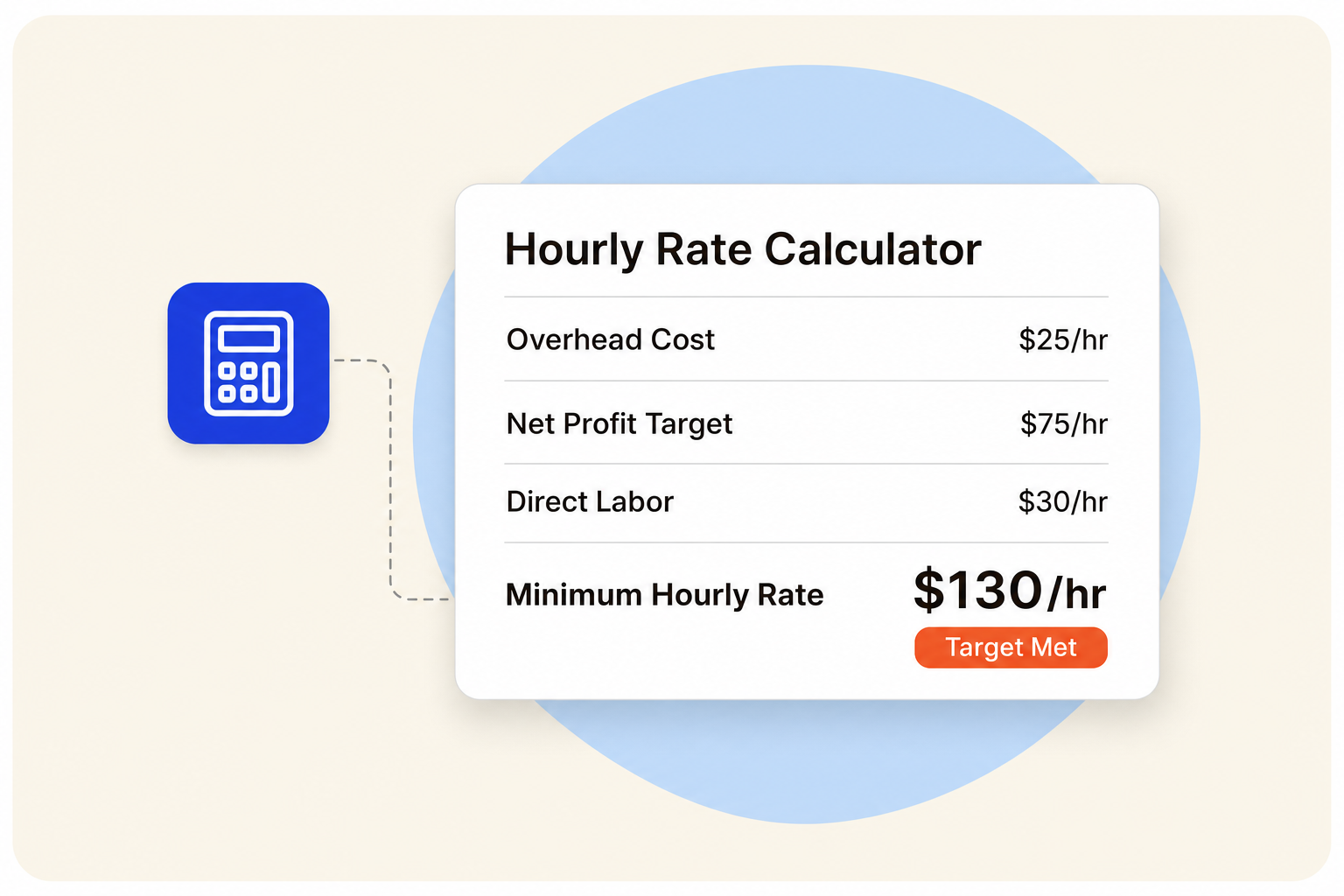
- Calculate your overhead cost per hour. Add up all overhead for the year, then divide by total billable hours. In a two-tech shop where each tech works 2,000 billable hours, that's 4,000 hours. If annual overhead is $100,000, overhead cost per hour is $25.
- Set a net profit target per hour. The national average for residential service is approximately $75 per hour, according to Ruth King. Add that to the overhead cost per hour: $25 + $75 = $100 gross profit needed per hour.
- Add direct labor cost. If your tech earns $30 per hour (fully burdened), your minimum hourly rate for service pricing is $130.
- Adjust for partial billability. As Ruth explains: if a tech is only billable half the time, double the rate. A tech billable 50% of their hours needs to generate $260 per billable hour to hit the same profit target.
"So our minimum is $130 an hour for pricing for our maintenance clients. And then if you're only billable half time, then your hourly rate demand service would be 260, double it. What you should be charging. It's very easy. It's not hard. There's no multiplication in percentages and guessing about what a percentage should be, how much you got on the bottom line, how much does your overhead cost add your direct cost. It's that easy." Ruth King, Financially Fit Business
What Inputs Do You Need to Price by Net Profit per Hour Accurately?
The formula is only as reliable as the four inputs feeding into it. Most owners' data breaks down in at least one of these areas, which means the pricing built from it is also unreliable. For a deeper look at how these inputs connect, see HVAC job costing and price books and job costing and margin visibility in Housecall Pro.
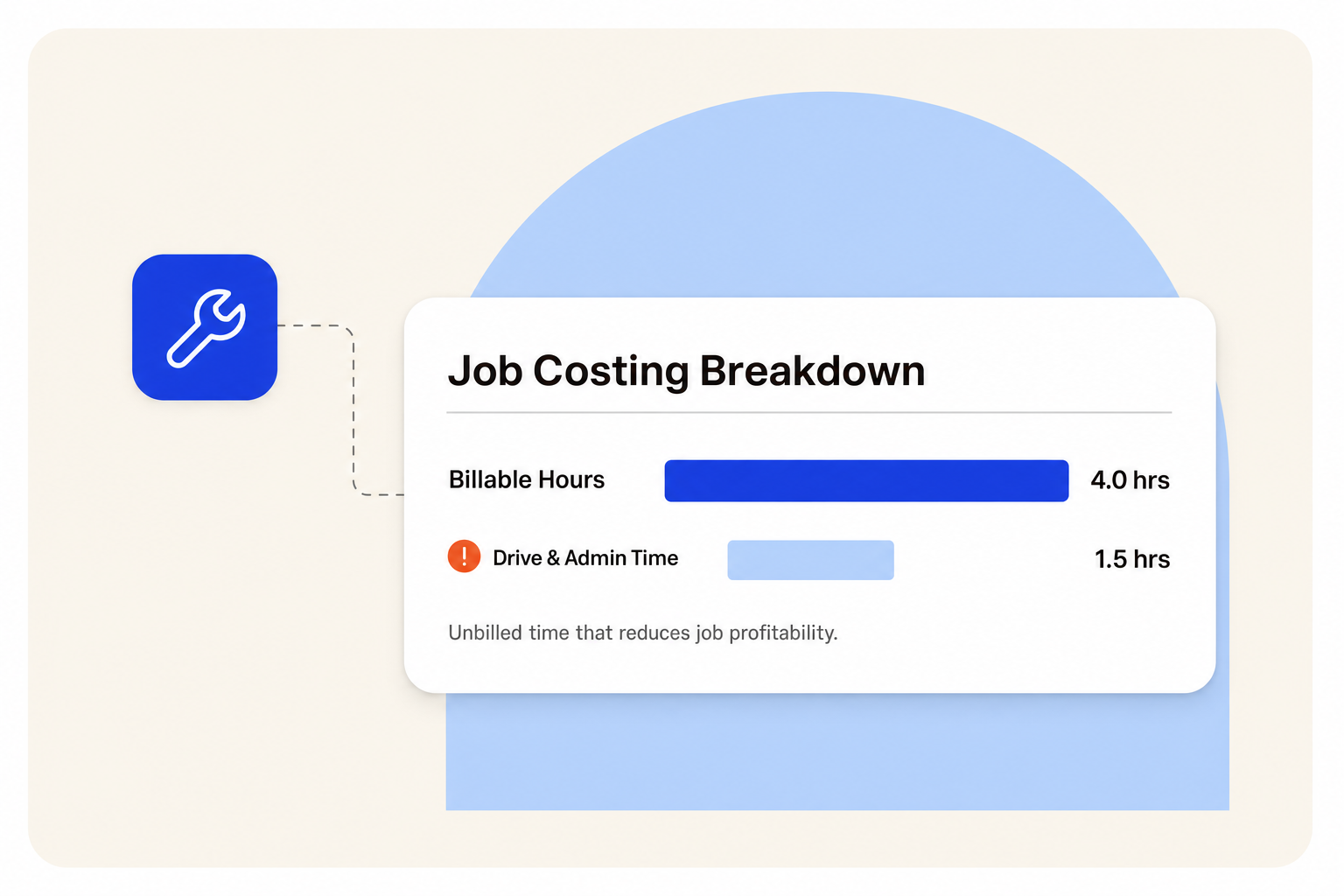
- Billable hours: Drive time, callbacks, permit runs, and time spent on hold with utilities all consume hours that don't generate revenue. If those hours aren't tracked separately, your billable hour count is overstated, and your overhead cost per hour is understated. The pricing math looks better than it is.
- Job costing: Full job costing must capture drive time, fuel, booties, tarps, and labor, not just parts and direct labor. When those smaller costs are excluded, reported margins look stronger than they actually are. See HVAC job costing and price books for how to structure this correctly.
- Pricebook structure: A pricebook turns job cost and margin target into a defensible selling price. For a capacitor replacement where material is $25 and one hour of labor is $100, total cost is $125. At 50% gross margin, the selling price is $250. At 60% gross margin, it's $312.50. That $62.50 difference per job compounds across hundreds of service calls annually. A custom flat-rate HVAC pricebook built from real cost and margin logic removes the guesswork.
- Overhead allocation: Total overhead divided by billable hours gives you overhead cost per hour. Ruth King's guidance puts healthy overhead at under $40 per hour for service and under $30 per hour for installation. Many shops exceed $60 per hour without realizing it, which means any pricing built on a lower overhead assumption is already short.
What's a Good Net Profit per Hour Target for an HVAC Shop?
Industry benchmarks vary significantly by work type. The HVAC net profit margin benchmarks 2026 show the 2024 ACCA Financial Benchmarking Study put the median HVAC contractor's net profit margin at 5.8%, with the top quartile averaging 13.2%. On a per-hour basis, targets differ by segment.
- Service work: The national average net profit target for residential service is approximately $75 per hour, according to Ruth King. This is the figure most commonly used as a baseline when building service pricing from the ground up.
- Residential replacement: Low-efficiency equipment installs carry a target around $100 per hour. High-efficiency residential equipment, where material costs are higher and margins need to compensate, runs closer to $200 per hour. The HVAC gross margin benchmarks by segment show residential service and maintenance running 50 to 58% gross, while equipment installs run 35 to 48%.
- Commercial work: Commercial net profit per hour varies more than any other segment. High-material jobs, such as large equipment replacements, can exceed $1,000 per hour. High-labor jobs, such as extended service contracts with heavy field time, can run as low as $20 per hour. Commercial pricing requires segment-level analysis, not a single benchmark figure.
These figures are sourced from industry benchmarking studies. Your own targets depend on your overhead structure, labor burden, and billable hour count, which is exactly why the calculation in the previous section matters more than any published benchmark.
How Do You Price Maintenance Agreements So They're Actually Profitable?
Maintenance agreements fail financially when the operational structure behind them is unclear, not because the pricing formula is wrong. The problems that erode margin on service plans are almost always administrative. See job costing and margin visibility in Housecall Pro for how these issues surface inside field service software.
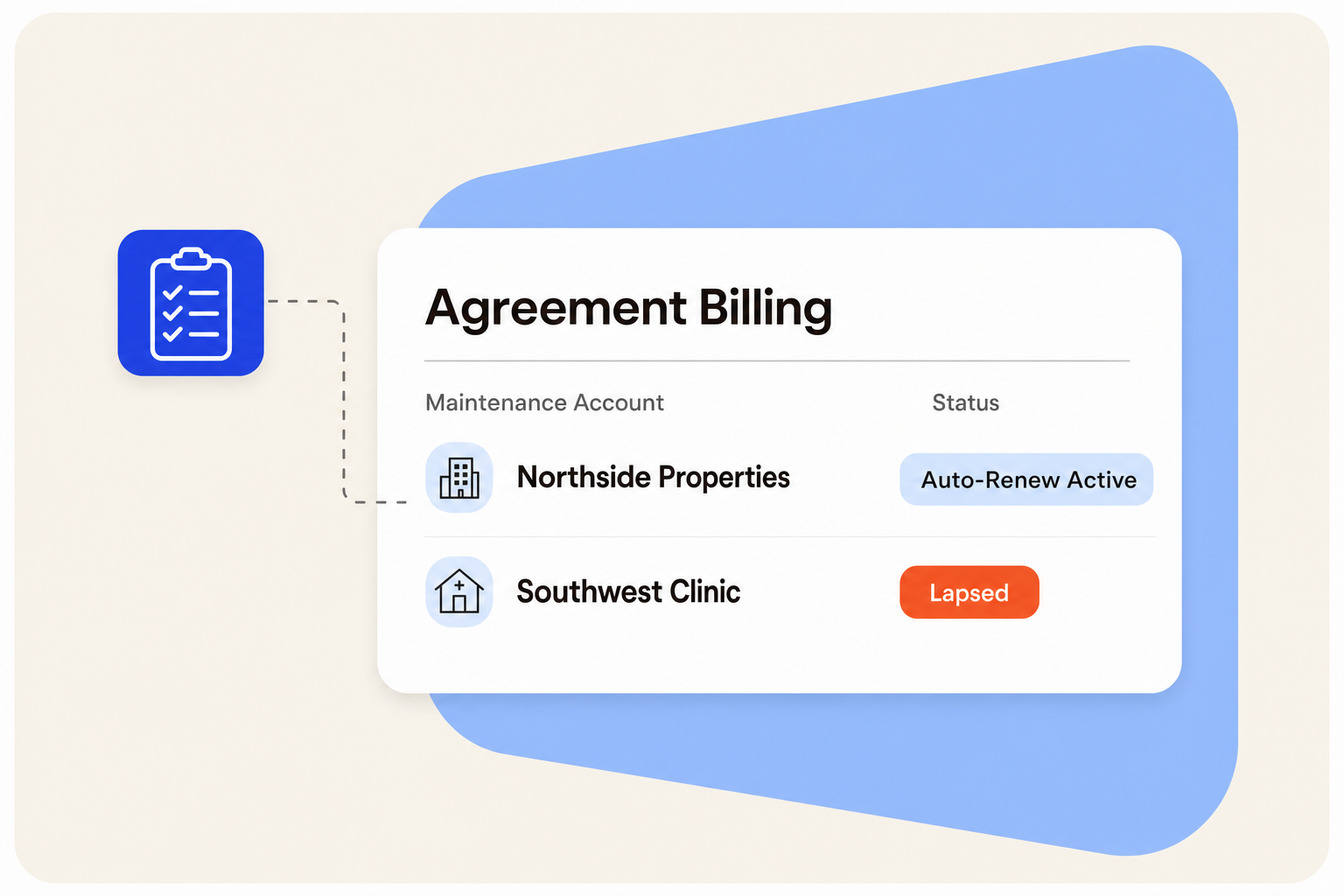
- Renewal ambiguity: If it's not clearly defined whether agreements auto-renew or require manual confirmation, plans lapse without anyone noticing, and the revenue disappears quietly.
- Equipment-level vs. household-level billing: Homes with two or three systems create billing confusion when plans are structured at the household level. Each system needs its own cost basis if the plan is going to be priced accurately.
- Billing cadence misaligned with service delivery: Collecting annual fees in January and delivering service in April creates a cash timing mismatch. Billing cadence should match when the work actually happens.
- Inconsistent discount logic: When technicians apply membership repair discounts inconsistently because eligibility rules aren't clear, margin erodes job by job without showing up anywhere obvious until a P&L review catches it.
How Do You Keep Net Profit per Hour Pricing Accurate as Costs Change?
A pricebook built once and left alone will produce inaccurate pricing within months. Supplier costs change, labor burden shifts with wage adjustments and benefits changes, and field edits inside Jobber, Housecall Pro, or ServiceTitan can quietly bypass the system's margin logic without triggering any alert.
The operational fix is a monthly P&L review that catches margin leakage before it compounds. Departmentalizing the P&L by service line, separating service from install, or residential from commercial, shows which part of the business is underperforming instead of hiding the problem inside one blended revenue number. Tracking HVAC KPIs and profit dashboards monthly gives you the visibility to catch a supplier cost increase or a labor burden shift before it's been priced incorrectly for six months.
Pricebook maintenance isn't a quarterly project. It's an ongoing operational function, the same way scheduling and invoicing are. Owners who treat it as a one-time build tend to discover the gap at year-end when the numbers don't match what they expected.
How Do You Fix Pricing When Your Admin Data Isn't Reliable?
Pricing accuracy is a back-office problem as much as it is a field problem. Over 50% of home service businesses don't run at a profit, and the primary cause is weak accounting foundations, not insufficient revenue. When job costing is incomplete, pricebooks are stale, and invoices go out late, the margin that pricing is designed to produce gets eroded before it ever reaches the bank account.
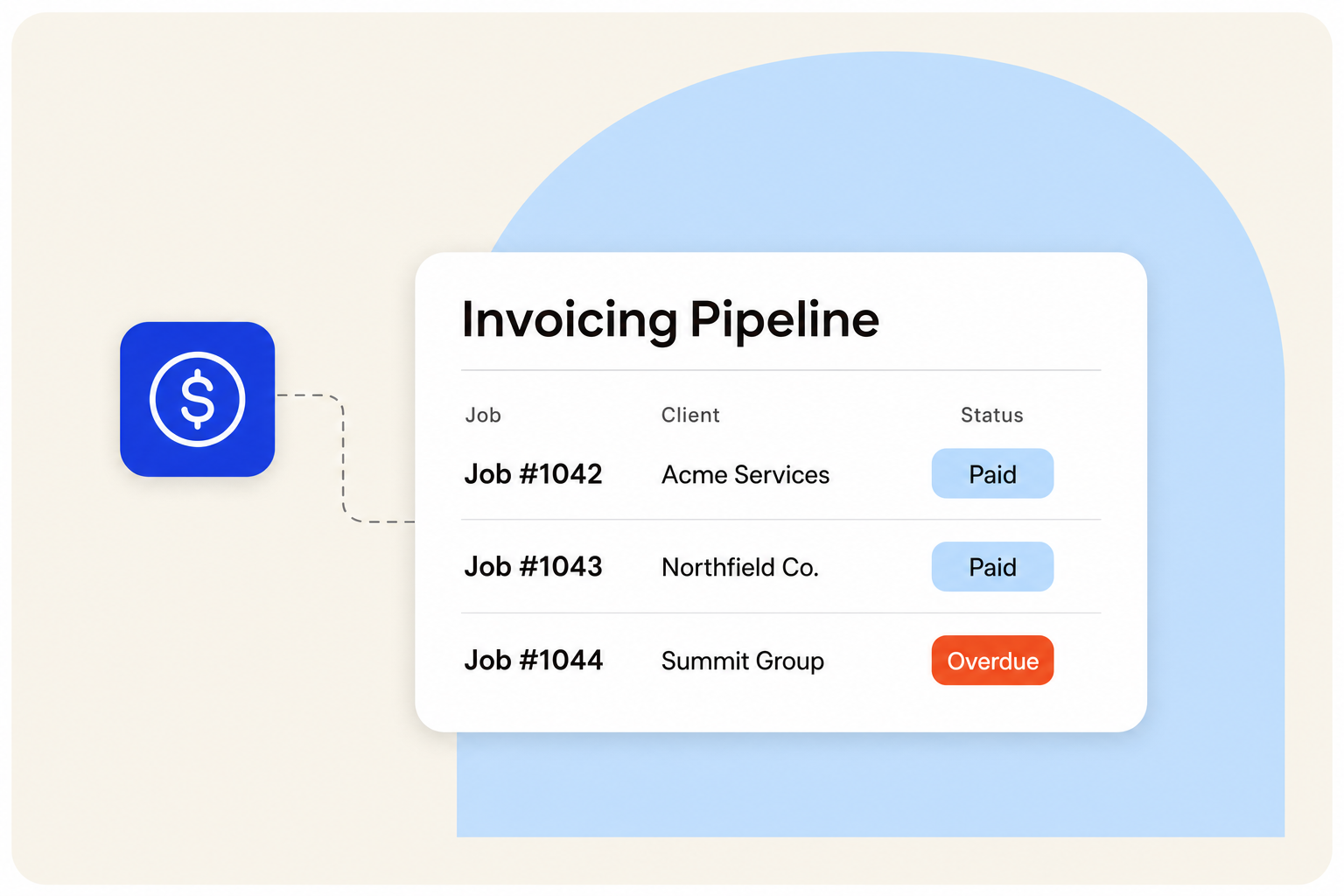
The concrete fixes are job costing cleanup, pricebook build and maintenance, and faster invoicing and collections. Understanding how HVAC pricing decisions affect cash flow is the starting point for diagnosing which of these is doing the most damage in your shop. Just Right Mechanical, a nine-person HVAC company, saw invoices issued increase by 700% and payments arrive 48% faster after taking billing ownership seriously. ABL Comfort Solutions tracked 1,565 service jobs with a 99% billing success rate once the right infrastructure was in place. In both cases, the pricing was never the issue. The admin systems protecting the margin were.
Solid HVAC invoicing and collections management is what converts a well-priced job into actual cash. Without it, even accurate net profit per hour pricing produces results that don't show up where they should.
Listen to the Full Conversation
This article is based on Ruth King's conversation with hosts Gary McCreadie and Furman Haynes on the HVAC Know It All Business Edition podcast (How HVAC Contractors Can Fix Bookkeeping and Understand Profit Before Going Broke and How HVAC Owners Can Fix Pricing and Increase Net Profit Per Hour). You can find these episodes, and every other episode of the show, on YouTube, Spotify, and Apple Podcasts, or browse them all on the WorkHero HVAC Business Podcast page.
