

Key takeaways
- Collections problems start at job closeout: Incomplete tech notes, missing PO numbers, and unconfirmed payment methods delay the invoice before any reminder tool even enters the picture.
- Four real options exist for small shops: Built-in FSM reminders, AI collections apps, VA or staffing help, and fully managed billing services each fit a different situation and budget.
- Benchmarks make AR measurable: Tracking your aging buckets and collection rate against a 35-55 day DSO and an 85.1% median collection rate turns a reactive problem into a managed one.
Most HVAC shops running 2-4 trucks carry more unpaid AR than they realize. Across shops that bring in outside billing support, $50K to $100K in outstanding AR is common, and some carry $300K. The jobs were completed. The problem is everything that happens between job closeout and collected cash.
This article compares the real options available for HVAC payment collection services, explains how the billing and follow-up process should actually work, and gives you the benchmarks to measure whether your current approach is keeping up.
What Are HVAC Payment Collection Services?
HVAC payment collection services cover the full cycle of invoicing, follow-up, payment reminders, and AR tracking together, not any single tool in isolation. For a 2-4 truck shop without a dedicated office manager, that entire cycle often falls on the owner after hours.
Jobs are being sold and completed every day, yet cash gets stuck between completion, invoicing, and collection. Owners tend to call it an AR problem, but in most cases it starts earlier: a job closes without the documentation the office needs to bill it cleanly. Incomplete technician notes, photos scattered across phones, missing PO numbers, or unclear billing instructions quietly push the invoice back before the payment clock even starts.
Software can automate reminders once an invoice exists. It can't fix a job that wasn't closed out properly. That distinction is what separates a software gap from an admin execution gap, and it's why managed HVAC invoicing and collections exists as a distinct category from FSM tools and reminder apps. Understanding that distinction is the starting point for choosing the right option.
Why Do HVAC Invoices Go Unpaid or Age Out?
Invoices age out for predictable, fixable reasons. Most of them happen before the reminder stage, not because of it. According to the 2025 HVAC industry admin survey findings, the most time-consuming administrative tasks are quotes, invoices, equipment and inventory management, and permits, which tells you where the friction actually lives.
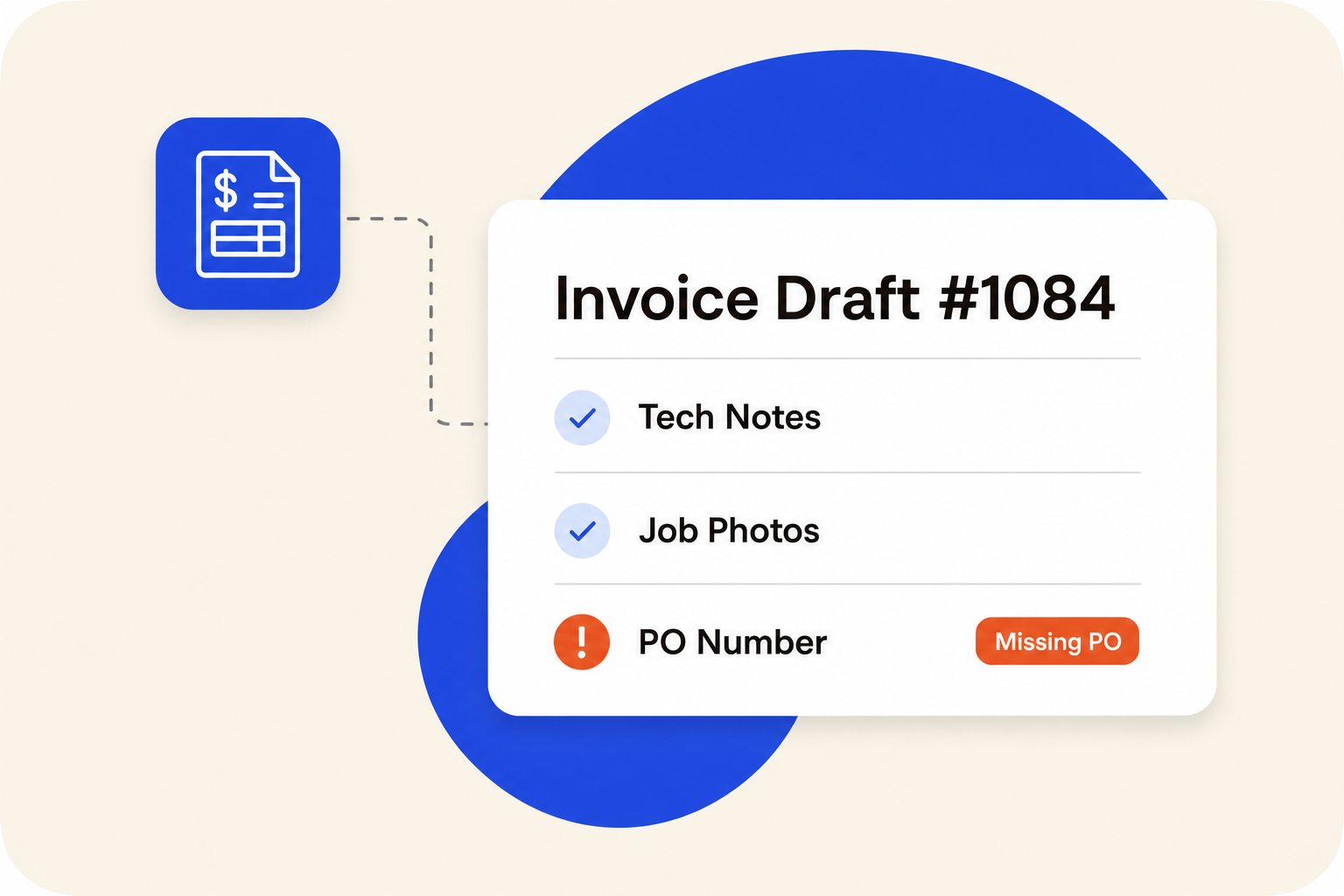
- Messy job closeout: When a tech leaves without complete notes, photos, or a confirmed payment method, the office can't invoice immediately. That delay pushes the entire collection timeline back, sometimes by days, sometimes by weeks. See the full breakdown in the HVAC collections playbook that works.
- No dedicated billing owner: When an office manager leaves or was never hired, invoicing responsibility gets split between the owner, a part-time admin, and whoever has time. None of them own it fully, so follow-up is inconsistent.
- Informal escalation: A reminder goes out when someone remembers. Then days pass. Then the next call feels awkward because there's no defined next step. Reactive follow-up produces reactive results.
- AR only checked when cash feels tight: By the time an owner notices the bank balance is off, weeks of missed follow-up have already accumulated. The HVAC payment terms and cash flow breakdown explains how that pattern compounds over time.
How Does HVAC Invoice Follow-Up and Payment Collection Actually Work?
A working collections process runs on a defined sequence from job closeout through escalation, not on whoever remembers to send a reminder. Here's how it should be structured, drawing from the HVAC collections playbook that works:
- Invoice immediately after job completion. Residential jobs get invoiced the same day. Commercial jobs get invoiced the same day or the following morning at the latest. Every day the invoice sits unsent is a day the payment clock hasn't started.
- Review AR weekly, not when cash feels tight. Pull total AR, aging buckets (0-30, 30-60, 60-90, 90+), unbilled completed jobs, and top overdue accounts by dollar amount. Without this visibility, you're always reacting. For shops using automation, AI-driven accounts receivable follow-up can run these reports and flag what needs action at defined intervals.
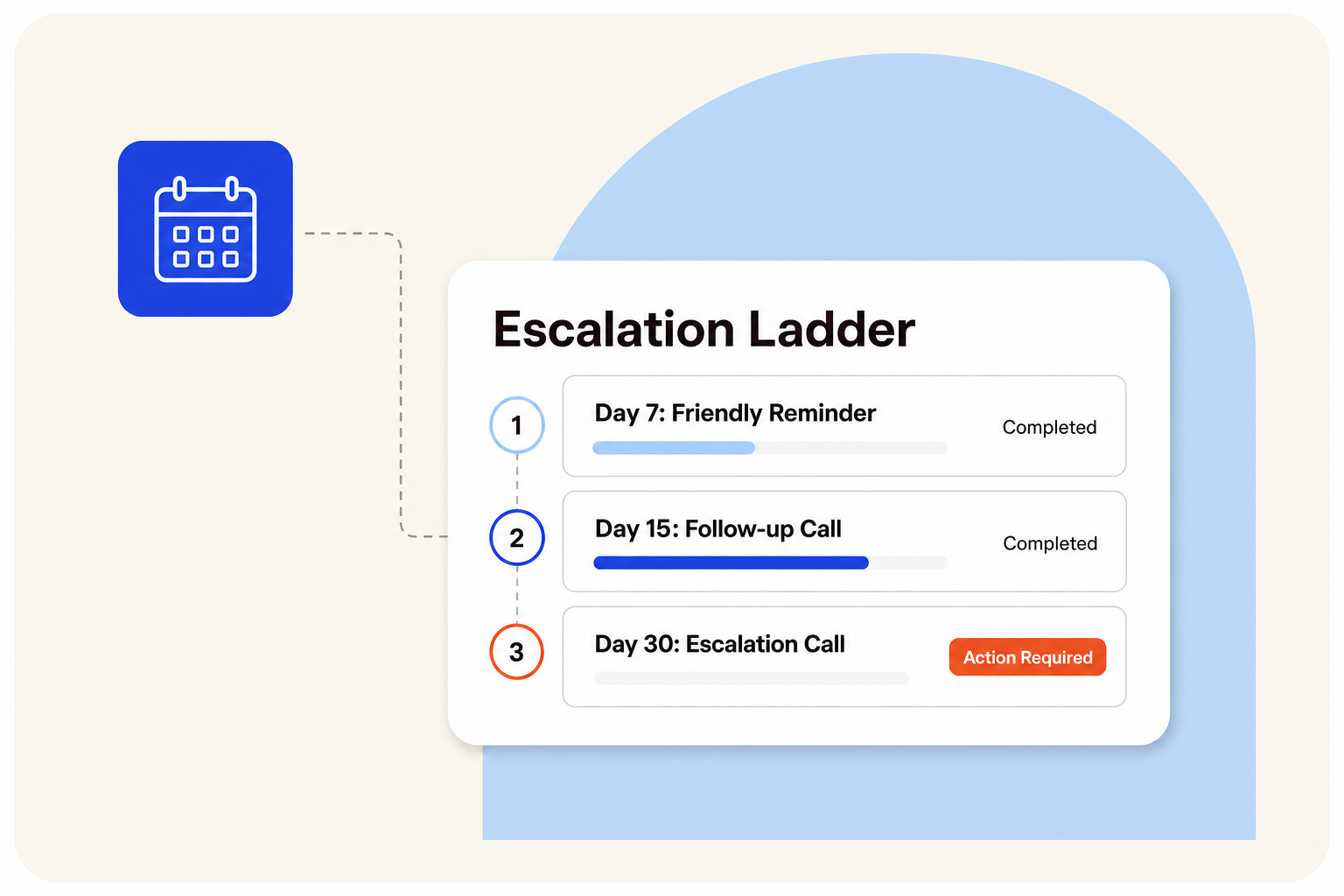
- Run a four-stage escalation ladder. Consistency is what actually moves payments, not aggression. The stages: 7 days (friendly reminder, resend invoice, confirm receipt); 15 days (follow-up call, confirm payment date, check for anything missing); 30 days (escalation call, firm date request, check for disputes or approval blockers); 45-60 days (formal written notice, potential service hold depending on account type). Each stage has a specific action tied to it, not just a reminder ping.
- Automate where it helps, own what automation can't do. FSM tools like Housecall Pro include automated invoicing and payment reminders that handle the early-stage touchpoints. A human still needs to make the 30-day escalation call and check for disputes.
What Are Your Options for HVAC Payment Collection Services?
Small HVAC shops have four real categories of help available. Most search results for this topic surface software and app comparisons almost exclusively, leaving the managed-service option largely unaddressed. Each option fits a different situation, budget, and level of involvement from the owner. For a full picture of what managed HVAC invoicing and collections looks like as a distinct category, the breakdown below covers what each option is, who it fits, and the main trade-off.
Software Reminder Tools Built Into Your FSM
FSM-bundled reminders are the lowest-friction starting point for shops already paying for a field service platform. Jobber's native invoice follow-up automation sends email and SMS reminders on a schedule tied to days since the invoice was sent, with a one-click pay link included. Housecall Pro and ServiceTitan bundle similar reminder functionality into their invoicing modules rather than selling it as a standalone product. See how automated invoicing and payment reminders work inside Housecall Pro specifically. This option fits shops who already have an FSM and just need the built-in feature switched on. The trade-off: it only works after a clean invoice exists, and it doesn't replace the escalation calls or dispute resolution that older invoices require.
AI-Powered Collections Apps
AI collections apps handle the reminder and follow-up work algorithmically, without a human initiating each contact. Some charge a percentage of what they recover, others charge a monthly subscription, and enterprise AR automation platforms usually require quote-based annual contracts that are more than most small shops need. These tools fit contractors who are comfortable with an algorithm contacting their customers and who already have a clean invoice backlog to work from. What they can't do is fix the closeout problems that keep an invoice from going out in the first place.
Virtual Assistants and Staffing Agencies
Generic VA or staffing models put the hiring, training, and management burden back on the owner. A VA without HVAC billing experience needs to learn your FSM, your closeout process, your commercial portal requirements, and your escalation scripts from scratch. A full-time office manager runs $50K+ per year before you factor in the time spent recruiting, onboarding, and managing that person. The main trade-off isn't cost alone: it's that the owner becomes the trainer and the manager, which is often the job they were trying to get out of.
Fully Managed Billing and Collections Services
A fully managed service handles invoicing, follow-up, and AR tracking inside the tools the owner already uses, with no new software to learn and no hiring required. WorkHero's approach pairs an experienced HVAC office manager with AI that drafts invoices directly from technician notes and pricebook logic, then runs the escalation ladder consistently. The results from named clients show what that consistency produces: Just Right Mechanical saw a 700% increase in invoices issued and 48% faster payments after WorkHero took over billing end to end (see billing chaos turned around fast). ABL Comfort Solutions, a commercial operation handling 150+ service calls per month across 10+ Boston-area properties, reached a 99% billing success rate across 1,565+ tracked jobs (see 99% billing success at high volume). This option fits owners who want the output of a dedicated office manager without the overhead of employing one.
How Does Accounts Receivable Management Differ Between Residential and Commercial HVAC Jobs?
Residential and commercial AR break down in different places and need different handling. As system costs have risen, with homeowner HVAC payment term preferences shifting because "HVAC doesn't cost $5,000 to $7,000 anymore; it's $15,000 to $25,000," residential payment conversations have gotten more complex too. But commercial jobs introduce a separate layer of process discipline that residential work doesn't require. See the full framework in the HVAC collections playbook that works.
Residential HVAC Payment Collection
Residential collections should be built around COD. The invoice gets reviewed before the tech leaves the driveway, the customer confirms a payment method on-site, and payment is collected in person whenever possible. If it can't be collected on-site, the invoice goes out the same day. Common slip points: the tech leaves without reviewing the invoice, payment method goes unconfirmed, or notes are incomplete so the office holds the invoice. Each of those delays pushes the payment clock back and makes follow-up harder than it needed to be.
Commercial HVAC Payment Collection
Commercial closeout depends on documentation and submission discipline, not just speed. PO numbers and billing instructions need to be confirmed before invoicing. Property managers require portal uploads matched to the original work order. QSR chains route invoices through corporate AP using store numbers and location codes, so a missing field means a rejected submission. When any part of that process is incomplete or late, payment cycles stretch to 60-90 days even with customers who normally pay on time. According to commercial HVAC A/R aging benchmarks, outstanding contractors have only 10.9% of their total AR aged over 90 days, which requires getting submissions right the first time.
How Much Do HVAC Payment Collection Services Cost?
Costs vary significantly across the four options, and the right comparison depends on what you're actually getting for the price. Here's how each category breaks down, using only verified figures from available sources.
- Software and app subscriptions: Basic invoicing tools run roughly $30-$70/month. Mid-tier FSM platforms run $100-$250/month, and full FSM suites run $250-$500+/month. You still need someone to run them.
- Percentage-of-recovery apps: Some AI collections tools charge around 10% of the amount they recover, with no monthly fee. The cost scales with what's collected, which can work for clearing a backlog but adds up on high-volume AR.
- In-house office manager: A full-time office manager runs $50K+ per year. That figure doesn't include the time spent recruiting, training, and managing that person, or the disruption when they leave.
- Fully managed billing service: WorkHero's entry-level plan covers invoice follow-up, payment reminders, and billing at a monthly rate that represents a 60% cost savings compared to in-house staff, with no hiring and no training required. Details at managed HVAC invoicing and collections. For a real-world example of what that investment produces, see billing chaos turned around fast.
How Do You Measure and Maintain Healthy HVAC Accounts Receivable?
Healthy AR requires a weekly review habit and external benchmarks to measure against, not just a gut check when cash feels tight. Pull these numbers every week and compare them to industry standards.
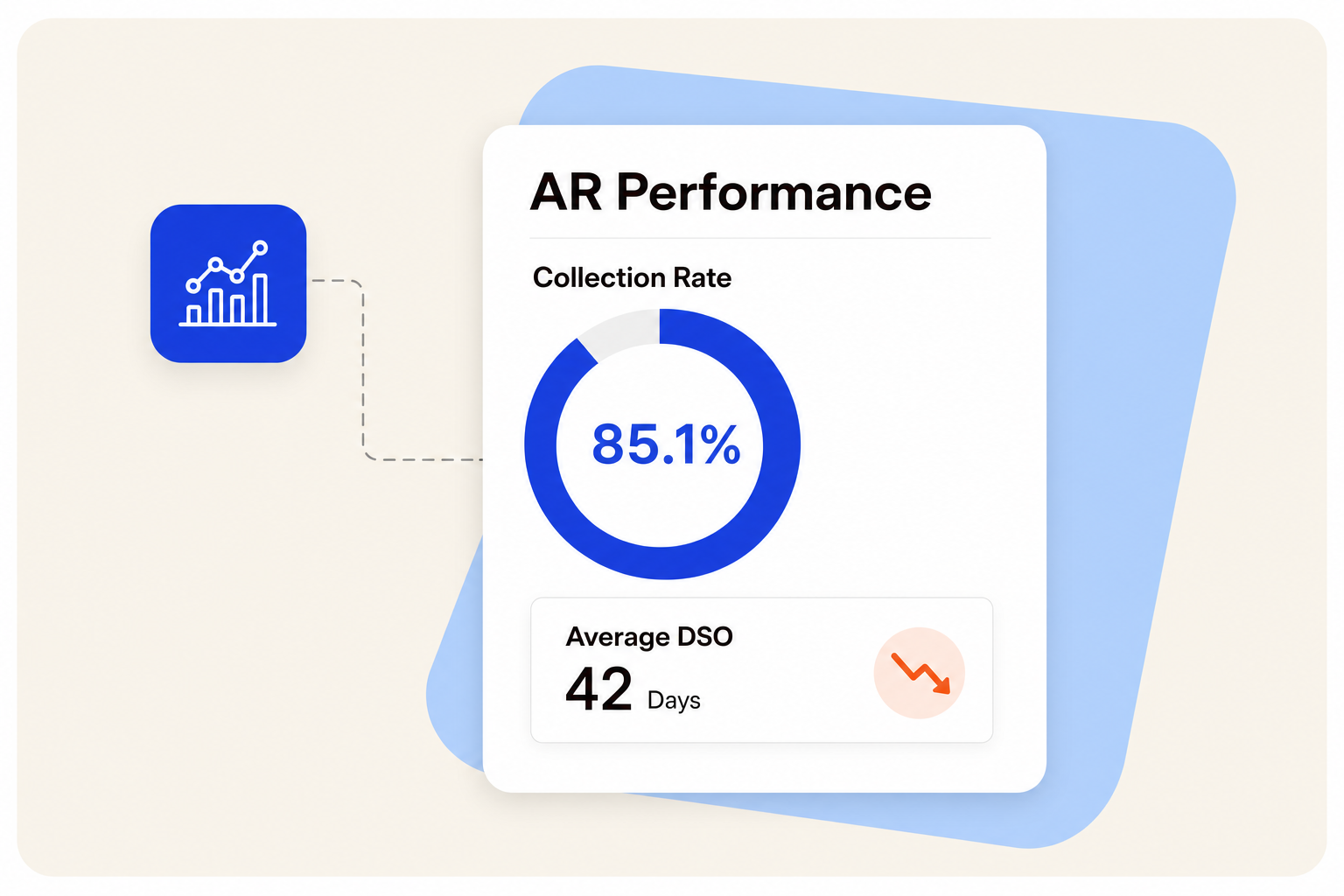
- Total AR and aging buckets: Review 0-30, 30-60, 60-90, and 90+ buckets weekly. The 90+ bucket is the clearest signal of a process problem. Per HVAC contractor DSO industry benchmarks, the average HVAC contractor carries a DSO of 35-55 days. If yours is running higher, the aging buckets will show you where the backlog is sitting.
- Unbilled completed jobs: Any job that's complete but not invoiced is revenue that hasn't started its collection clock. This number should be zero or close to it at the end of every business day.
- Collection rate vs. benchmark: Per median HVAC collection rate data, the median collection rate across 464 HVAC contractors is 85.1% (cash collected divided by billed revenue). The top decile reaches 96.0%. If your rate is below 85%, the gap is measurable and worth investigating by aging bucket.
- Top overdue accounts by dollar amount: Prioritize follow-up by dollar value, not just by age. A 45-day invoice for $8,000 deserves more attention than a 60-day invoice for $400.
- Commercial invoices awaiting portal submission: These are the invoices where the payment clock hasn't started yet because the submission step isn't complete. Track them separately from invoices that have been submitted and are waiting on the customer's payment cycle.
Running this review once a week, and then acting on what it shows, is what separates shops that manage AR from shops that react to it. The full process for building that habit is in the HVAC collections playbook that works.
