

Key takeaways
- Completed jobs that don't get paid hurt your cash position just as much as jobs you never booked. Most HVAC cash flow problems trace back to gaps between job closeout, invoicing, and follow-up, and those gaps widen as volume grows.
- Residential and commercial billing require different collection systems. Residential should be built around collecting on-site or invoicing the same day, while commercial depends on PO numbers, portal submissions, and documentation discipline before the payment clock even starts.
- A staged escalation process gets you paid faster than ad hoc reminders. A consistent ladder from a friendly reminder at 7 days through a formal notice at 45 to 60 days outperforms any approach that relies on someone remembering to follow up.
According to collecting payment at HVAC job completion data from ACHR News, 33% of customer payments run more than a week late. For a shop running three or four trucks, that's not an occasional inconvenience; it's a recurring cash flow problem that compounds across a busy season.
This article covers the full cycle of HVAC payment collection services: what breaks down and where, how residential and commercial billing differ, what a working accounts receivable process looks like, and how to recover late payments without damaging customer relationships. If you're handling any of this yourself at night or on weekends, you'll find a clearer picture of what a structured system actually requires.
What Is HVAC Payment Collection, and Why Do Completed Jobs Go Unpaid?
HVAC payment collection services cover the full cycle from job closeout through invoicing to collected cash, not just the moment an invoice gets sent. A job isn't financially complete until money is in your account, and every step between the tech leaving the driveway and that deposit hitting matters.
Owners who carry unpaid A/R aren't usually bad at billing. They're busy doing the work. Invoices go out late because notes are incomplete. Follow-up doesn't happen because no one owns it. The payment clock never starts because a PO number was missing at closeout. None of these are personal failures; they're operational gaps that widen as job volume increases.
The dollar amounts involved are significant. Across the shops that use HVAC invoicing and collections management support, $50,000 to $100,000 in uncollected A/R is common, and some shops carry $300,000. In most cases, invoices sat for weeks because closeout, billing, and follow-up never ran on a stable cadence, and the owner didn't realize how much was owed until cash started feeling tight. The full HVAC billing and collections playbook starts at job closeout, not at the reminder email.
Why Does HVAC Invoice Follow-Up Break Down in Small Shops?
Invoice follow-up breaks down in small shops because no one owns it consistently. Reminders go out when someone remembers, which means they often don't go out at all during a busy week.
The timing problem is real. According to commercial HVAC average payment timeline data from ACHR News, the average time to get paid is 28 days. That's the average, meaning plenty of invoices run longer. And with 33% of payments arriving more than a week late, a shop with 40 open invoices at any given time is statistically carrying 13 or more that are already past due.
The bandwidth issue compounds this. The HVAC admin hours per week survey from the 2025 HVAC Industry Pulse report found that companies with 1 to 10 employees average 15.4 administrative hours per week. When scheduling, permits, customer calls, and payroll all compete for that same block of time, invoice follow-up is the task that gets pushed. It doesn't feel urgent until the bank balance does.
The real problem isn't getting the invoice out the door. It's what happens after. An invoice sent is not an invoice paid, and the gap between those two events is where most small shops lose ground.
What Does Effective Accounts Receivable Management Look Like for HVAC Contractors?
Effective accounts receivable management means having a clear weekly picture of what's owed, by whom, and for how long, and then acting on it before the backlog compounds. Reactive A/R checking, where you only look when the bank balance looks off, means you're always fixing a problem that's been building for weeks.
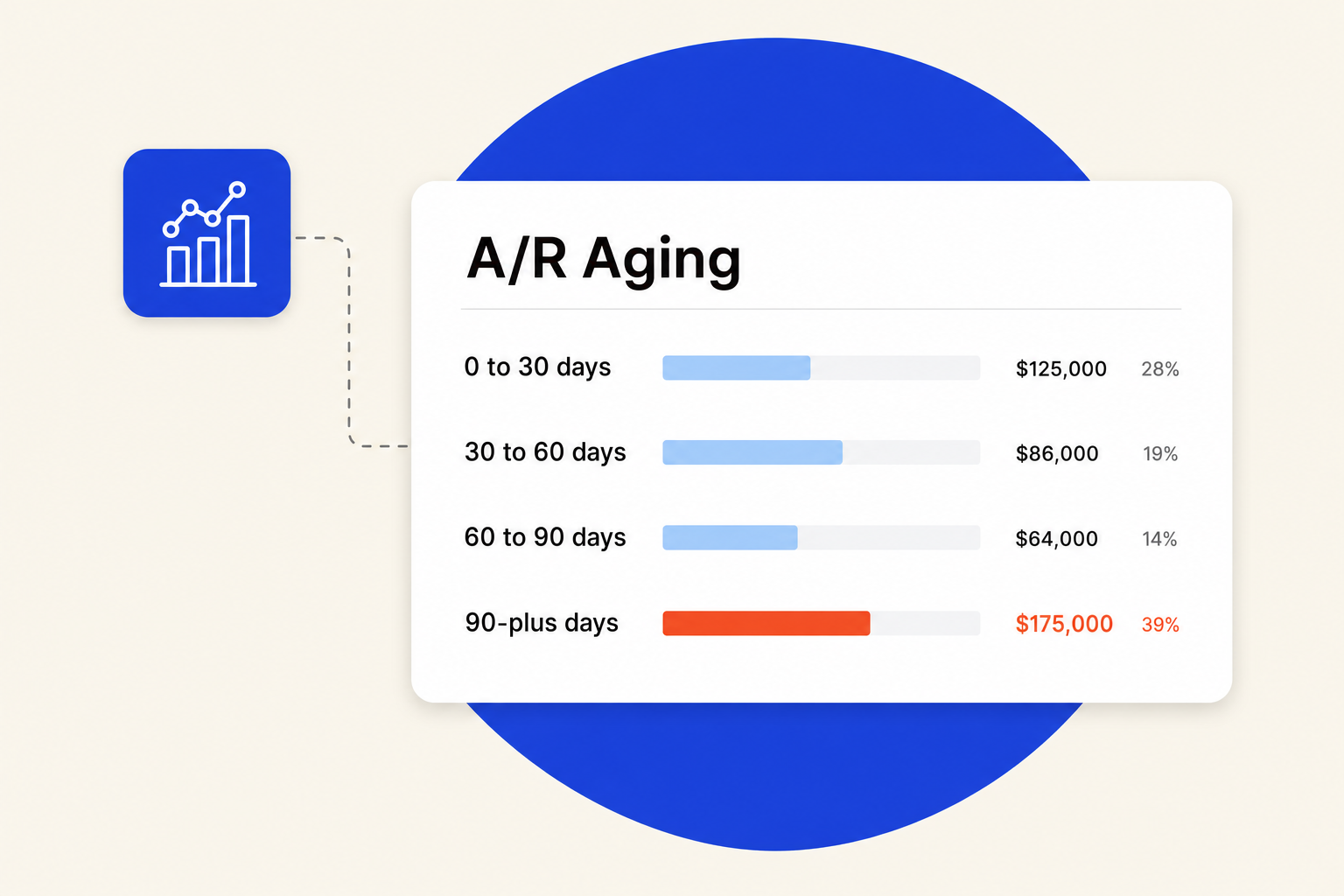
Every owner should be able to see the following numbers on a weekly basis:
- Total A/R: The full dollar amount outstanding across all customers, not just what's past due.
- A/R aging buckets: Balances segmented into 0 to 30, 30 to 60, 60 to 90, and 90-plus days so you can see where money is getting stuck.
- Unbilled completed jobs: Jobs the tech closed out but that haven't been invoiced yet, which represents revenue that hasn't even entered the collection cycle.
- Weekly collections target: A specific dollar amount to collect that week, tied to your cash flow needs, not just a vague intention to follow up.
- Top overdue accounts by dollar amount: The five or ten accounts that represent the most exposure, so follow-up effort goes where it matters most.
Without this visibility, the pattern is predictable: you notice problems when cash gets tight, then spend days trying to fix weeks of missed follow-up at once. Payment delays also have a pricing consequence. According to payment delays inflating contractor bids research from Built, slow payments inflate bids by 8% as contractors price in payment risk. That means chronic A/R problems don't just hurt current cash flow; they quietly distort your pricing over time.
What Are Your Options for Customer Payment Collection Services?
There are four realistic options for handling customer payment collection, and each comes with a different set of trade-offs.
- Doing it yourself: You handle invoicing, follow-up calls, and A/R review on evenings and weekends. No added cost, but the follow-up is inconsistent because your attention is split, and the work doesn't stop when you're busy in the field.
- Software automation alone: Platforms like Housecall Pro and Jobber can send automated reminders and allow customers to pay online. Automated invoicing and payment reminders in HCP work well for straightforward residential jobs. The gap is exception handling: when a customer goes quiet, a PO number is rejected, or a property manager portal submission stalls, the software sends another reminder. Someone still needs to make the call.
- A full-time office manager: Hiring in-house gives you dedicated ownership of billing and collections, but it comes with $50,000 or more per year in salary, plus recruiting time, training, and turnover risk. When that person leaves, the process often leaves with them.
- A generic virtual assistant: Hourly VA services can handle task-based work, but HVAC billing has enough nuance (PO requirements, portal submissions, QSR store codes, rebate documentation) that a VA without industry experience needs constant direction. You end up managing the process instead of delegating it.
- A dedicated HVAC back-office model: A team that works inside your existing tools, understands HVAC billing mechanics, and owns follow-up end to end. This model handles the exceptions that software misses, without the hiring overhead of a full-time employee. Plans are month-to-month and built around scope, not a long-term contract.
The choice usually comes down to what you can actually sustain. Software handles the easy cases. Everything else requires a person who knows what to do when the invoice stalls.
How Does HVAC Contractor Billing Differ Between Residential and Commercial Customers?
Residential and commercial billing break down differently and require different systems. A single process that tries to cover both usually serves neither well.
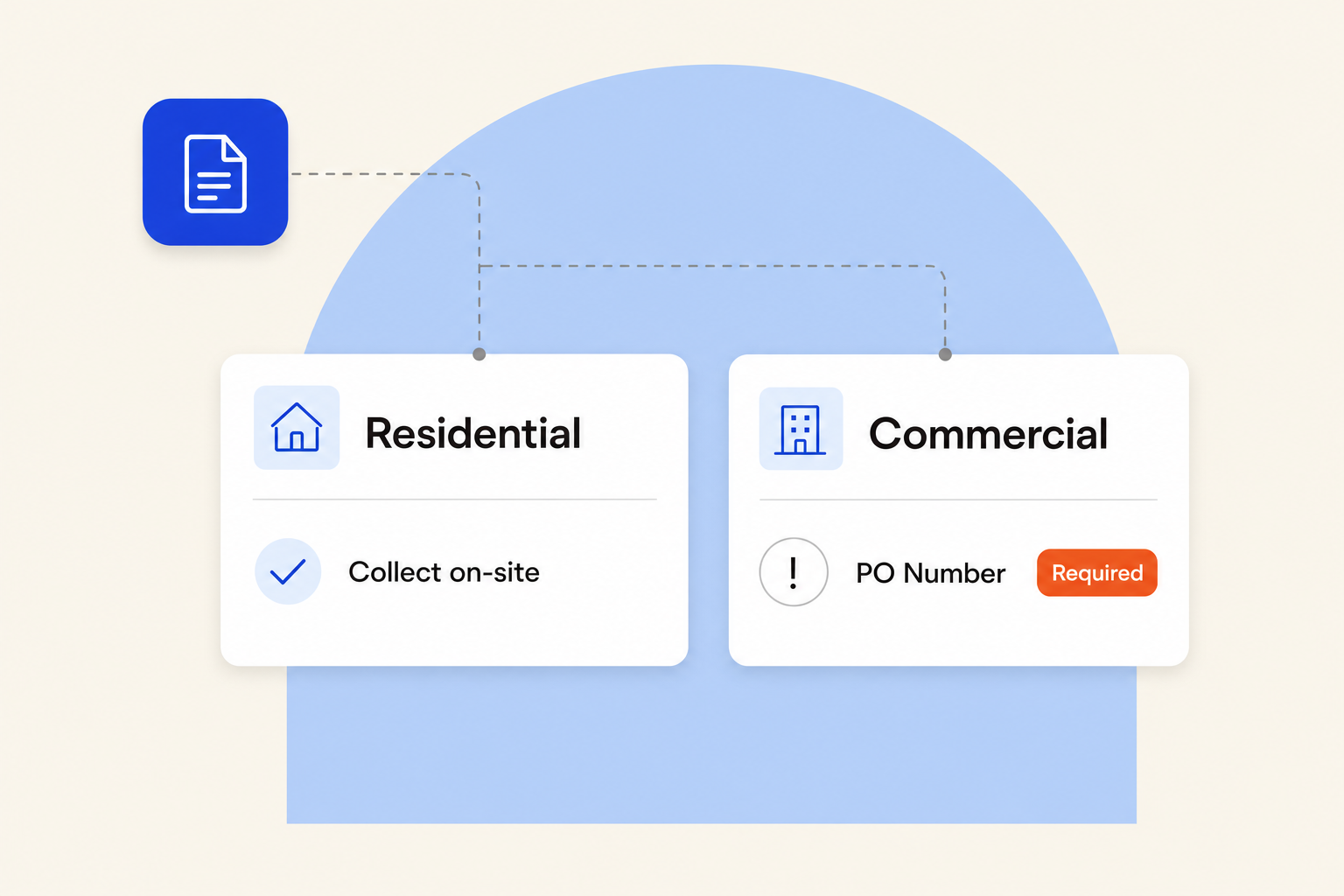
Residential HVAC Billing
- Collect on-site whenever possible: The invoice should be reviewed before the tech leaves the driveway, with payment method confirmed while the tech is still there. COD is the standard to build toward, not an exception.
- Same-day invoicing if payment isn't collected: If the customer can't pay on-site, the invoice goes out the same day, not when the office catches up. Every day of delay pushes the payment clock back.
- Complete technician notes and timestamped photos at closeout: Incomplete notes are the most common reason residential invoices sit. When the office has to chase documentation, billing slows, and collections gets harder than it needed to be.
For more on how payment terms affect residential cash flow, see HVAC payment terms and cash flow strategy.
Commercial HVAC Billing
Commercial billing breaks down earlier in the process than most owners expect. The customer may pay on their normal cycle, but only after the invoice has been accepted into their system, and that depends entirely on documentation and submission discipline.
- Missing PO numbers cause invoice rejections: If the PO number isn't confirmed before the invoice goes out, the invoice gets kicked back and the payment clock resets.
- Property manager portals require specific submission steps: Many property managers require invoices to be matched to the original work order inside a vendor portal before they're approved. Submitting by email instead of through the portal means the invoice doesn't enter the approval workflow at all.
- QSR chains add another layer: Quick service restaurant accounts require store numbers, location codes, and the correct billing entity so invoices route properly through corporate accounts payable. Missing any of these delays payment regardless of the customer's intent to pay.
ABL Comfort Solutions, a commercial HVAC operation serving 10-plus Boston-area properties, each with different PO requirements and payment portals, achieved a 99% billing success rate across 1,565-plus tracked service jobs. The ABL Comfort Solutions 99% billing success case study shows what's possible when commercial documentation requirements are turned into repeatable workflows rather than left to memory.
How Do You Recover Late Payments Without Damaging Customer Relationships?
A consistent escalation process recovers late payments more reliably than emotional or ad hoc outreach. Customers often pay faster when they know you have a process, because it signals that follow-up will continue regardless of whether they respond.
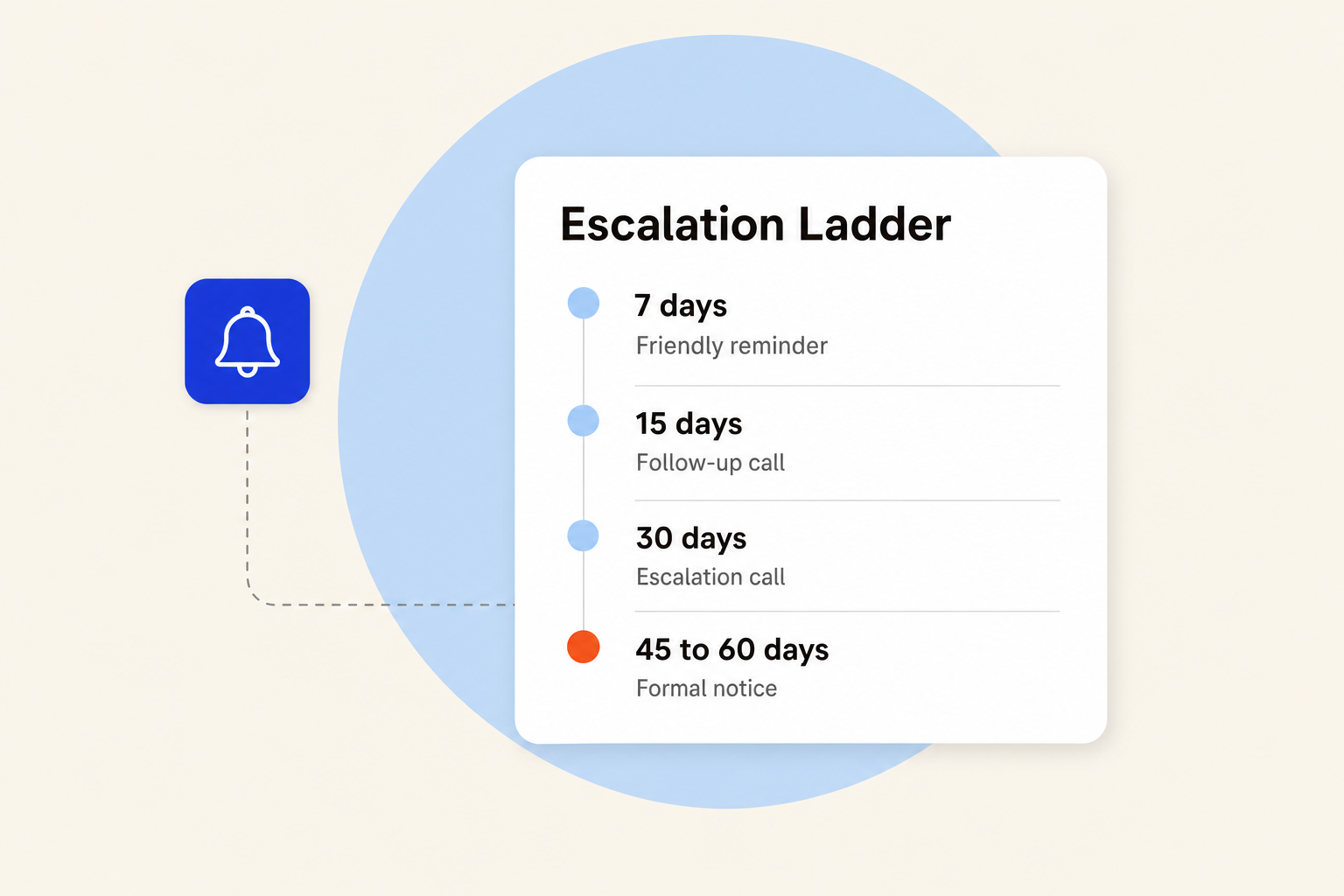
With collecting payment at HVAC job completion data confirming that 33% of payments run more than a week late, a defined escalation ladder isn't optional for a shop with volume. Here's the five-stage structure:
- 7 days: Friendly reminder. Resend the invoice, confirm it was received, and check that the billing contact is correct. This catches the cases where the invoice genuinely got lost.
- 15 days: Follow-up call. Call the customer directly, confirm whether anything is missing or in dispute, and get a specific payment date on record.
- 30 days: Escalation call. Make a firm date request, check for approval blockers on commercial accounts, and document the conversation. The tone stays professional and logistics-focused, not emotional.
- 45 to 60 days: Formal notice. Send written follow-up and, depending on the customer type and your agreement, consider a service hold for repeat offenders. High-value accounts warrant careful handling at this stage.
This process doesn't involve legal threats or formal collections agency involvement. It's a structured communication cadence that keeps invoices moving through the payment cycle. One ignored invoice across a busy season is manageable. Ten of them, compounding without follow-up, creates a cash flow problem that takes months to unwind. Weekly A/R review catches the pattern before it reaches that point.
How Does WorkHero's Invoicing Support Work Inside Your Existing Tools?
WorkHero's office managers work inside Jobber, HouseCall Pro, QuickBooks, and ServiceTitan rather than requiring new software or a new workflow. The operational model is built around taking full ownership of billing and collections, not just handling tasks when asked.
- HVAC-specific expertise from day one: The team brings 125-plus years of combined HVAC office management experience, which means no ramp-up time explaining what a PO number is or how a property manager portal works.
- AI-assisted invoice drafting: Technician notes get turned into invoice drafts using AI, pulling the correct items from the pricebook and applying the right labor logic. The invoice is prepared for review and sending, not rebuilt from scratch by someone in the office. For more on how this works in practice, see AI-driven AR tracking for HVAC shops.
- Weekly owner check-ins: A/R issues, overdue invoices, and unbilled jobs surface on a set cadence, not when cash gets tight. The owner sees the numbers and the follow-up plan, not a pile of unresolved items.
- Month-to-month, no long-term contract: Plans are built around the scope the shop needs, with no commitment beyond the current month.
The documented outcomes from this model are specific. Just Right Mechanical, a 9-person HVAC company, saw invoices issued increase by 700% and payments arrive 48% faster within 30 days of handing off billing ownership. On-time payments improved by 138% across both residential and commercial accounts. The full story is in the Just Right Mechanical billing turnaround case study. Across WorkHero's customer base, site-wide figures show 7.5x faster invoicing in the first month, approximately 20 hours per week saved, and 60% cost savings compared to in-house staff. The difference in every case was consistent follow-up and clear ownership of the collections process.
