

Key takeaways
- Back-office capacity sets the real ceiling: Scaling an HVAC business is bottlenecked by invoicing, permits, rebates, and follow-ups more often than by trucks, techs, or leads, and growth makes an already-strained admin system worse, not better.
- The warning signs are operational, not revenue-based: Missed follow-ups, late invoices, a slipping service standard, and a team that needs constant hand-holding all signal the same underlying problem, regardless of how much revenue is on the books.
- A full-time office manager costs $50K+ per year: Month-to-month outsourced back-office support built for 2-4 truck shops is a real, lower-risk alternative that works inside existing software like Jobber, Housecall Pro, QuickBooks, and ServiceTitan.
According to the 2026 EGIA HVAC contractor survey, the dominant mindset across the industry right now is growth. Most owners want to scale. Far fewer have thought through what actually breaks when they try.
This article walks through the real constraints on HVAC business growth, starting with the admin infrastructure that most owners overlook until it's already causing problems. You'll find specific warning signs, a direct answer on hiring techs, and a clear picture of what outsourcing your back office actually looks like day to day.
What Does It Mean to Scale an HVAC Business?
Scaling means increasing revenue and job volume without a proportional increase in owner time or operational chaos. That's the distinction most advice on how to scale an HVAC business skips over entirely.
Growing and scaling aren't the same thing. Adding a truck and a tech is growth. If you're also adding 10 more hours of your own paperwork per week to support that truck, you haven't scaled anything. You've just made your current situation bigger and more expensive. Scaling means the systems handling scheduling, invoicing, permits, and customer follow-up can absorb more volume without you personally becoming the processing bottleneck.
Most competitor content on this topic frames scaling as a marketing or hiring problem: get more leads, recruit better techs, build a stronger culture. Those things matter, but they're downstream of a more basic question. Can your back office actually handle what you're about to throw at it? If the answer is no, more trucks and more leads will expose that faster, not fix it.
Why Do HVAC Businesses Hit a Growth Ceiling Before They Run Out of Demand?
Demand isn't usually what stops a small HVAC shop from growing. Admin capacity is. When the owner is personally handling scheduling, invoicing, permit filings, and customer follow-ups, the business can only grow as fast as one person can process paperwork.
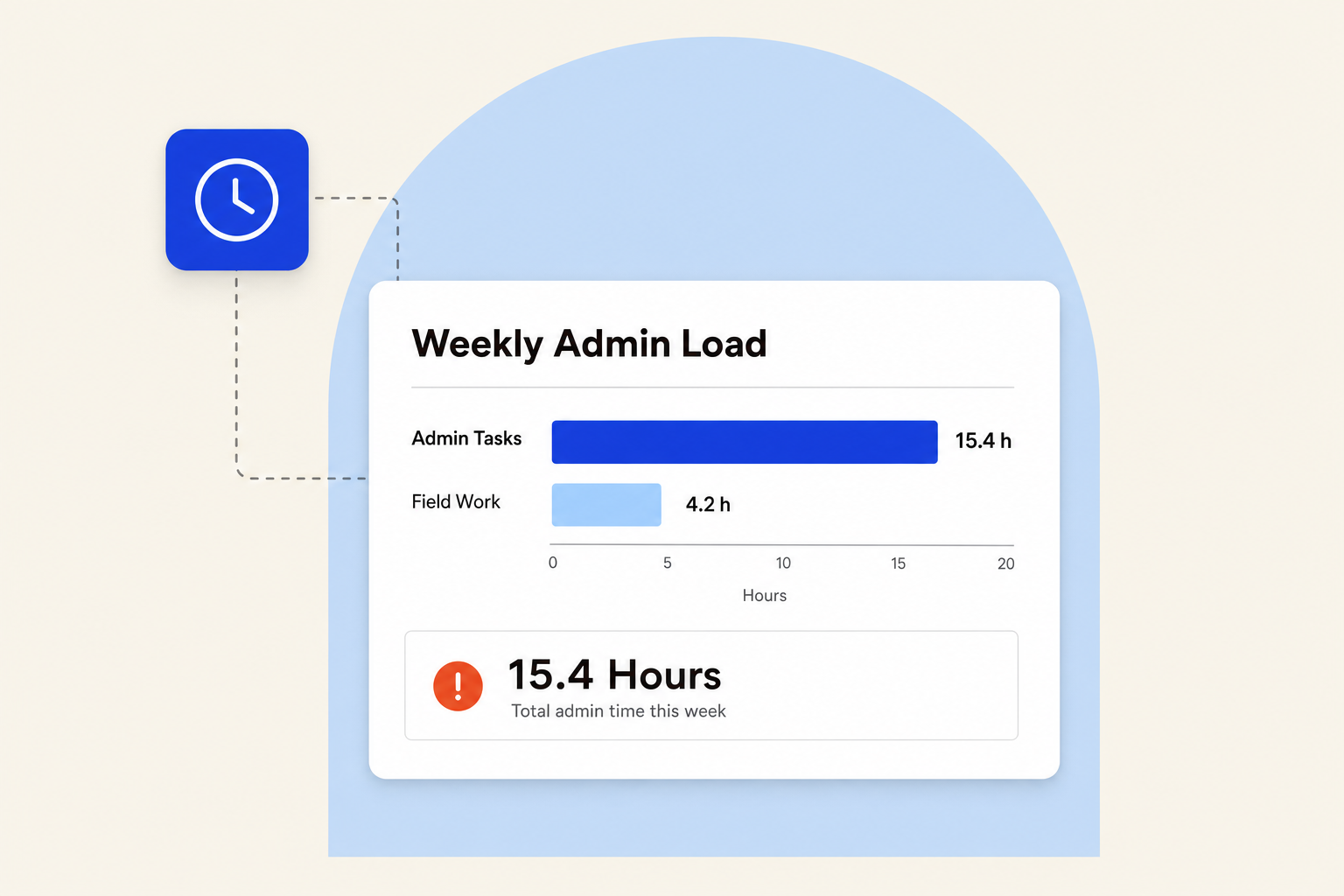
Small shops with 1-10 employees average 15.4 administrative hours per week, according to the HVAC Industry Pulse 2025 report. That's before a second or third truck gets added. Every new truck multiplies the permit filings, equipment registrations, invoices, and follow-ups that need to go out. The admin load compounds; the owner's available hours don't.
Admin Overload at the Owner Level
The paperwork reality for most 2-4 truck shops is that the owner is doing it at night. Invoices from Tuesday's jobs go out Thursday. Permit applications sit in a folder until the weekend. Rebate deadlines get missed because no one owns the tracking. These aren't failures of effort; they're failures of capacity.
Specific tasks pile up fast as trucks increase: permit filings for every install, equipment warranty registrations, rebate applications with documentation requirements, invoice follow-ups on aging receivables, and customer confirmations for the next day's schedule. Each one is manageable in isolation. Together, they consume the hours that should be going toward running the business. Understanding where the cash leaks are in this cycle is covered in detail in our guide to HVAC admin cash flow mistakes.
The Owner as Single Point of Failure
When every admin task routes through the owner, the business's growth speed is capped by one person's processing capacity. A tech calls out sick and the schedule has to be rebuilt. An operations manager leaves and the rebate pipeline stalls. The business is only as resilient as the owner's availability on any given day.
The contrast is a back office that runs independently of any single person. Mike Townsend of Veteran Heating, Cooling, Plumbing and Electric described it this way:
"In our case, all of our back office -- warranty registrations, building permits, rebate applications -- is handled by WorkHero. WorkHero goes into our CRM each day, mines the information they need using AI and their own staff, and just handles it. The company is instantly and infinitely scalable. If our call volume doubled overnight, the AI answers twice as many calls; I don't have to post help wanted ads for more CSRs. If our jobs doubled, WorkHero would probably charge us a little more money, but they'd just handle it." -- Mike Townsend, Veteran Heating, Cooling, Plumbing and Electric
That's what a fixed back office looks like in practice: volume doubles and the owner doesn't have to scramble.
What Are the Signs Your HVAC Business Is Growing Too Fast?
Growing too fast isn't a revenue number. It's an operational and cultural condition, and the signs show up in your shop before they show up on your P&L.
Mike Townsend of Veteran Heating, Cooling, Plumbing & Electric names the three signs of growing too fast: culture, cash, customers.
One experienced operator put it plainly: "If your culture sucks, that's a sign you've grown too quickly. When you've got a bunch of toxic people on board, people that don't do their jobs right, the people that need to be babysat or handheld, you grew too quick. If you can't pay the bills, you're growing too quick. If the level of service you provide to your customers is not where you want it to be, then you're growing too quick."
Beyond culture, the operational tells are specific:
- Invoices going out late: Jobs are completed but billing lags by days or weeks, which means cash lags too. This is one of the most common and costly patterns in growing shops, and it's covered in depth in our guide to HVAC admin cash flow mistakes.
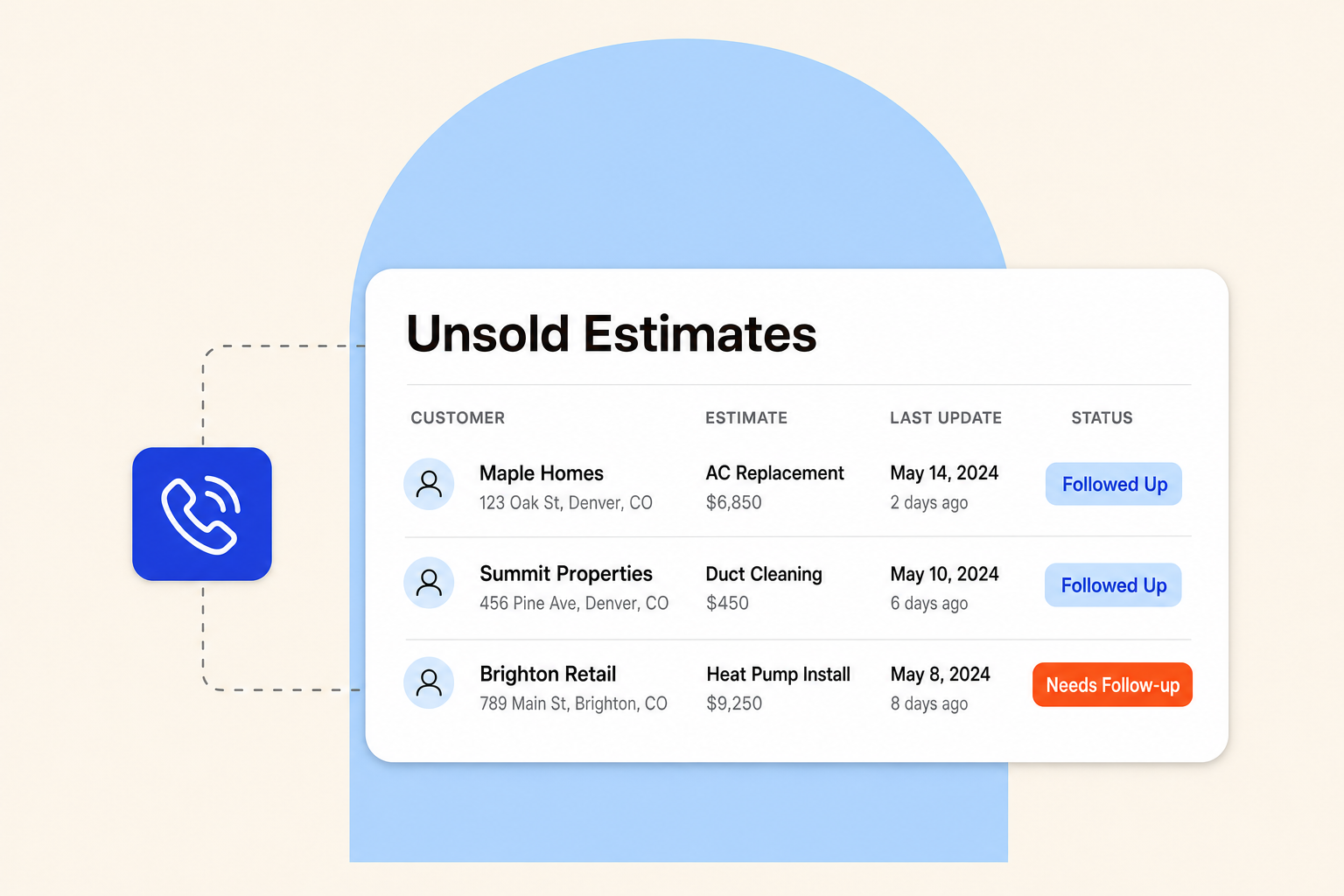
- Missed follow-ups on unsold estimates: Quotes go out and no one circles back. The job goes to whoever called next.
- Reactive scheduling: The next day's board gets built the night before, or worse, the morning of. Techs are waiting on dispatch instead of moving.
- Permit and rebate backlogs: Applications sit unsubmitted because no one owns the tracking. Deadlines pass and money is left uncollected.
- Team hand-holding: New hires can't onboard without the owner's direct involvement because there are no documented processes to hand them.
Culture breakdown, in this context, is a symptom of the same underlying problem: the systems that should be running the business are still running through the owner.
Should You Hire More HVAC Technicians?
Yes, but only if your scheduling, invoicing, and follow-up systems can absorb the added volume. Adding a tech without that infrastructure in place creates billing gaps and customer-experience failures that cost more than the tech produces.
Before adding headcount, work through these questions in order:
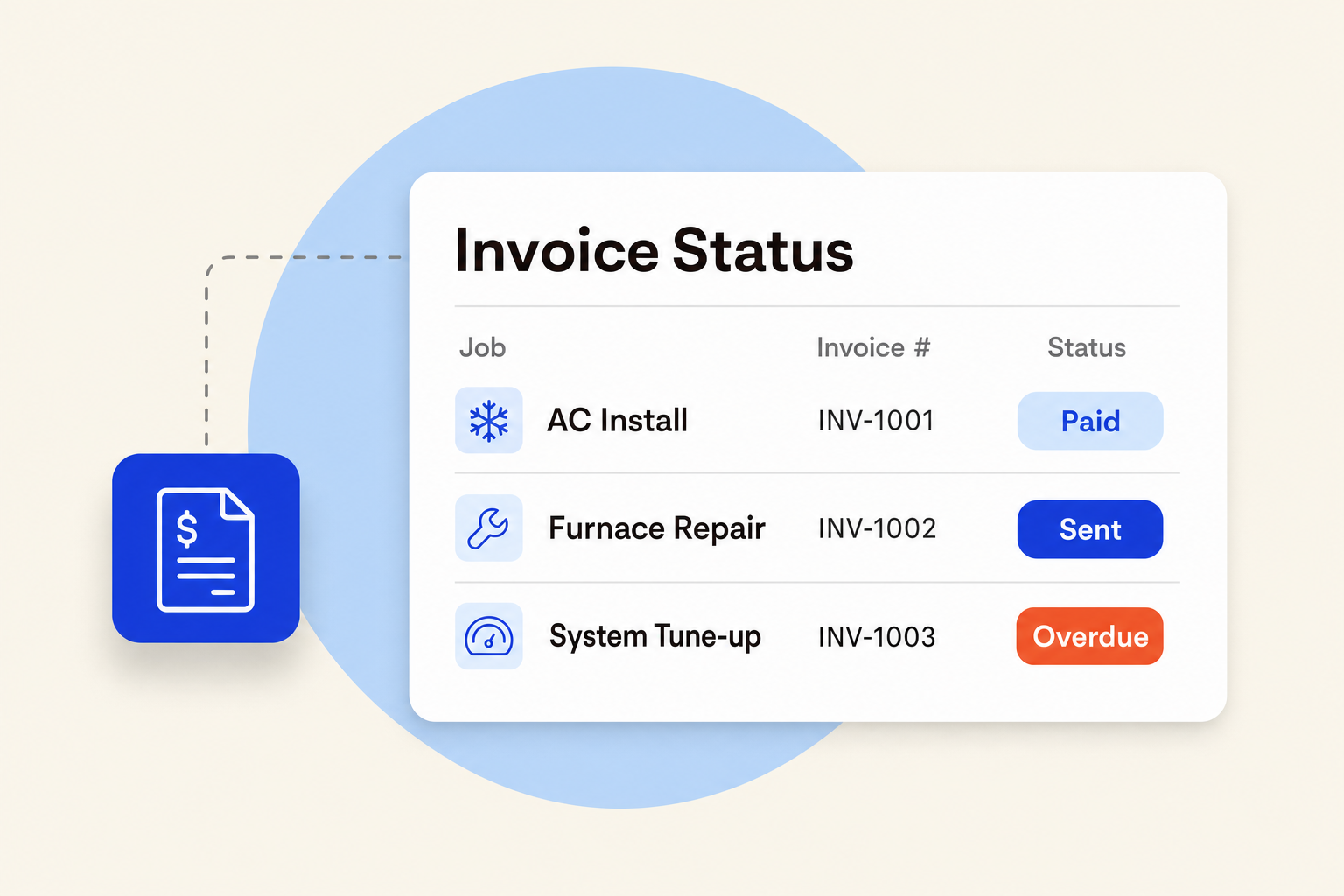
- Check your current billing cycle: If jobs from this week aren't invoiced until next week, a new tech will widen that gap, not close it. Fix invoice turnaround first.
- Audit your scheduling capacity: A new tech sitting idle because dispatch can't fill their day is overhead with no return. Confirm the schedule can be built and communicated efficiently before adding another body to it.
- Verify your job costing is current: Adding a tech changes your labor cost structure. If your pricing isn't built on accurate job costs, you can be busier and less profitable simultaneously. See our guide to HVAC job costing and pricing for the mechanics of building that foundation.
- Confirm follow-up ownership: New customers from a busier schedule need consistent follow-up. If no one owns that process today, a new tech generates more leads that go cold.
The question isn't whether you need another tech. It's whether the office can support one without the owner personally absorbing the extra coordination work.
How Do You Grow Fast Without Blowing Up Your Overhead?
Overhead creep in a growing HVAC shop is usually an admin failure, not a field failure. Unbilled work, missed rebate filings, stale pricing, and untracked receivables all erode margin without showing up obviously on a job-by-job basis.
- Unbilled work is the most direct overhead leak: Every completed job that doesn't generate an invoice the same day is effectively a short-term loan to your customer. At volume, this creates cash flow gaps that force owners onto credit lines to cover payroll.
- Missed rebate filings are pure lost revenue: Rebate programs require documentation, deadlines, and jurisdiction-specific submissions. Without someone owning that process, the money simply doesn't get collected.
- Stale pricing compounds with every job: If your price book hasn't been updated to reflect current equipment and labor costs, you're repricing your margin downward with every quote. This is a pricing discipline problem, not a demand problem.
- Marketing spend only pays off if the back office can fulfill: Per ACCA contractor growth benchmarks, contractors allocating at least 12% of revenue to marketing see net profits jump from 5% to 9%. But that math only holds if the new customers being generated are actually invoiced, followed up with, and converted to repeat business. Marketing spend that generates leads your office can't process is overhead with no return.
- Social media is a low-cost acquisition channel, but it's not the constraint: Consistent posting on job sites and finished installs builds local visibility without ad spend. The question isn't whether to do it; it's whether your shop can handle the calls it generates. See our guide to social media for HVAC growth for the tactical side. For the full lead pipeline picture, see HVAC marketing and lead generation.
What Does Outsourcing Your HVAC Back Office Actually Look Like?
Outsourcing your back office means handing off specific, defined tasks to a team that already knows HVAC operations and works inside your existing software. No migration, no new tools, no training from scratch.
- The onboarding process is structured: A good back-office partner starts by learning your current workflow, identifying what's creating the most friction, and building a service plan around your actual needs. Weekly check-ins keep priorities aligned as the business changes. See how that operational foundation gets built in our guide to HVAC business systems and SOPs.
- Tool compatibility is non-negotiable: The work happens inside Jobber, Housecall Pro, QuickBooks, and ServiceTitan, whichever you're already running. If you're evaluating or optimizing your software stack, our guide to the modern HVAC software stack covers how the layers connect.
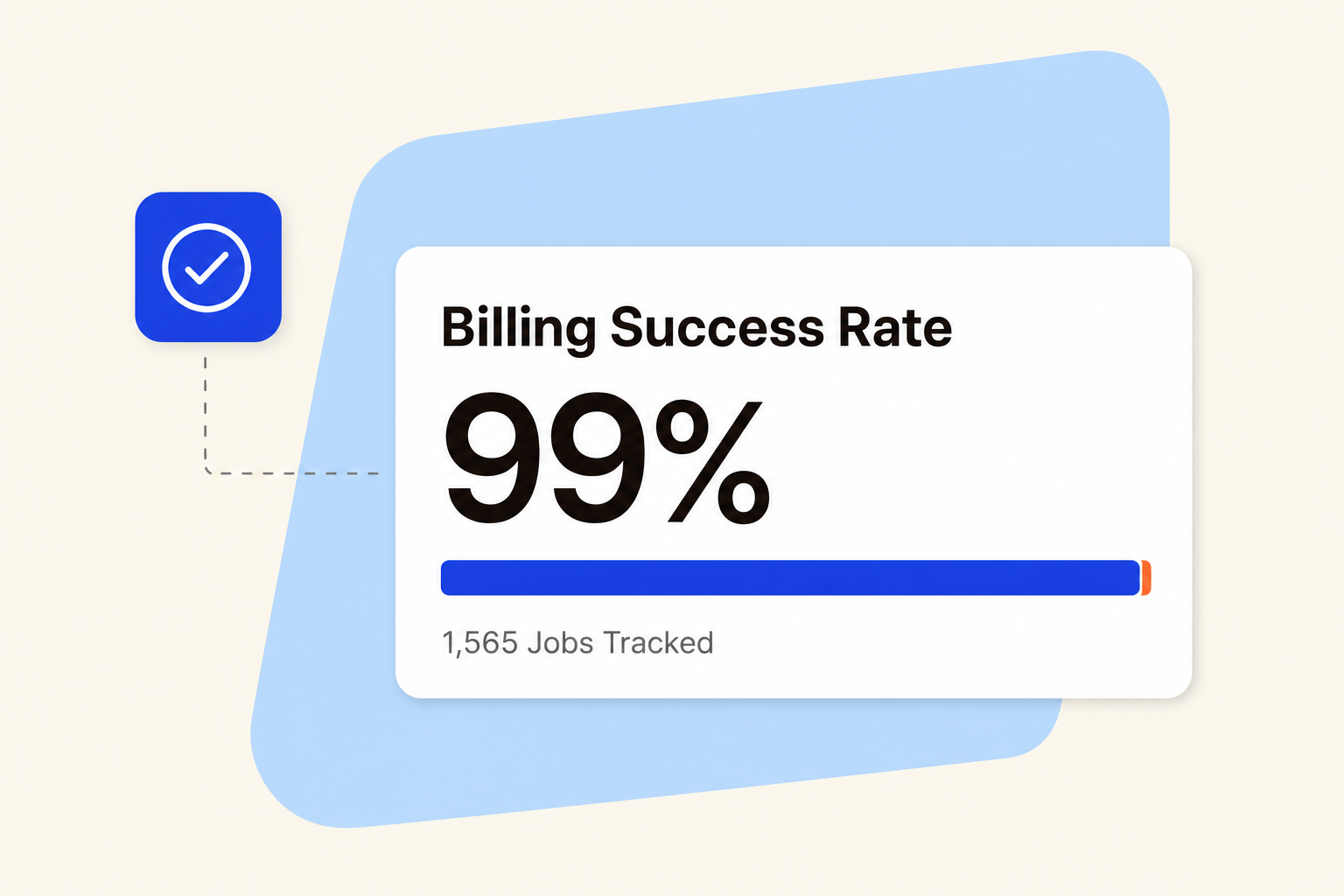
- The results are measurable: Just Right Mechanical saw a 700% increase in invoices issued and 48% faster payments in the first 30 days after handing off billing. ABL Comfort Solutions reached a 99% billing success rate across 1,565+ tracked jobs spanning 10+ properties. Veteran Heating scaled to $5.8M in completed revenue and $1.4M+ in rebates across 50+ Colorado jurisdictions without a dropped submission, including through a mid-year operations manager departure.
What Tasks Typically Transfer First
The starting point is almost always the tasks with the clearest ownership gap: invoicing and billing, permit filings, equipment warranty registrations, rebate application tracking, and customer follow-ups on open estimates and scheduled appointments. These are the tasks that pile up fastest as volume grows and that have the most direct impact on cash flow when they're handled consistently.
If you're running Housecall Pro, most of these workflows already have a home in the platform. The issue is usually that the features aren't configured or actively managed. Our guide to underused Housecall Pro features covers what most shops leave on the table.
Why This Isn't the Same as Hiring a Virtual Assistant
A generic virtual assistant takes direction. You tell them what to do, check their work, and manage their output. That's a different job than the one you're trying to get out of. Unlike a VA, a managed back-office team built for HVAC already knows the workflows, handles training and oversight internally, and takes ownership of outcomes rather than just tasks.
The comparison point for cost is a full-time office manager at $50K+ per year, plus recruiting time, onboarding, and the risk that they leave six months in and take institutional knowledge with them. A month-to-month managed back-office arrangement built around your scope doesn't carry that overhead or that single-point-of-failure risk.
How Do You Know If Your Scaling Strategy Is Actually Working?
Track four operational metrics weekly, not monthly. Revenue is a lagging indicator. These numbers tell you what's actually happening in real time.
- Invoice turnaround time: How many days between job completion and invoice sent? Same-day or next-morning is the standard to hold. Anything longer is a cash flow gap in the making.
- Accounts receivable aging: What's sitting unpaid past 30 days, and who owns the follow-up? This number tells you whether your collections process is working or just existing.
- Cash balance today (not last month): Profit on paper doesn't cover payroll. Knowing your actual cash position weekly is a basic ownership discipline that separates shops that grow from shops that just get busier.
- Follow-up rate on unsold estimates: Per lessons from 1000 HVAC contractors, 39% of thriving businesses reported generating an extra 1-15% of revenue when they follow up on unsold estimates. That's revenue already in your pipeline that most shops leave uncollected.
Financial review discipline matters beyond just knowing the numbers. Per HVAC contractor growth strategies 2026, contractors who review their financials weekly or monthly reported an average confidence score of 8.9. Owners who know their numbers make faster, better decisions about when to add a truck, when to tighten terms, and when to hold.
If these four metrics are moving in the right direction, your back office is keeping pace with your growth. If any of them are slipping while revenue is climbing, that's the signal to fix the infrastructure before adding more volume on top of it.
