

Key takeaways
- The back office is the ceiling, not your trucks: According to the HVAC Industry Pulse 2025 data, only 12.8% of HVAC companies that start under $250,000 in revenue ever break through to $5M or more. Fixing operations before adding trucks is what separates the ones that make it.
- Each revenue stage breaks in a different place: The $500K–$1M stage stalls on owner-run admin. The $1M–$2M stage stalls on missing pricebooks and maintenance plans. The $2M–$5M stage stalls on financial visibility and permit and rebate volume.
- You still need new customers at every stage: Even as your systems mature, your existing customer base shrinks naturally as customers move, sell homes, or maintain aging equipment. Continuous marketing and new-customer acquisition are required to grow, not optional.
Most HVAC owners who stall between $500K and $5M aren't short on skilled techs or willing customers. They're short on back-office capacity. The quotes don't go out same-day. The maintenance renewals sit in a spreadsheet. The rebate filings pile up until someone has time. That's where the revenue goes.
This article walks through the three operational stages between $500K and $5M, what breaks at each one, and what you actually need to fix it. Whether you're at two trucks or four, the framework applies.
What Does It Take to Scale an HVAC Business From $500K to $5 Million?
Scaling from $500K to $5M is primarily an operations problem. Most owners treat it as a marketing or hiring problem, but adding trucks to a back office that can't keep up just creates more chaos at higher cost.
The path breaks into three distinct stages, and each one has a different failure point. From $500K to $1M, the owner is the bottleneck personally handling scheduling, invoicing, and follow-ups. From $1M to $2M, the business needs pricebooks, maintenance plans, and follow-up systems that run without the owner's direct involvement. From $2M to $5M, financial visibility, documented processes, and consistent marketing become non-negotiable.
What makes this jump rare is worth understanding. The HVAC Industry Pulse 2025 data shows that only 12.8% of companies under $250,000 in revenue ever break through to $5M or more. The ones that do typically fix their admin infrastructure before they run out of capacity to manage it. See what that looks like in practice with from zero to $5.8M in year one.
Why Do Most HVAC Businesses Stall Before Reaching $5 Million?
Most HVAC businesses stall because revenue leaks out before the work is even scheduled. The HVAC call booking rate benchmarks show that the average HVAC company books just 38% of the calls that come in, dead last among the major trades. That's not a tech problem or a pricing problem. That's a back-office problem.
Beyond booking rates, the specific failure patterns that show up between $500K and $1M include:
- Quotes delayed by 24 to 48 hours: When the owner is the one writing quotes after a full day on the truck, same-day turnaround doesn't happen. Customers call someone else.
- Follow-ups that never happen: Maintenance renewals, unsold estimates, and seasonal tune-up reminders sit in someone's head or a sticky note, not a system. Revenue that was already earned gets left behind.
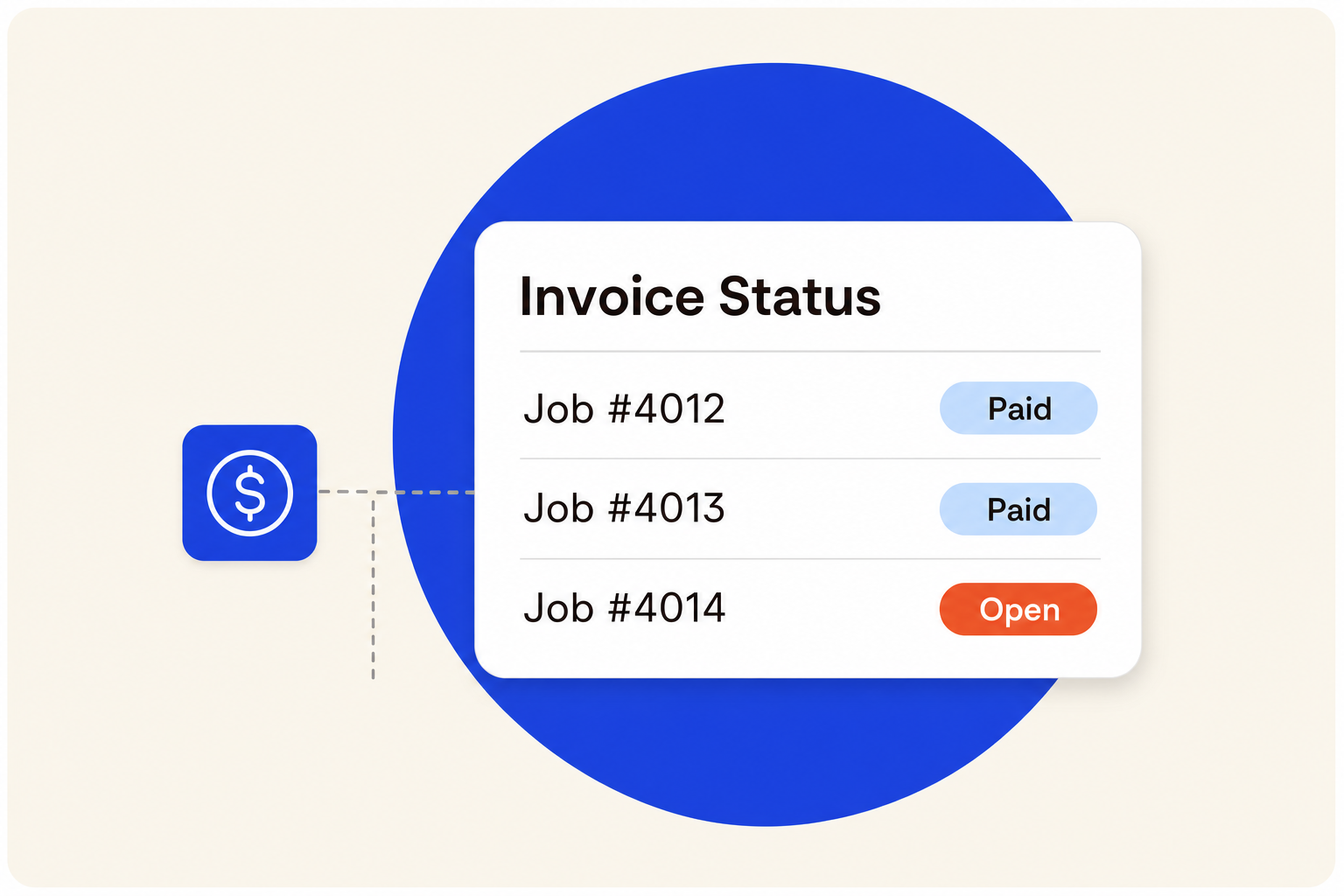
- Invoices sitting open for weeks: Completed jobs that aren't invoiced promptly create cash flow gaps that make the business feel broke even when the schedule is full.
- No coverage when a tech calls out: Without a documented dispatch process, one sick call cascades into a missed appointment, an angry customer, and a lost review.
These aren't signs of a bad business. They're signs of a business that outgrew its admin capacity. For a closer look at where HVAC cash flow breaks, the patterns are consistent across shops of all sizes.
What Breaks Operationally Between $500K and $1M?
At this stage, the owner is doing admin work that should be handled by a system or a dedicated person. The specific tasks that stall growth include:
- Pricebook gaps: Over 50% of home service businesses don't run at a profit, largely because pricing isn't built from real job costs and margin targets. When techs are quoting from memory or gut feel, margin disappears job by job. The math on HVAC job costing and pricing makes this concrete: a capacitor that costs $125 in parts and labor needs to be priced at $312.50 to hit 60% gross margin, not $150 because that's what felt fair.
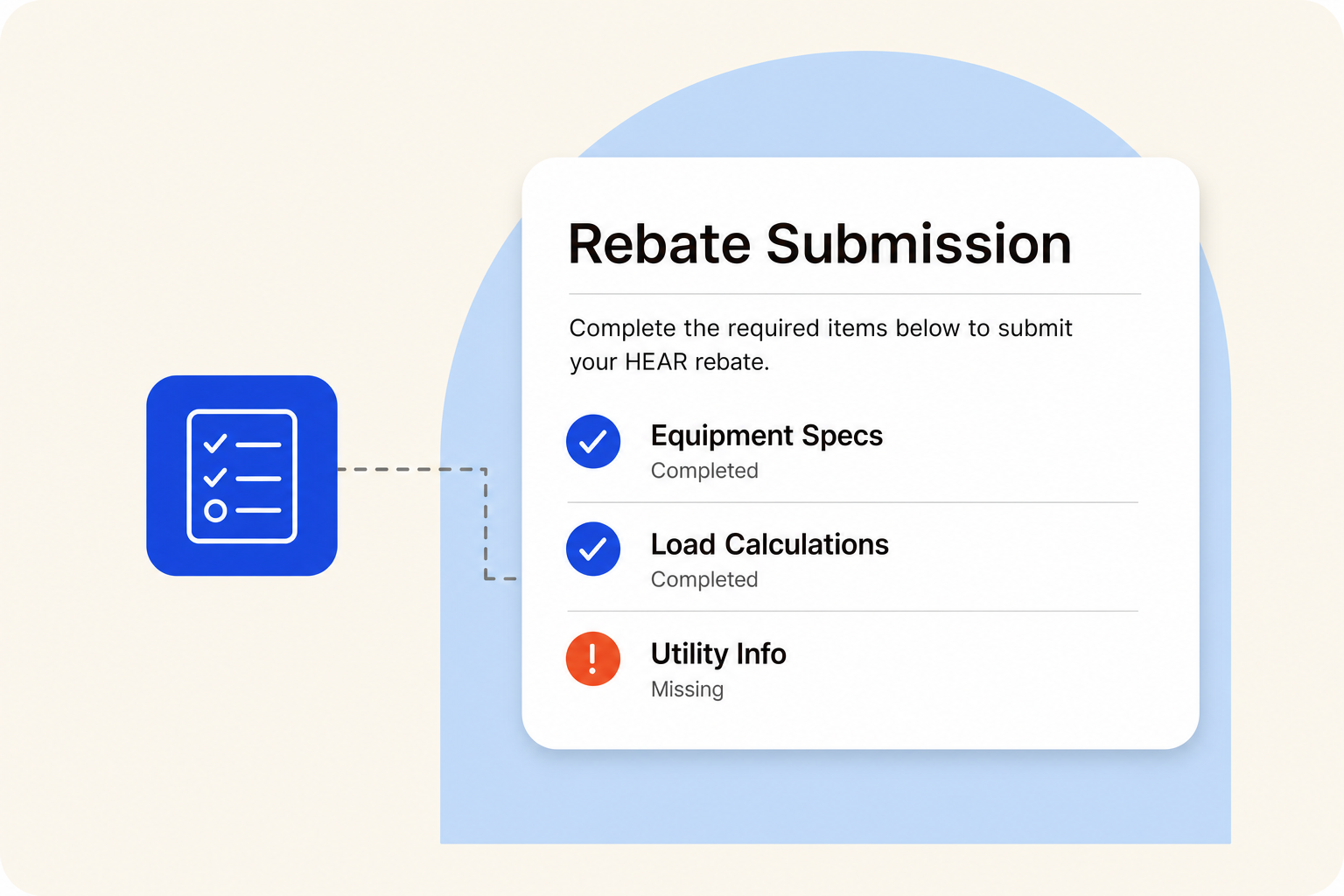
- Rebate filings missed entirely: HVAC rebate programs require precise documentation on every submission: equipment specs, load calculations, utility info, and invoices. At low volume, one person can wing it. Past a few installs per week, submissions start getting skipped.
- Maintenance renewals with no follow-up: A maintenance plan that isn't actively renewed is just a one-time visit. Without a follow-up system, the recurring revenue that makes maintenance plans valuable never materializes.
- Scheduling gaps from tech callouts: When dispatch lives in the owner's head, a tech calling out sick at 7am means the owner is on the phone rescheduling customers instead of running the business.
Each of these is a fixable process problem, not a people problem. The business doesn't need more techs. It needs the admin infrastructure to support the techs it already has.
How Do You Build the Systems That Scale an HVAC Business From $1M to $2M?
Between $1M and $2M, the work is about converting one-time revenue into recurring revenue and making sure your field service software is actually doing what you paid for it to do. Most shops at this stage are in Jobber, HouseCall Pro, or ServiceTitan but using maybe 30% of what the platform can do.
The specific systems that matter at this stage:
- A configured pricebook in your FSM: Techs in the field should be pulling prices from a pricebook built into your software, not texting the owner to ask what to charge. This is what makes pricing consistent across your whole team. See how this connects to your modern HVAC software stack.
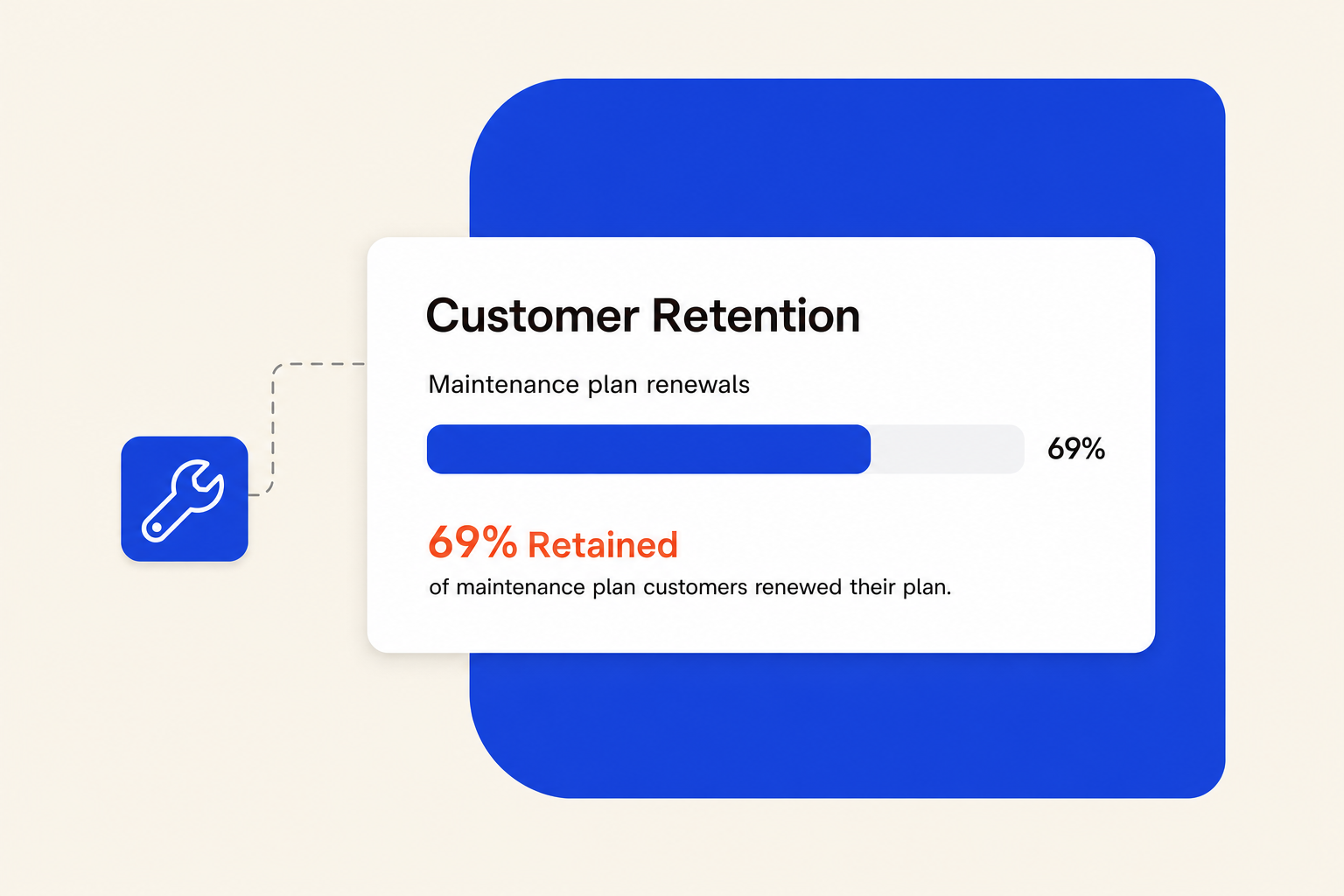
- Maintenance plan follow-up built into the system: According to data on how HVAC customers choose contractors, 69% of homeowners hired a company they had used before or that was recommended by friends and family. That means your existing customers are your most reliable revenue source, but only if you're actively staying in contact with them.
- Documented SOPs for job close-outs: When every tech closes out a job the same way, invoicing happens faster, photos get attached, and the admin team isn't chasing details after the fact.
- QuickBooks sync configured correctly: Jobs, invoices, and payments should flow from your FSM into QuickBooks without manual re-entry. If someone is copying data between systems, that's a process that needs to be fixed before you add more volume.
For a practical look at what building systems that scale actually involves, the work at this stage is less about buying new tools and more about using the ones you already have correctly.
How Do You Run an HVAC Company Like a Real Business From $2M to $5M?
At $2M and above, the business needs financial visibility, consistent marketing, and the operational capacity to handle permit and rebate volume without dropping submissions. These aren't nice-to-haves at this stage. They're what separates companies that keep growing from ones that plateau.
Veteran Heating, Cooling, Plumbing and Electric is a concrete example of what this looks like in practice. In 12 months, they added 69 people, put 17 trucks on the road, registered across 50+ Colorado jurisdictions, and hit $5.8M in completed revenue. The rebate pipeline alone produced $1.4M in approved HEAR project applications, with zero dropped submissions, even when their operations manager left mid-year. That kind of volume requires a documented, owned process, not a person trying to keep up manually.
On the marketing side, growth at this stage requires a continuous flow of new customers, not just repeat business. As Valeria Velazquez explained on the WorkHero HVAC Business Podcast:
"You're as much a lead generation and marketing company as you are an HVAC business. If you want to scale at that speed, you need new customers. Your customer base is shrinking no matter what you do. You have to market to even stay at the same size." (Valeria Velazquez, WorkHero HVAC Business Podcast)
Financial visibility matters for another reason beyond operations. According to the HVAC business valuation multiples report, a $5M to $10M EBITDA residential service firm typically trades at 9 to 10x EBITDA, compared to roughly 6.2x for a smaller $500K to $1M firm. Clean books and documented processes don't just help you run the business. They directly affect what the business is worth. For owners thinking about an eventual exit, filling your pipeline with leads is part of building a company that commands a premium valuation.
Should You Hire an In-House Office Manager or Outsource Your HVAC Back Office?
At $500K in revenue, a full-time office manager salary doesn't pencil out for most shops. The comparison between the two options comes down to cost, speed to productivity, and what happens when that person leaves.
In-House Office Manager
- Cost: $50,000 or more per year in salary, before benefits, payroll taxes, and the time spent recruiting and onboarding.
- Ramp time: A new hire with no HVAC background needs weeks to months before they're productive. Someone who's worked in another industry doesn't know what a HEAR rebate is, how to navigate a municipal permitting portal, or how your FSM is configured.
- Risk: When that person leaves, the knowledge walks out with them. If they managed your rebate pipeline or your permit filings, you're starting over.
Outsourced HVAC Back Office
- Cost: Monthly plans at a fraction of a full-time salary, with no benefits, no recruiting cost, and no training burden on the owner.
- Ramp time: An outsourced team that already knows HVAC operations, FSM platforms, and rebate programs can be productive in days, not months. They plug directly into Jobber, HouseCall Pro, QuickBooks, or ServiceTitan without requiring you to change how you operate. See how maximizing your field service software fits into this.
- Coverage: Unlike a single in-house hire, an outsourced back-office team doesn't create a single point of failure. When Veteran Heating's operations manager left mid-year, the rebate pipeline didn't slow down for a week because ownership of that process wasn't tied to one person.
How Long Does It Take to Scale an HVAC Business to $5 Million?
The realistic range is 24 to 36 months for most businesses, with outliers on both ends depending on how quickly operational infrastructure gets built.
The Typical Path (24 to 36 Months)
The standard multi-year timeline reflects what happens when delegation and systems-building happen gradually. Roy White of Fixed Right grew from roughly $700K to $7M over several years by focusing on leadership development and delegation. Core Growth Group's four-step scaling sequence maps a similar 24 to 36 month window for businesses moving from $2M to $4M toward $10M or more. These timelines are realistic when the owner is building systems while also running the business day to day.
The Accelerated Path (12 Months)
Veteran Heating reached $5.8M in completed revenue in 12 months by handing off permitting, rebates, and HouseCall Pro implementation from day one rather than trying to build those systems internally while scaling. The difference wasn't more trucks or a bigger marketing budget. It was having back-office infrastructure in place before the volume arrived, not after. The full breakdown is in the from zero to $5.8M in year one case study.
How Do You Know If Your HVAC Scaling Strategy Is Working?
Track these specific numbers at each stage. If you can't pull them from your FSM or QuickBooks within five minutes, that's the first problem to fix.
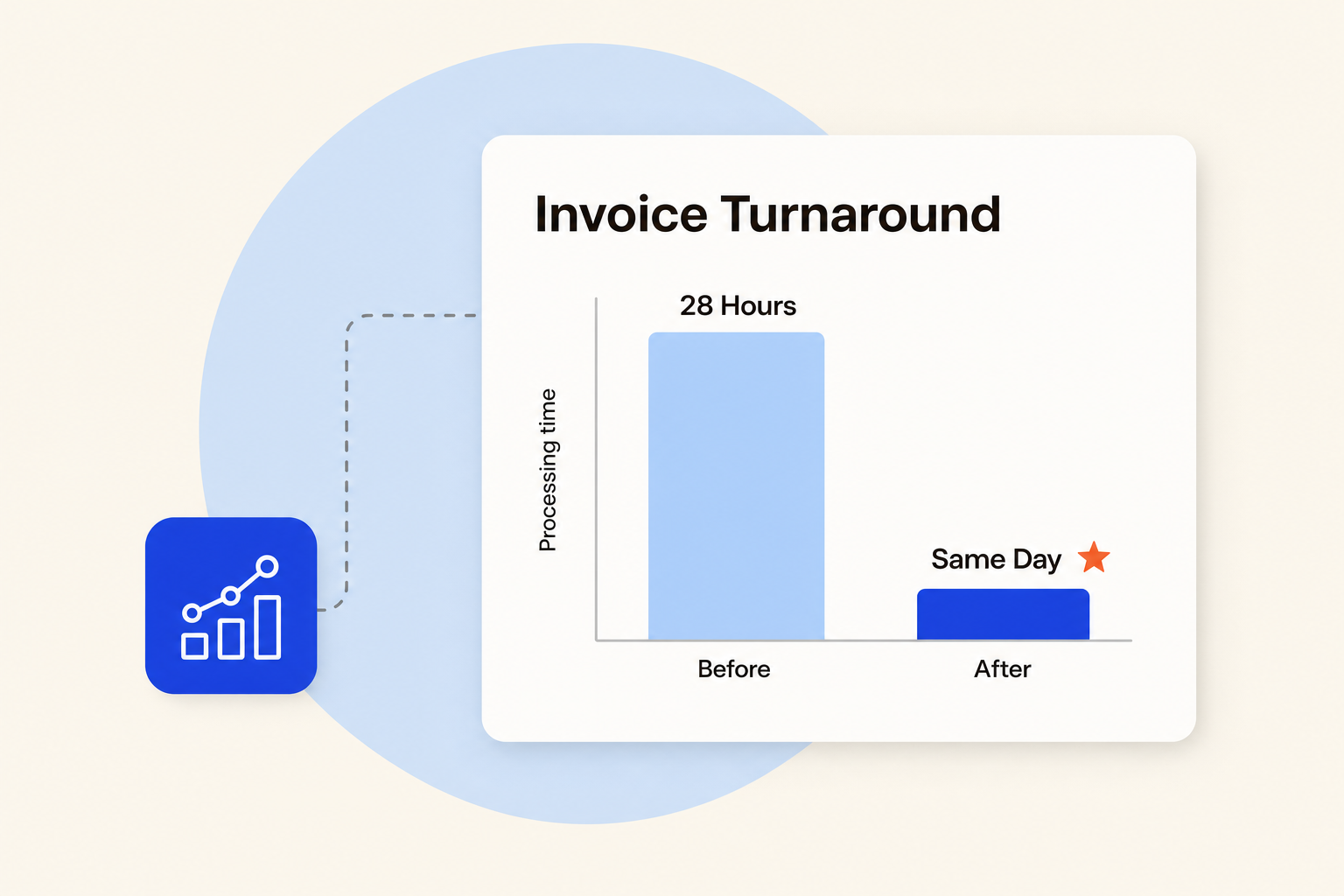
- Invoice turnaround time: Jobs completed before noon should be invoiced same day. Jobs completed after noon should be invoiced the next morning. If your average is longer than 24 hours, cash flow is slower than it needs to be.
- AR aging: Know what's outstanding at 0 to 30 days, 30 to 60 days, and 60 days or more. Anything sitting past 60 days needs active follow-up, not a reminder email.
- Gross margin by department: Service and install should be tracked separately. A blended revenue number hides which part of the business is underperforming. According to HVAC profit margin benchmarks 2026, HVAC contractors average 7% net profit with flat-rate pricing but only 4% without. That 3-point difference compounds significantly at $2M or $3M in revenue.
- Rebate and permit completion rate: Every submitted rebate that gets approved is revenue. Every permit that gets missed is a liability. Track both as a percentage of eligible jobs.
- Revenue per truck: This tells you whether adding a truck actually added capacity or just added overhead. If revenue per truck is flat or declining as you add vehicles, the constraint is back-office throughput, not field capacity.
These KPIs don't require a new platform or a consultant. They require someone with ownership of the numbers reviewing them on a weekly or monthly cadence and flagging what's off before it becomes a bigger problem.
