

Key takeaways
- Admin is the ceiling, not demand: Most HVAC owners stuck at $1M already have enough work coming in. What they don't have is a back office that can keep pace with quotes, invoices, permits, rebates, and follow-ups at volume.
- A full-time office manager costs $50K+ per year: A dedicated HVAC back-office partner runs $1,800 to $2,500 per month and covers the same core functions without the hiring, training, or management overhead.
- Named HVAC shops have broken through this ceiling by fixing specific systems first: Billing ownership, rebate tracking, and permitting infrastructure are the documented levers, not more trucks or more marketing spend.
According to the 2025 HVAC Industry Pulse report, when HVAC companies hit $1M in revenue and 6 to 10 employees, they face a critical transition point. Most owners at this stage are still personally handling scheduling, invoicing, and follow-ups alongside field work.
This article breaks down why that stall happens, what systems actually move the needle, and how to decide whether a full-time hire or a lower-cost alternative makes more sense for a 2 to 4 truck shop trying to push past $1M.
What Does "Breaking the $1M HVAC Ceiling" Actually Mean?
Breaking the $1M HVAC ceiling means getting your operations to a point where the business can process more volume without the owner personally touching every invoice, permit, and follow-up. The HVAC growth ceiling survey findings confirm that owners often hit a growth ceiling around $1 to $2M in revenue, and the pattern is consistent: it's not a demand problem.
Owners at this stage typically have phones ringing and jobs on the board. What they don't have is a back office that can handle the paperwork those jobs generate. Every completed install creates a permit filing, an equipment registration, a rebate application, and an invoice that needs to go out the same day. When the owner is also the person doing all of that, the business can only grow as fast as one person can work nights and weekends.
This article is written for shops running 2 to 4 trucks. Not solo operators still figuring out their first price book, and not 10-truck operations with a full office staff. The 2 to 4 truck range is where the ceiling is most acute, because there's enough volume to create real admin pressure but not enough revenue to justify a $50K+ full-time hire without hesitation.
Why Do HVAC Shops Stall Out Right Around $1M in Revenue?
The stall happens because the admin load grows faster than the owner's capacity to handle it, and the jobs themselves don't slow down to wait. As one WorkHero podcast guest put it directly: "We see this all the time at WorkHero. It's the guy at 1 million, maybe one and a half, and he's capped out. He can't scale himself any further and he's still wearing all the hats in the business."
"Just to stay on that for one second. So because we see this all the time at work here, it's the guy at 1 million, maybe one and a half and he's capped out. He can't scale himself any further and he's still wearing all the hats in the business. I mean, like, what do you tell this guy, like you said, like build systems. Like what kind of systems are needed to scale past that point?"
The specific tasks creating the bottleneck aren't glamorous, but they're where the money either gets captured or lost:
- Quotes and invoices sitting unsent: Jobs get completed, but invoices go out two or three days later because the owner is the only one who knows how to build them. That delay directly slows cash flow.
- Permit filings piling up: Each jurisdiction has its own forms, timelines, and fee structures. At volume, managing this manually means something gets missed.
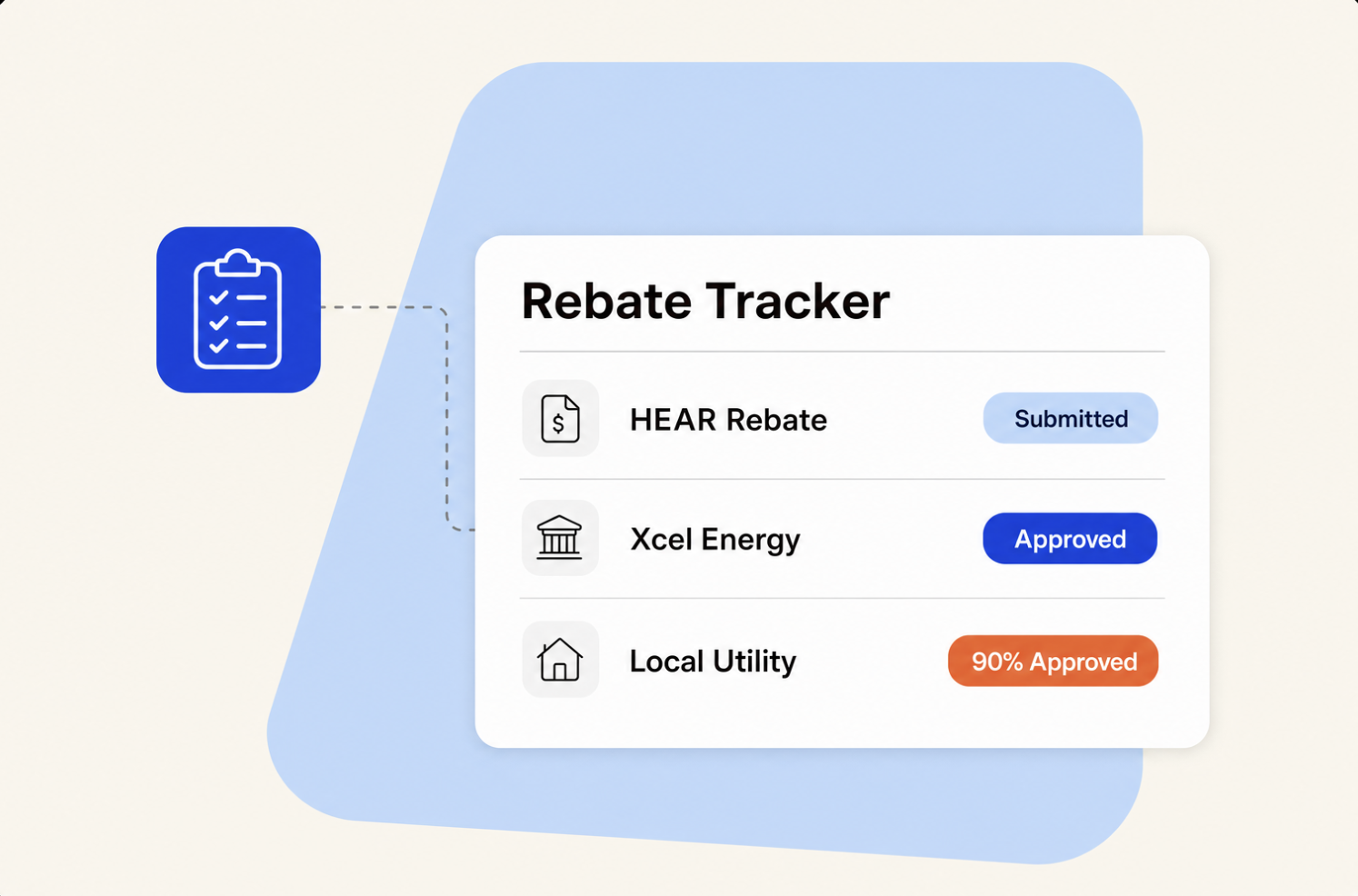
- Rebate applications going uncaptured: Heat pump rebates through Xcel Energy or HEAR programs can run $2K to $13K+ per install. Without a dedicated process, those applications don't get submitted.
- Follow-ups that never happen: Maintenance plan renewals, unbooked estimates, and overdue invoices require consistent outreach that doesn't happen when the owner is in the field all day.
Hiring more technicians doesn't fix any of this. According to HVAC contractor revenue and labor data, approximately 90 percent of all HVAC hiring replaces exits rather than adding net capacity. The technician labor market is tight, and even when you find good people, adding trucks without fixing the back office just creates more paperwork for an already overloaded owner. For a closer look at where these admin gaps that drain profit show up in practice, that breakdown is worth reading before you add another truck.
Do I Need to Hire a Full-Time Office Manager to Scale Past $1M?
A full-time office manager is one path, but it's not the only one. The decision comes down to cost, risk, and how quickly you need the capacity. Before committing to a salary, it's worth understanding what each option actually involves, and what your modern HVAC operations tech stack needs to support either choice.
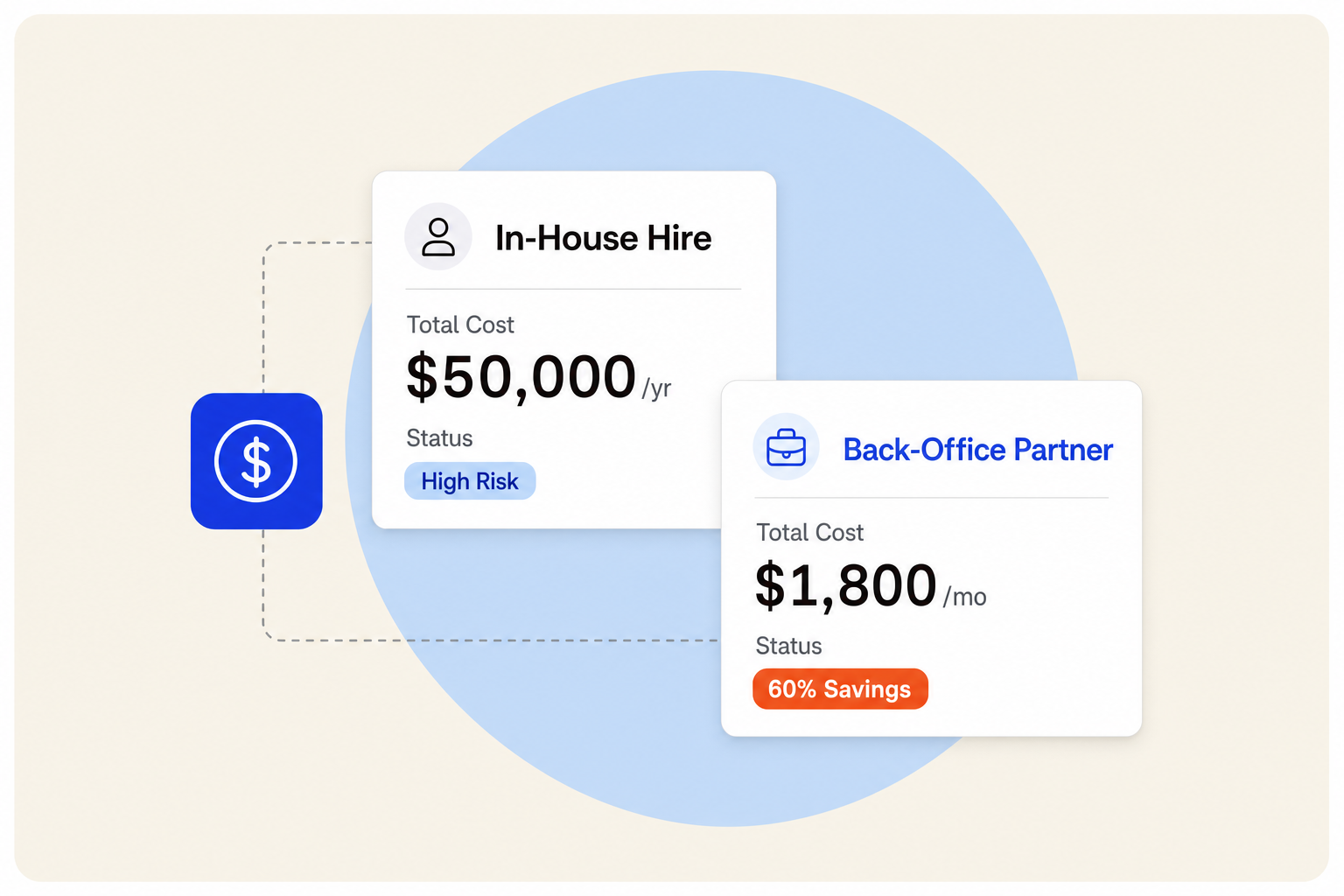
The $50K+/Year Full-Time Hire
- Base salary: A competent office manager with HVAC experience typically costs $45,000 to $60,000 per year, before payroll taxes, benefits, and any paid time off.
- Training time: Even an experienced hire needs 60 to 90 days to learn your software, your customers, and your workflows. During that window, you're still doing most of the admin yourself.
- Management overhead: You're now responsible for onboarding, performance reviews, and coverage when they're sick or quit. For a 3-truck owner, that's a significant management burden on top of field work.
- Hiring risk: A bad hire in this role costs more than the salary. Invoices go out wrong, permits get missed, and customers get inconsistent follow-up while you're figuring out the problem and starting the search over.
The $1,800 to $2,500/Month Alternative
- No training required: A dedicated back-office partner with HVAC-specific experience already knows how Jobber, HouseCall Pro, QuickBooks, and ServiceTitan work. You don't spend the first three months explaining what a load calc is.
- 60% cost savings vs. in-house staff: The math is straightforward. At $1,800 to $2,500 per month, you're spending roughly $21,600 to $30,000 per year versus $50K+ for a full-time hire, with no benefits, no payroll taxes, and no severance risk.
- 125+ years of combined HVAC office management experience: That's the depth behind WorkHero's team. When a rebate portal changes its documentation requirements or a new jurisdiction comes online, that knowledge is already there.
For a concrete example of what this looks like in practice, the invoicing turnaround case study shows what happened when Just Right Mechanical handed off billing ownership to a dedicated back-office team.
What Systems Do You Need in Place to Hit $1M in HVAC?
The systems that matter at this stage are the ones that take repeatable work out of your head and put it into a documented, executable process. If your scheduling process, your invoicing workflow, or your rebate tracking lives in your memory, it can't scale past you.
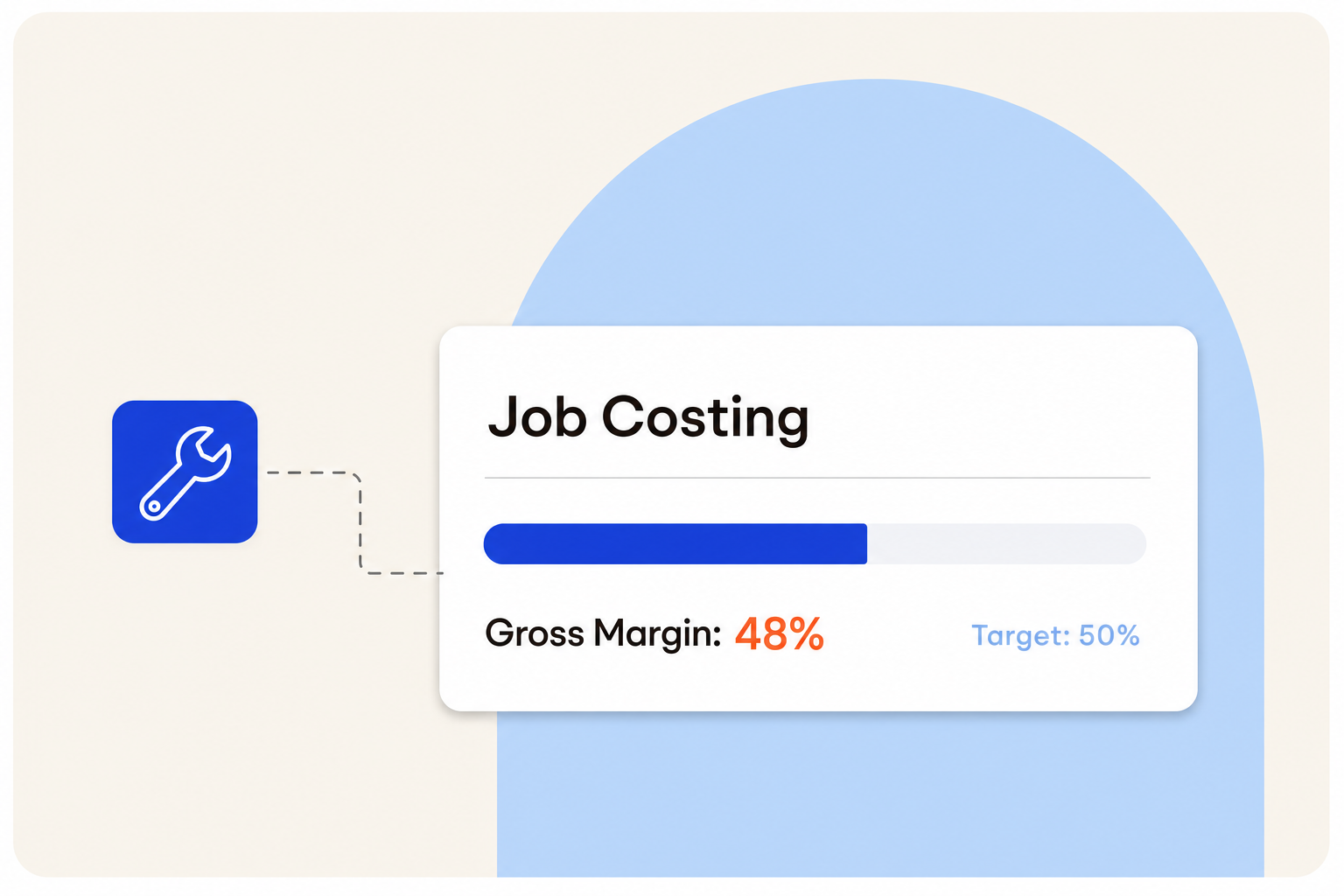
Price Books and Job Costing
- Price books anchor pricing in math, not memory: A price book built on real job costs and gross margin targets means your techs can quote accurately in the field without calling you for approval. For more on building profit through job costing, that article covers the mechanics in detail.
- Job costing catches underpricing before it compounds: When you departmentalize your P&L by service type or customer segment, you can see which work is actually profitable versus which jobs are keeping you busy without producing margin.
- Bookkeeping review becomes necessary around $500K: Per the first-party guidance, waiting until tax time to review financials at this revenue level means problems go undetected for months. A fractional bookkeeper or CFO review at the half-million mark is the right time to tighten this up, not after you've crossed $1M.
SOPs and Workflow Automation
- Documented job close-outs prevent revenue leakage: A close-out checklist that requires tech notes, photos, and equipment serial numbers before a job is marked complete means invoicing can happen immediately, not two days later when someone tracks down the details.
- Hiring and training SOPs reduce ramp time: When your onboarding process is documented, a new tech or office hire follows a checklist instead of shadowing you for three weeks.
- Automation handles the repetitive layer: Invoicing triggers, rebate submission reminders, equipment registration workflows, and follow-up sequences can all run without manual input once they're configured. For a practical breakdown of how AI and automation for HVAC owners applies to these tasks, that resource covers the setup in detail.
How Do You Handle More Jobs Without Dropping the Ball as You Scale?
Handling more volume without errors requires dedicated ownership of each back-office function, not shared responsibility split between a part-time admin and whoever has a free moment. The high-volume billing infrastructure results from ABL Comfort Solutions show what that looks like at scale: 1,565+ service jobs tracked, 99% billing success rate across 10+ properties, with a custom automation generating invoices directly from technician notes.
Billing and Invoicing at Volume
- Ownership gap is the core problem: At Just Right Mechanical, a part-time office manager and a VA split billing responsibilities, but neither had full accountability for invoice timing or collections follow-through. Invoices sat. Follow-ups were inconsistent. Cash moved slowly.
- Dedicated ownership produced immediate results: Once a single team took complete ownership of billing end to end, Just Right Mechanical saw a 700% increase in invoices issued in the first 30 days, a 138% improvement in on-time payments, and payments arriving 48% faster. See the full invoicing turnaround case study for the breakdown.
Permits, Rebates, and Equipment Registration at Volume
- Rebate capture requires a dedicated process, not occasional attention: Mountain West Heat Pumps was closing roughly 10 installs per week in Colorado's incentive-heavy market. Without a structured submission process, those rebate applications weren't getting filed consistently. With dedicated back-office ownership, the team captured $1.5M+ in total rebates at a 90% approval rate, and returned 10 to 15 hours per week to the owner and his main salesperson.
- Permitting across multiple jurisdictions requires a system, not a spreadsheet: Veteran Heating, Cooling, Plumbing & Electric scaled to $5.8M in completed revenue across 2,132 jobs in 12 months, operating under Colorado's fragmented municipal permitting system. That required registration across 50+ jurisdictions and $1.4M+ in HEAR rebate submissions, with zero dropped applications even through a mid-year staff transition.
When Should an HVAC Owner Hire Their First Office Manager, or Choose an Alternative?
The right time to act is when admin errors start costing you money or customers, not when you feel overwhelmed. Feeling stretched is normal at 3 trucks. Losing a permit approval, missing a rebate deadline, or sending a customer to a competitor because scheduling slipped is a different category of problem.
- Identify the specific failure point. Is it invoices going out late? Permits getting filed after the fact? Rebate applications not submitted at all? The answer tells you whether you need billing support, paperwork support, or both before you decide on a hire.
- Calculate the cost of the current gap. If you're missing one $5,000 rebate per month because no one owns the submission process, that's $60,000 per year in uncaptured revenue. A back-office partner at $2,500 per month pays for itself in the first rebate check.
- Test before you commit to a salary. A dedicated back-office partner is a lower-risk first step than a $50K hire. You learn what the role actually requires, what your software needs to support it, and whether the volume justifies a full-time employee, all without the hiring and severance risk.
- Watch for the staff transition risk. If your current admin setup depends on one person and that person leaves, your billing, permitting, and follow-up process stops with them. A structured back-office arrangement with documented SOPs doesn't have a single point of failure.
How Do You Measure Whether You've Actually Broken Through the Ceiling?
You've broken through when the business can absorb more jobs without the owner personally managing each back-office task, and when the financial picture reflects that capacity in real numbers. A few specific indicators tell you whether the ceiling is behind you or still ahead.
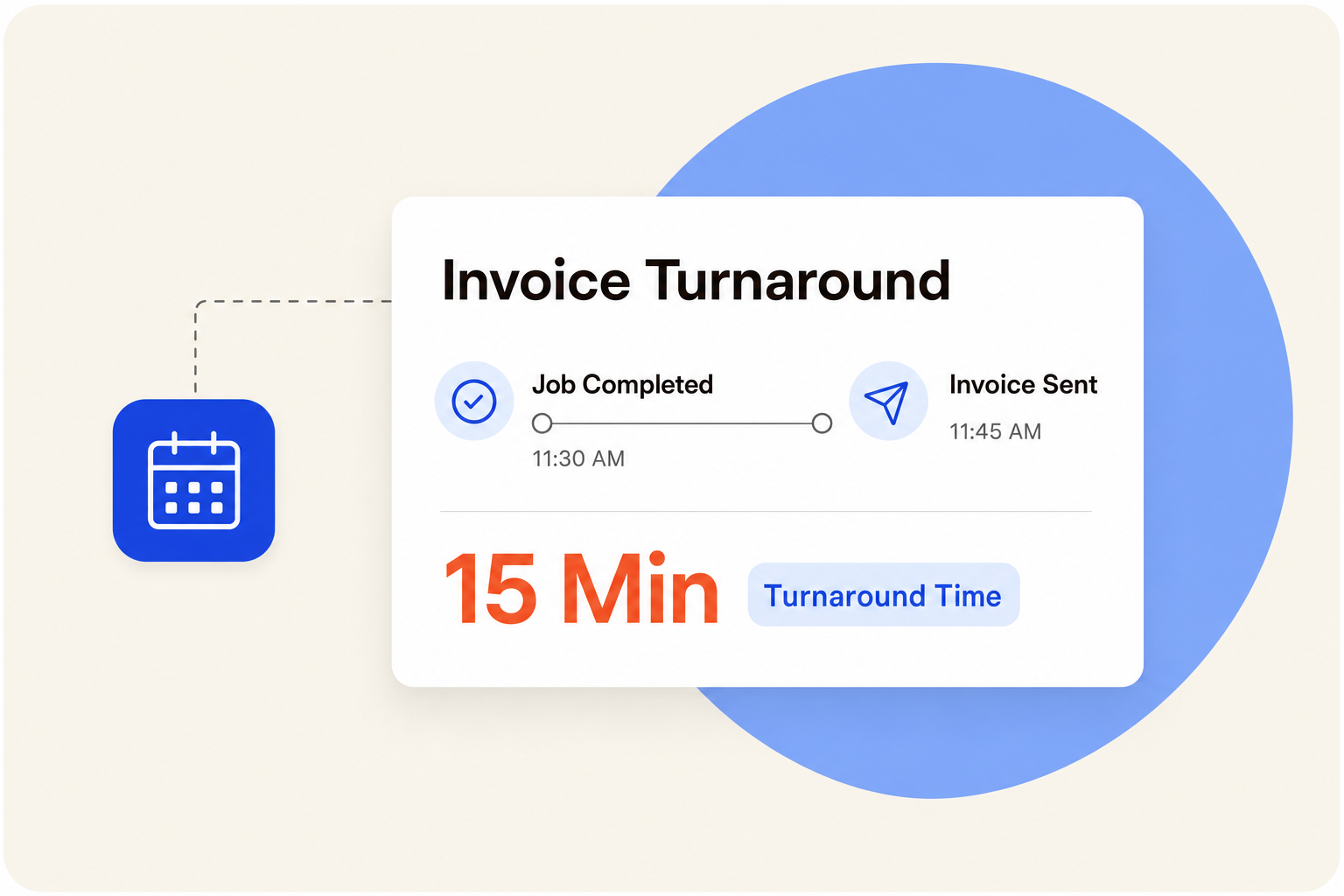
- Invoice turnaround time: Jobs completed before noon should produce invoices the same day. If there's a consistent lag between job completion and invoice send, the billing process still has an ownership gap.
- Rebate capture rate: If you're installing heat pumps and not tracking what percentage of eligible rebates actually get submitted and approved, you're leaving real income uncaptured. A 90% approval rate like Mountain West achieved is a concrete target.
- Accounts receivable aging: Monthly P&L reviews and AR aging reports tell you whether collections are tightening or drifting. The documented outcome of $1M to $2M in 12 months by tightening collections shows what's possible when this number gets managed actively.
- Owner hours on admin vs. field: If you're still spending evenings on paperwork, the ceiling hasn't moved. The goal is getting that time back, which Mountain West measured at 10 to 15 hours per week returned to the owner once rebate operations had dedicated ownership.
- Referral and repeat business rate: According to how HVAC customers choose contractors, 69% of homeowners hired a company they had used before or that was recommended by friends and family. Consistent follow-up, clean invoicing, and reliable scheduling are what build that reputation. Filling your calendar with new customers is also a lever here; local marketing that fills your schedule covers how smaller shops are doing that without a dedicated marketing hire.
